
Italy is set to delay the closure of its coal-fired power stations by 13 years, postponing the phase-out from the end of 2025 to 2038, according to a bill passed by the lower house of Parliament on March 31 that’s widely expected to gain full approval.
Italian Prime Minister Giorgia Meloni’s government wants to dial back net-zero policies amid growing energy supply challenges triggered by the conflict in Iran.
Three of Italy’s four remaining coal plants are controlled by Enel Group, a multinational energy producer.
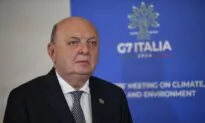
Italian Minister for European Affairs Tommaso Foti said “all energy sources, at least in the immediate term, must be used to their fullest extent,” in comments published by the Italian news wire service ANSA on March 28.
Under its net-zero plans, Italy aimed to phase out coal in electricity generation by 2025, according to a 2024 European Commission report.
It also said that Italy phased out nuclear power following a 1987 referendum in the aftermath of the Chernobyl nuclear accident in the Soviet Union.
In the last five years, out of roughly 8 gigawatts of coal-fired generation capacity previously installed in Italy, much of it has been retired or placed on standby as the country moved toward a planned phase-out.
Italian Energy Minister Gilberto Pichetto Fratin said this month that he would restart some coal-fired power stations if the conflict in the Middle East were to provoke an energy crisis.
Italy has “coal-powered stations that I wouldn’t like to reactivate, but they are there in reserve to safeguard our country,” he said in an interview with the TV news channel TgCom24 on March 4.
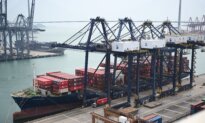
Since the United States and Israel launched their Feb. 28 strikes on Iran, shipping traffic through the Strait of Hormuz, one of the world’s most important energy corridors, has slowed to a near standstill.
Shell CEO Wael Sawan said on March 24 that a fuel crunch already hitting parts of Asia could spread to Europe as early as next month amid continued disruption from the conflict.
Italian Defense Minister Guido Crosetto told the Repubblica newspaper on March 30 that he is concerned.
“I live this war and its possible consequences 24 hours a day. I have to know things that don’t [let] me sleep anymore,” Crosetto said. “For what may happen in the coming weeks, for the effects it will have on the economy and on our daily lives.”
The European Commission has urged member countries to reduce oil and gas use.
In a March 31 post on X, European Commissioner for Energy and Housing Dan Jorgensen said that amid “market volatility” linked to the Middle East crisis, he is calling on EU member states “to coordinate action to safeguard oil and refined petroleum products supply.”
Jorgensen urged national energy ministers to refrain from taking measures that “may increase fuel consumption” and to consider “the promotion of demand saving measures, with particular attention to the transport sector.”
Last week, Slovenia deployed the army to help move fuel supplies after becoming the first European country to ration fuel at the pump amid shortages and surging demand.
Slovenia’s shortages were caused in part by cross-border fueling and stockpiling due to the Iran war, according to the state news agency STA on March 21.
Fueling at individual service stations has been restricted to 50 liters (13 gallons) per day for private vehicles and 200 liters (53 gallons) per day for companies and other priority users, such as farmers, Slovenian Prime Minister Robert Golob said.
Reuters contributed to this report.
 Friends Read Free
Copy
Facebook
Tweet
Friends Read Free
Copy
Facebook
Tweet