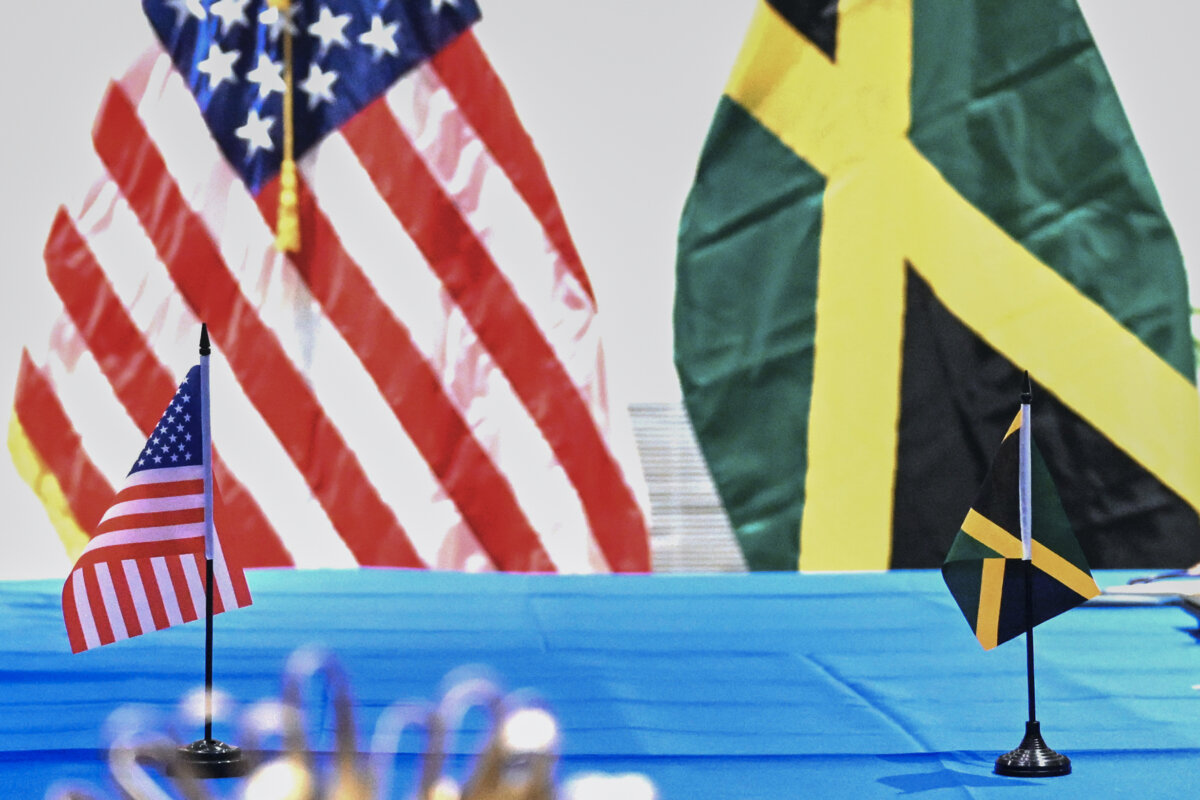

Jamaica is in talks with the United States to accept U.S. deportees from third countries, joining a growing number of nations prepared to work with U.S. President Donald Trump in his bid to drive down illegal immigration.
The Caribbean country has signed a memorandum of understanding with the Department of Homeland Security (DHS) to accept up to 25 non-Jamaican deportees every two weeks, the island nation’s national security minister, Horace Chang, said on June 16.
If the agreement is finalized, Jamaica will join countries including Mexico, El Salvador, and Uganda, which have agreed to accept third-country immigrants with no right to remain so that they can be deported from the United States before being repatriated.
Chang said deportees will not be placed in detention, although details of where they would be housed have yet to be determined.
Compensation for accepting them is still under negotiation.
‘Structured, Managed Process’
“Jamaica, like other sovereign nations, is obligated under international laws to accept the return of its own citizens,” Chang said.
“However, this new arrangement does not mean third-country nationals are being dumped on our shores. This is a structured, managed process to transit individuals through Jamaica to their final destination,” he said, drawing a distinction between repatriating deported Jamaican nationals and processing foreign citizens.
The ruling Jamaican Labour Party, considered nationalist and conservative, is facing criticism from the opposition People’s National Party, or PNP, which accused the government of keeping the negotiations from the public.
The PNP says that accepting the deportees threatens Jamaica’s internal security, fragile social infrastructure, and international standing.
“Jamaicans deserve to know whether discussions have taken place and whether any commitments or understandings have been reached,” Jamaican politician Donna Scott Mottley said in a statement for the PNP.
A DHS statement said the administration is “utilizing all lawful options” to carry out deportations.

Court Proceedings Ongoing
A U.S. federal district court struck down the third-country removal policy as unlawful in February, ruling that the country cannot place migrants in undesignated nations without being given “meaningful” notice and an opportunity to dispute the decision.
The policy is still being enforced while the government appeals.
As part of its crackdown against illegal immigration, the Trump administration has used a series of agreements to deport more than 19,000 people to third countries, according to the group Third Country Deportation Watch.
The watch group says some deportees were sent to nations that they had no connection to, and in some cases, to countries they had not heard of.
The majority of deportees have been sent to Mexico, according to the group, but more than 1,500 have been scattered to more than 20 other nations.
Across the Caribbean, several governments have entered into various agreements with the United States to house deportees.
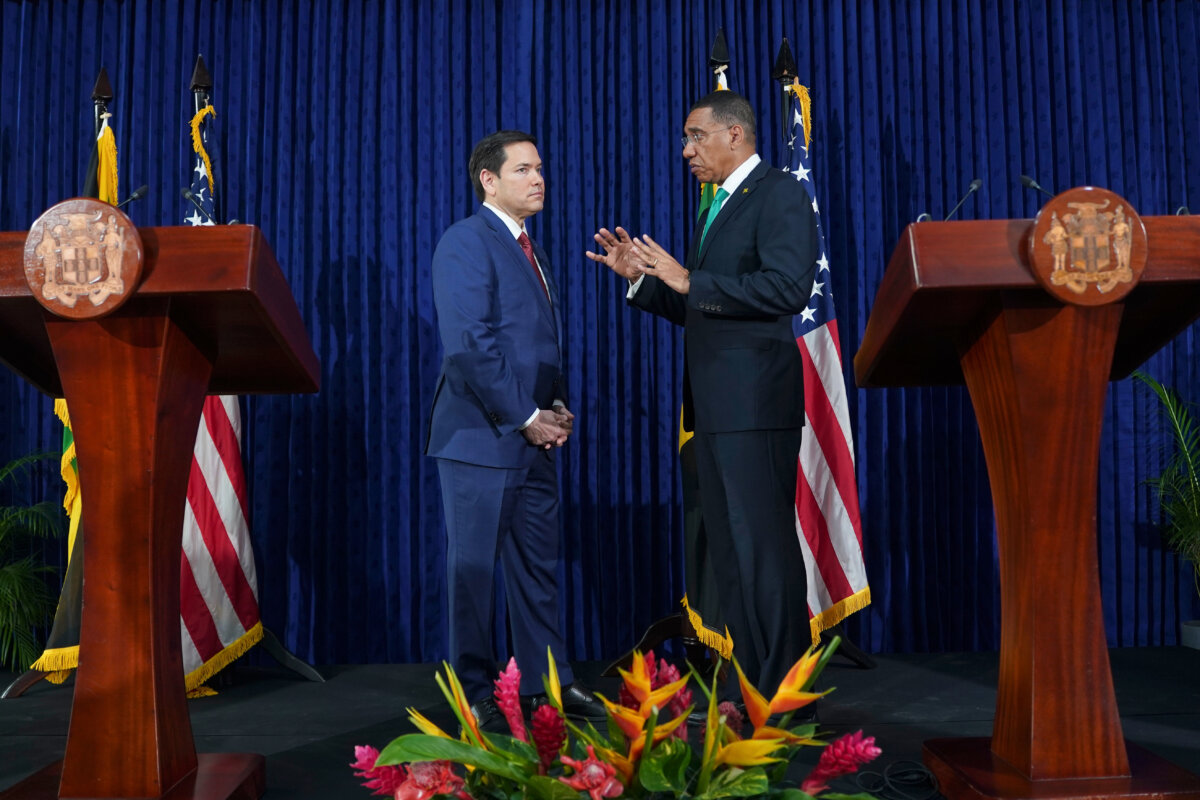
The Dominican Republic signed a nonbinding agreement to temporarily hold a limited number of third-country nationals who were not convicted criminals, while explicitly barring unaccompanied minors and nationals from neighboring Haiti.
Roosevelt Skerrit, prime minister of the Lesser Antilles island nation of Dominica, insisted that violent offenders would be rejected from the agreement that his government made, defending it as a “pragmatic step” to maintain vital bilateral relations with Washington.
The country of Antigua and Barbuda adopted a case-by-case model with tight restrictions. Prime Minister Gaston Browne capped the total accepted at 10 non-criminal individuals.
Venezuela’s neighbor Guyana is considering a scheme funded by the United States to accept skilled, non-criminal migrants, to plug a shortfall of 80,000 workers needed to sustain the country’s oil boom.
‘Every Tool Available’
DHS said in a statement issued in September 2025 that the department and Trump were using “every tool available to get criminal illegal aliens out of American communities” and the United States.
“If you come to our country illegally and break our laws, you could end up in CECOT [maximum security prison in El Salvador], Eswatini, South Sudan, or another third country,” the statement reads.
Trump’s pledge to oversee mass deportations of illegal immigrants, particularly targeting criminal gang members, was a centerpiece of his 2024 election campaign. The policy is popular with the majority of Americans, with a January 2025 Ipsos poll finding that two-thirds of respondents supported the goal of removing those without the right to remain.
Support was somewhat lower, at 34 percent, for deporting illegal immigrants to third-party countries or deporting people who were brought into the country illegally as children.
DHS last year introduced an app designed to facilitate self-deportation for immigrants living illegally in the United States.
Trump has urged those without the legal right to remain in the country to leave voluntarily, with a $2,600 exit bonus, rather than face action by law enforcement.
Reuters and The Associated Press contributed to this report
 Friends Read Free
Copy
Facebook
Tweet
Friends Read Free
Copy
Facebook
Tweet