
Japan’s Self-Defense Forces fired a Type 88 surface-to-ship missile on May 6 during a joint maritime exercise with U.S., Philippine, and Australian forces in the northern Philippines.
The live-fire drill hit a decommissioned Philippine Navy vessel, the BRP Quezon, in waters facing the South China Sea. It took place about 75 kilometers (about 47 miles) off the coast of Paoay in Ilocos Norte province.
Philippine military officials said two volleys struck the target within six minutes of launch.
Philippine Defense Secretary Gilberto Teodoro and Japanese Defense Minister Shinjiro Koizumi witnessed the firing from the ground. President Ferdinand Marcos Jr. watched via live video feed from Manila.
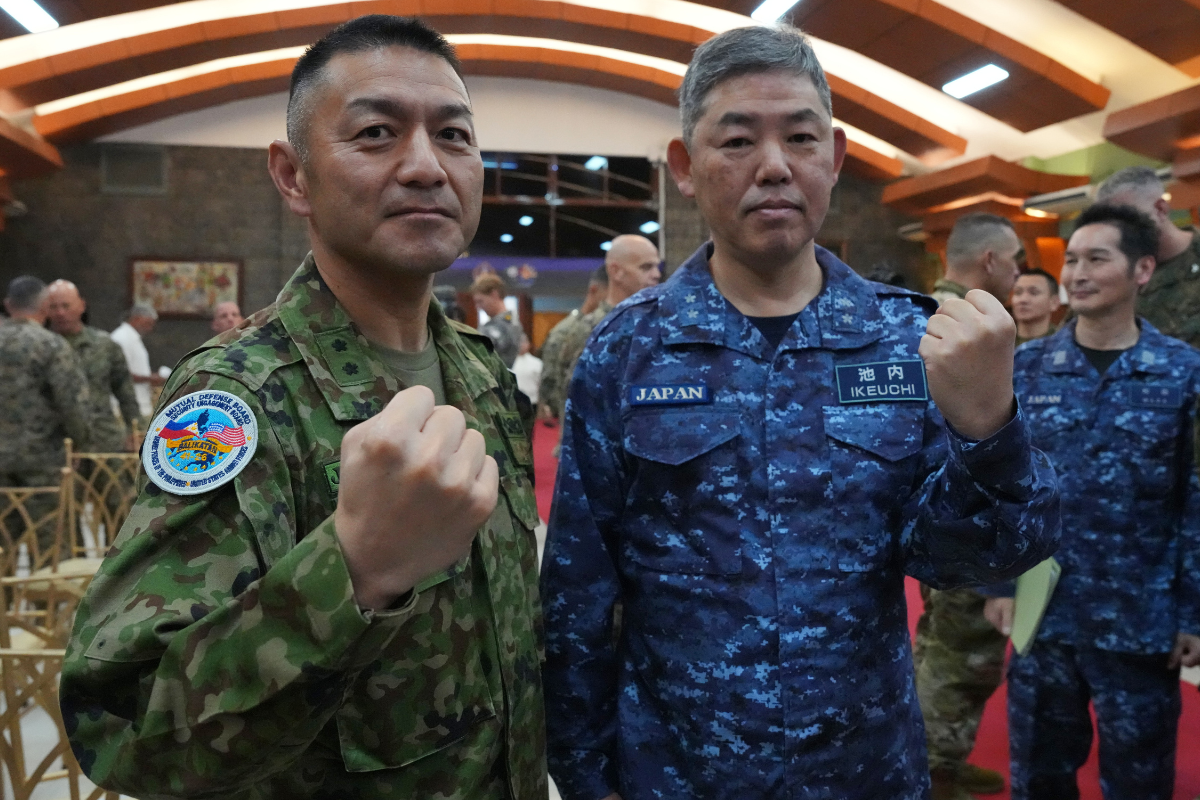
The exercise formed part of Balikatan 2026, the annual “shoulder-to-shoulder” drills between the Philippines and the United States. Australia is a regular participant, and Japan joined as an active participant for the first time, along with Canada, France, and New Zealand.
More than 17,000 troops from several countries took part, including about 10,000 Americans and about 1,400 from Japan.
“I’m very, very proud and happy that we were able to pull this off for the first time, and it will only get larger in scope with more partners,” Teodoro said.
The Philippine Department of National Defense described the Type 88 system as designed to defend coastal areas and deter maritime threats.
The missile firing came one day after Teodoro and Koizumi met in Manila. They agreed to start working-level talks on transferring Japanese defense equipment, including surplus Abukuma-class destroyers and TC-90 trainer aircraft.
Japan recently eased restrictions on military exports, opening the way for such transfers. The Abukuma-class ships, commissioned in the late 1980s and early 1990s, carry anti-ship and anti-submarine weapons.
The Philippine Navy has few heavily armed combat vessels, relying mostly on offshore patrol boats.
In their joint statement, the two ministers expressed serious concern over coercive activities in the South China Sea and East China Sea. They reaffirmed opposition to unilateral changes to the status quo by force.
The South China Sea is a busy trade route linking the Pacific and Indian Oceans. Tensions there have risen over China’s claims and encounters with Philippine vessels.
Japan and the Philippines are both U.S. treaty allies. Their closer defense cooperation aims to support regional stability and freedom of navigation.
China has criticized the exercises, saying they increase tensions.
The Balikatan drills, running April 20 to May 8 this year, include a range of training activities to improve coordination among partners.
Reuters contributed to this report.
 Friends Read Free
Copy
Facebook
Tweet
Friends Read Free
Copy
Facebook
Tweet