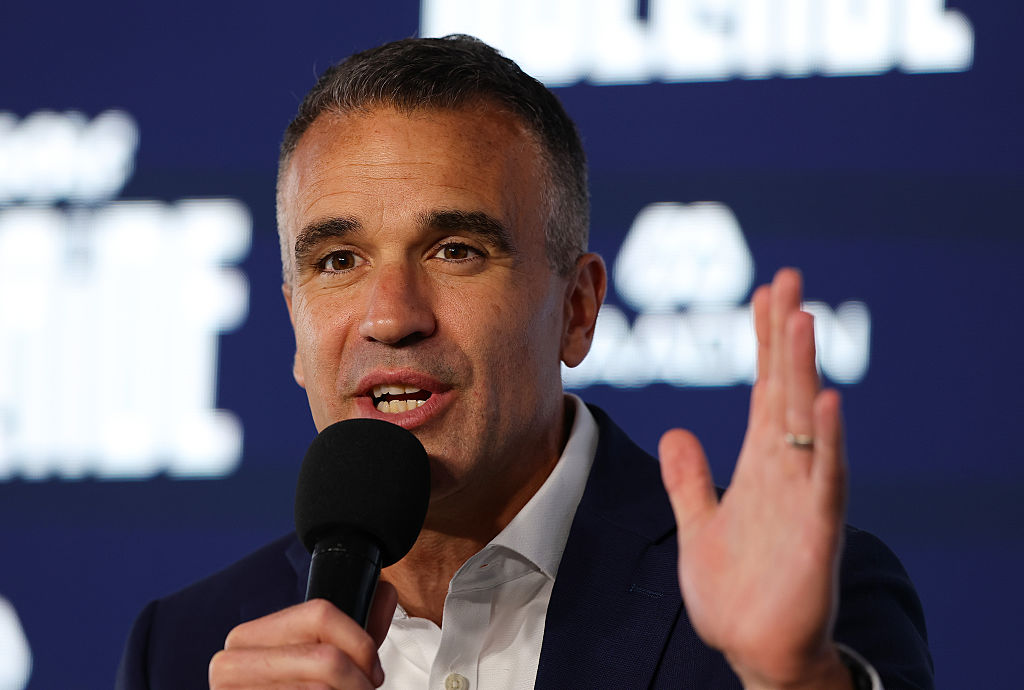

The Malinauskas Labor government has recorded a landslide win in the South Australian state election, and is on track to win 31 of 47 seats in the state’s lower house, the House of Assembly.
At this stage, the centre-left Labor Party has also picked up several centre-right Liberal seats, guaranteeing them victory at the March 21 election.
Labor is poised to take the following seats from the Liberals including Unley, Morialta and Hartley in the capital Adelaide’s east, and Colton in Adelaide’s western suburbs. The Liberals look likely to be reduced to just four seats from 13.
Bragg, a blue ribbon Liberal seat in Adelaide’s east, is likely to be retained by candidate Jack Batty.
However, the conservative-leaning One Nation is proving to be the major story of the night, outpolling the Liberals on a statewide basis, at the time of writing.
Overall, Labor won 37.4 percent of the primary vote so far, followed by One Nation’s 21.3 percent, and the Liberal’s on 20.3 percent.
In terms of swings, One Nation achieved an 18.8 percent swing towards it, while Labor saw a 1.4 percent swing away, and the Liberals saw a major 17 percent away from them. The Greens have achieved a 1.7 percent increase in its vote.
Yet One Nation candidates continue to lead in several regional South Australian seats. However, three and four-way races between candidates means the preference distribution and final seat result may take days for some electoral districts.
Reactions So Far
Labor Treasurer Tom Koutsantonis described the swing against the legacy centre-right Liberals as “seismic.”
“I am shocked,” he said on ABC. “What we’ve seen tonight is the Liberal Party had the worst election result in its history. The Liberal Party are cheering that they won four seats”
Liberal Senator Anne Ruston expressed confidence that state Liberal leader Ashton Hurn—who came into the role in December—would remain as leader.
“The rebuild starts from here,” Ruston said on the same program.
Later, Hurn in her concession speech said she was proud of her campaign and had called Premier Peter Malinauskas.
“We have been sent a message tonight. And it’s not just the Liberals who have been sent a message, it’s the Labor Party as well,” she told the Liberal faithful.
“And we have to acknowledge that, we have to learn from that,” she said.
“We are going to come back stronger than ever.”
Hurn will retain her seat of Schubert. Former Liberal leader Vincent Tarzia has conceded in the seat of Hartley.
Premier Urges Colleagues Against Complacency
Premier Peter Malinauakas delivered his victory speech in front of Labor faithful flanked by his wife Annabel and their children.
Malinauskas said he had been fortunate enough to lead one of the most disciplined, united political parties in the history of Australia’s federation.
However he urged his team not to be complacent.
“To my colleagues, although this is a historic result, although it is the best result our party has ever achieved … we should see it as only being an invitation to continue to work our guts out for the next four years, to make sure the next four years are as busy as the next four years,” he said.
“We have never had more opportunity in this state than what we have before us right now.”
How Did One Nation’s Surge Play Out?
The election was one of the most closely watched because it served as a litmus test on whether One Nation could convert months of popularity in the polls to the ballot box.
Based on current results, One Nation not only appears to have soaked up support from the Liberals, but also from Labor, garnering swings of more than 25 percent in some seats, particularly in regional and outer suburban areas.
In the seat of Mackillop in the state’s south east, One Nation has won 37.4 percent of the vote with the Liberals on 23.3 percent, and the independent on 21.1 percent. The final result will depend on preferences.
In the seat of Mawson in Adelaide’s south, which covers Kangaroo Island, One Nation’s Tyler Green has 27.9 percent of the vote behind Labor on 33.4 percent of the vote.
The Liberals sit on 18 percent, and the Greens on 18.2 percent with preferences likely to be the final decider.
In the working class seat of Elizabeth in the northern outreach of Adelaide, One Nation achieved a 22.7 percent swing towards it, while Labor has suffered a 15.5 percent swing against it while the Liberals lost 13.3 percent of the vote.
However, after preference distribution Labor looks likely to retain this seat with 40.1 percent of the vote compared to 32.5 percent for One Nation.
Liberals and One Nation are currently neck and neck after preferences in the regional seat of Ngadjuri, while One Nation are also edging ahead of Labor in the seat of Hammond.
Hanson’s Reaction
At One Nation’s post-election function, leader Pauline Hanson said it was still early days but very encouraging.
“I’m lost for words, I really am,” she told reporters. “To all the people who have voted for One Nation, please believe me when I say you have got a strong leader in Cory Bernardi here in South Australia.
“I think the rest of Australia is going to be watching what happens tonight.”
Hanson said they were not sure how many seats One Nation would ultimately win, but they would “wait and see what happens next week.”
One Nation leader Cory Bernardi has won his upper house seat along with two other seats for the conservative party.
More than 400,000 people voted early ahead of the election day. These votes will be counted late into the night on election night and beyond.
Pollster Kos Samaras, a former Labor advisor, said the result was a harbinger for future elections at state and federal level.
“If One Nation starts becoming the principal anti-Labor vessel there [in Playford and Elizabeth], the story is no longer just conservative fragmentation. It is a deeper demographic fracture inside the old two-party system that we can translate into all other large cities,” he wrote on X.
Labor’s Dominance in South Australia
Since 1996, South Australia has been governed by Labor for 20 of the past 30 years, and 34 of the past 50 years overall under Premiers Don Dunstan and John Bannon.
Yet this result trumps its previous peak in 2006 when Premier Mike Rann won 28 seats and 57 percent of the two-party-preferred vote, and its 2022 victory when it won 27 seats and 54.6 of the total vote.
In that election Labor also picked up the seats of Dunstan and Black in by-elections from the Liberals to hand it 29 seats.
 Friends Read Free
Copy
Facebook
Tweet
Friends Read Free
Copy
Facebook
Tweet