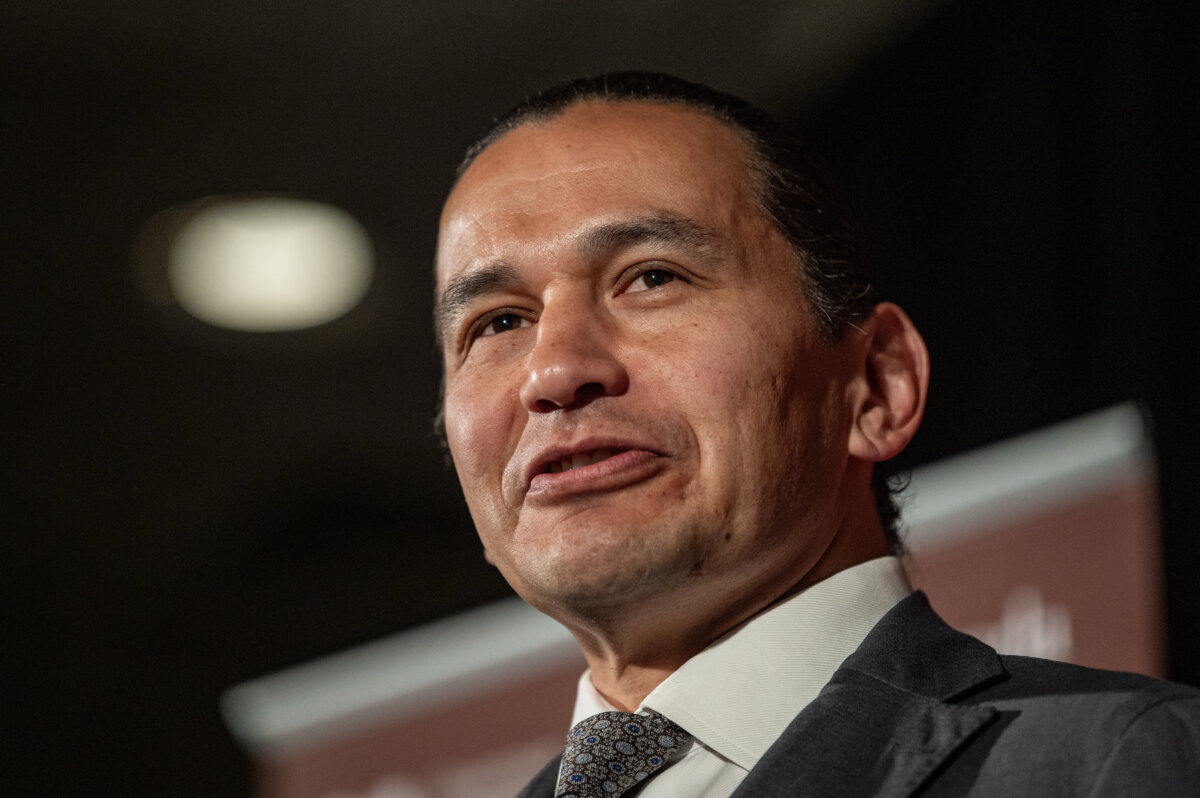

Manitoba Premier Wab Kinew says his province will not administer Ottawa’s gun buyback program and described the planned federal initiative as inefficient while speaking to reporters last week.
Kinew’s Jan. 16 comments position Manitoba among several other provinces that are pushing back against the program designed to compensate gun owners who willingly surrender recently banned firearms.
The federal government has earmarked more than $700 million for the buyback initiative, which covers semi-automatic and so-called assault-style guns.
Kinew said his province is unwilling to assume management of the program, saying it doesn’t appear to be “well run.”
“It’s a federal government program that doesn’t appear to be very efficient, doesn’t appear to be very well run,” Kinew told reporters during a Jan. 16 press scrum. “And so for us, looking at that, why would we want to take on that whole headache? This is not a good program to get involved with.”
Ottawa has banned roughly 2,500 types of what it calls “assault-style” firearms since 2020, saying the guns were meant to be used for warfare, not for sport shooting or hunting.
The government ran a six-week pilot program in Nova Scotia last fall in order to test the system, with a goal of collecting 200 guns. The trial program fell short of that goal, collecting just 25 firearms from 16 individuals, Public Safety Canada said in a report released Jan. 7.
The ban on so-called assault-style firearms was established by former Prime Minister Justin Trudeau in response to the 2020 mass shooting in Nova Scotia, which involved the use of weapons that had been illegally acquired from the United States. Trudeau subsequently declared a ban on the use, sale, and importation of more than 1,500 makes and models of firearms, and this list of prohibited guns was later extended to include more than 2,000 models.
The federal program was officially launched on Jan. 19, with Ottawa saying eligible gun owners can make a declaration online to receive compensation for a banned firearm. Deadline to participate is March 31, and the amnesty period ends on Oct. 30.
Pushback
The Opposition Conservatives have criticized the buyback, saying it targets legal gun owners without addressing illegal guns used in most crime, while Liberals have argued that the “assault-style” weapons falling under the ban are “designed for mass casualties.”
Alberta, Saskatchewan, and the Yukon have previously said they oppose the buyback program and won’t enforce it. Alberta has said the buyback program “undermines” law-abiding citizens and that it fails to address the illegal use of firearms, while Saskatchewan said the initiative has the “wrong approach” for improving public safety, and the Yukon said police resources should instead be invested in tackling crime. The program has also run into roadblocks in Ontario, where the provincial police service has declined to take part in its enforcement.
Quebec is on board with the program, however. The province has maintained its own firearms registry since 2016, collecting information on gun owners’ inventory. Now the province will receive up to $12.4 million to implement the firearms buyback program, Public Safety Minister Gary Anandasangaree announced on Jan. 7. The funding will cover costs incurred by Quebec for coordinating gun collection by local police services.
Kinew said his NDP government is not interested in taking the registry on, even though the province would also receive federal funding to do so.
“We just think there’s a lot of headaches here that are not going to make our community safer,” he said when questioned by reporters about the potential funding. “If we’re looking at taking away weapons from criminals, from people who are causing violence in our streets, I’m all for that. But this program doesn’t look like it’s going to achieve that end. Instead, it’s going to create other issues around administration and cost.”
Anandasangaree said in a Jan. 17 news release that “prohibiting and removing” banned firearms from communities “is an important part of our government’s commitment to tackling gun violence and keeping Canadians safe.”
He said the program is about safety, but also about ensuring owners receive “fair compensation” for turning in illegal guns.
“I urge all owners of prohibited assault-style firearms to declare their weapons so they can seek compensation. While participation is voluntary, abiding by the law is not,” he said.
 Friends Read Free
Copy
Facebook
Tweet
Friends Read Free
Copy
Facebook
Tweet