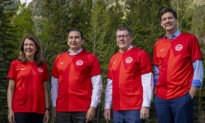
Manitoba Premier Wab Kinew says Alberta Premier Danielle Smith is wrong in her belief that a recent court ruling against a petition calling for a separation referendum is “anti-democratic,” saying the court’s decision rightly called for proper First Nations consultation.
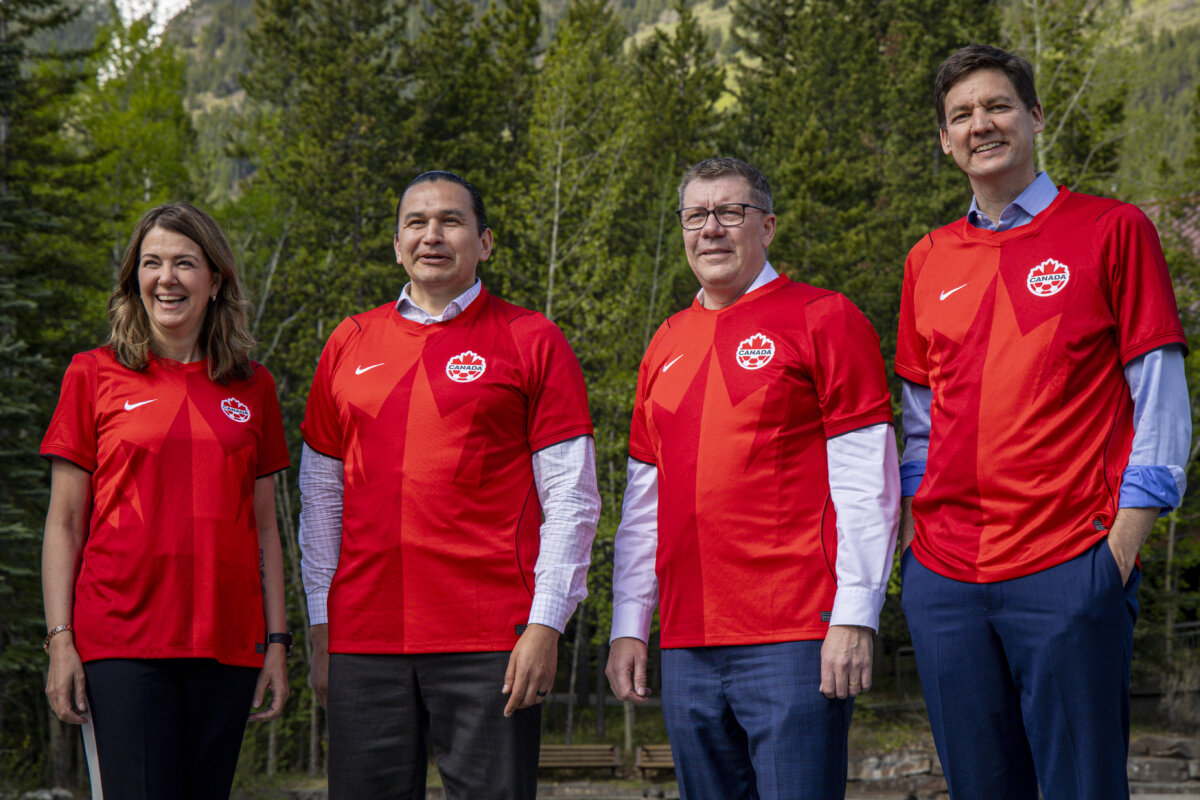
Kinew made the remarks in response to a question addressed to Smith on her government’s upcoming referendum related to separation, during a press conference at the Western Premiers’ Conference in Kananaskis, Alta., on May 26.
In the exchange, Smith had commented that the “duty to consult” First Nations and indigenous peoples needs to be more clearly defined by the courts and that she does not agree with the May 13 court ruling that overthrew a citizen-led petition asking for a referendum to separate from Canada. She has said that her government will appeal the court ruling.
In her decision, the judge said the petition drive was unlawful as First Nations had not been adequately consulted by the Crown prior to the petition drive going ahead.
“I think that the court erred in judgment, and I think it’s also anti-democratic, the decision that they made,” she said. “But we’ll make the arguments in court about what the limits to duty to consult ought to be, and we’ll see how that conversation goes.”
Kinew then said he wanted to comment on the issue as well.
“That is not correct, a lot of what you just said there, Premier Smith, specifically, and we spoke about this, so I don’t mind repeating this,” Kinew said.
“It is not up to the petition gatherers to fulfill the duty to consult. It is up to you, as the Alberta government, to fulfill the duty to consult, and in this case, when there is clearly going to be an impact on well-established existing hunting and fishing rights by putting up an international border if some would have their way, the judge ruled … that is going to infringe on rights, and so there is a duty to consult,” he added.
The disagreement between Kinew and Smith occurred during the annual conference of western premiers in Kananaskis, Alta., a two-day meeting that also includes the premiers of Saskatchewan, Yukon, Northwest Territories, and Nunavut.
Following his exchange with Smith, Kinew posted a video clip on social media and commented “I love Canada.”
Kinew is Anishinaabe and originally comes from the Onigaming First Nation in northwestern Ontario. He has served as premier of Manitoba since 2023 and is a member of the province’s New Democratic Party (NDP).
Smith responded to Kinew’s comment by saying the courts will decide what is the right course of action.
“This is why we have the courts. Because you can have politicians disagree, and that’s why you take it through the court, you take it through the appeals, and you go to the Supreme Court,” Smith said.
In his remarks, Kinew noted recent developments in building new energy projects and pipelines, adding that B.C. Premier David Eby has also been pushing for LNG projects.
“Why don’t we hold off on this referendum talk for a year or two, and see if we get these pipelines under construction?” Kinew said. “Because at the end of the day, we want Canada to succeed.”
Ottawa and Alberta have recently signed an agreement to build a new oil pipeline to the West Coast if a private proponent comes forward. Smith has said the agreement is a sign that things are turning in Alberta’s favour, using it to persuade separatists that Alberta should remain within Canada. Eby has been opposed to the project, saying the tanker ban in northwest B.C. should remain in place.
Alberta Referendum
Kinew’s comments come in the wake of Smith’s May 21 announcement that Alberta will include a referendum question in its upcoming Oct. 19 referendum asking Albertans whether the province should stay as part of Canada or begin a legal process to hold a binding referendum on separating from Canada.
A previous referendum petition by the pro-separation group Stay Free Alberta had collected more than 300,000 signatures, far above the required amount to trigger a referendum vote. The group submitted the signatures to Elections Alberta for validation, but the process couldn’t begin due to the court’s ruling.
In the May 13 court decision throwing out the petition, Justice Shaina Leonard found that Alberta’s Chief Electoral Officer had unlawfully approved the referendum petition as there had not been sufficient consultation done with First Nations who have made the case that their treaty rights will be significantly impacted by potential separation.
Smith has said the court made an error in law and that her government will be appealing the decision. Stay Free Alberta has already launched an appeal against the decision.
The Alberta premier noted that she supports Alberta remaining in Canada and will campaign for this objective, but said the referendum question is necessary to include in order to ensure that citizen-led petitions that meet legal requirements are given a voice. She said the appeal process could take months or years, and that’s why she decided to include a question related to the issue in the upcoming referendum in October.
Smith said her government’s referendum question is not binding, and therefore it doesn’t violate the court’s ruling.
 Friends Read Free
Copy
Facebook
Tweet
Friends Read Free
Copy
Facebook
Tweet