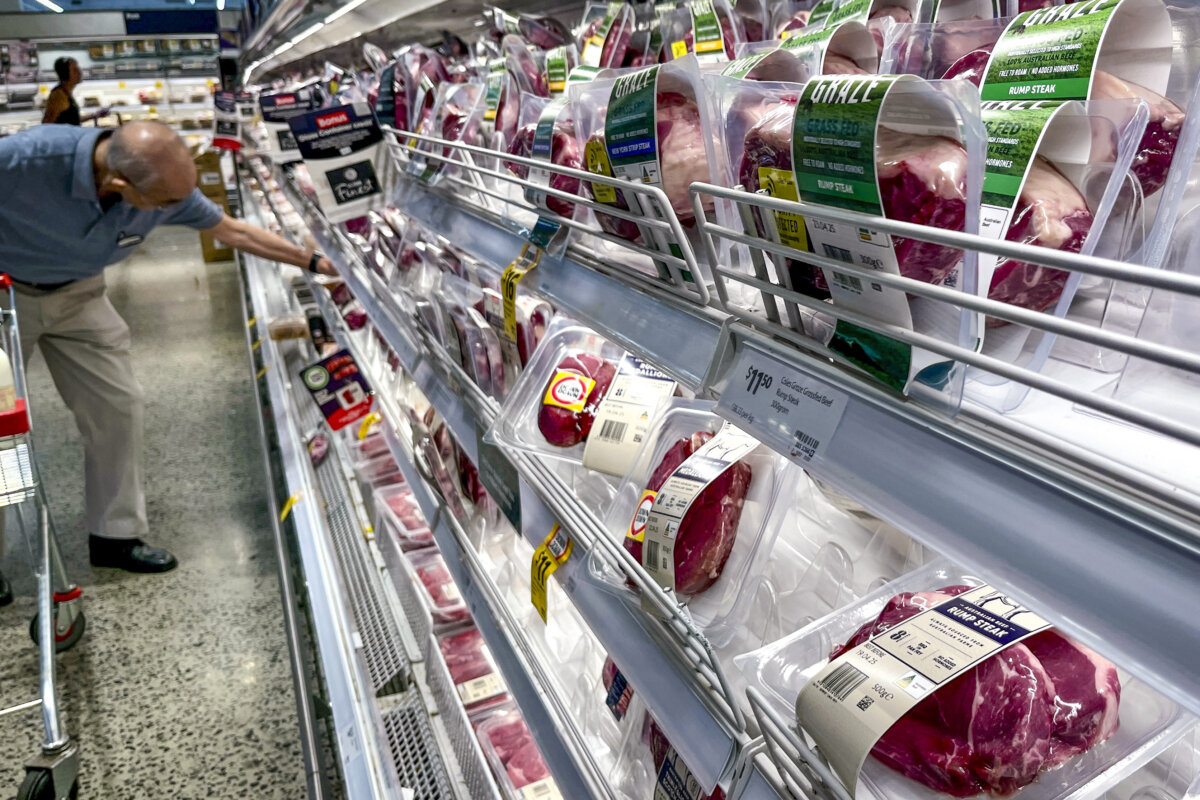

Meat farmers are being urged to support the free trade agreement (FTA) Australia signed with the EU on March 24, but they say it is the “worst ever” deal.
The two sides struck an agreement to expand trade across a range of areas after 8 years of negotiations. Australia has agreed to remove a 5 percent tariff on imports of EU products, which affects everything from cars to fashion products, food, and drinks.
In return, the EU will drop tariffs on a wide range of Australian goods, including critical minerals, manufactured items, and many dairy products.
Concerns about EU’s Subsidies for Meat Products
While the FTA will reduce tariffs on Australian meat exports, local farmers are concerned they may struggle to compete with EU producers on price due to heavy subsidies in the bloc.
The National Farmers’ Federation (NFF) pointed out that the EU would continue to tilt the playing field in favour of its producers even after the FTA was signed.
“Market access is the lifeblood of Australian farmers who do not rely on government subsidies. We are concerned the EU has offered subpar access for Australian producers while potentially needing to deploy billion-dollar subsidies to get their producers to accept the deal,” it said in a statement.
“This is exactly what happened when the EU signed a deal with the Mercosur nations, fast-tracking nearly $80 billion in farm subsidies, sending a clear signal protectionism is alive and well.
“They [Australian farmers] will now pay the price for this subpar EU deal for decades to come.”
But Trade Minister Don Farrell pointed out the agreement means expanded access to Europe for Australian red meat, and publicly asked the industry to “come on board” with the deal, describing it as “a vital moment for them.”
“We’ve got an 800 percent increase in our access to the European market as a result of this agreement,” he told ABC Radio.
“If we can’t demonstrate to the rest of the world that Australia is capable of negotiating free and fair trade agreements, then we’ve got a big problem in this country.”
According to data from the EU parliament, the bloc spent €38.16 billion (A$63.53 billion) on direct payments to farmers and €12.95 billion on rural development in 2023. A further €2.67 billion was allocated to support agricultural markets.
Overall, the EU’s agricultural subsidy budget for 2021–2027 totals €386.6 billion.
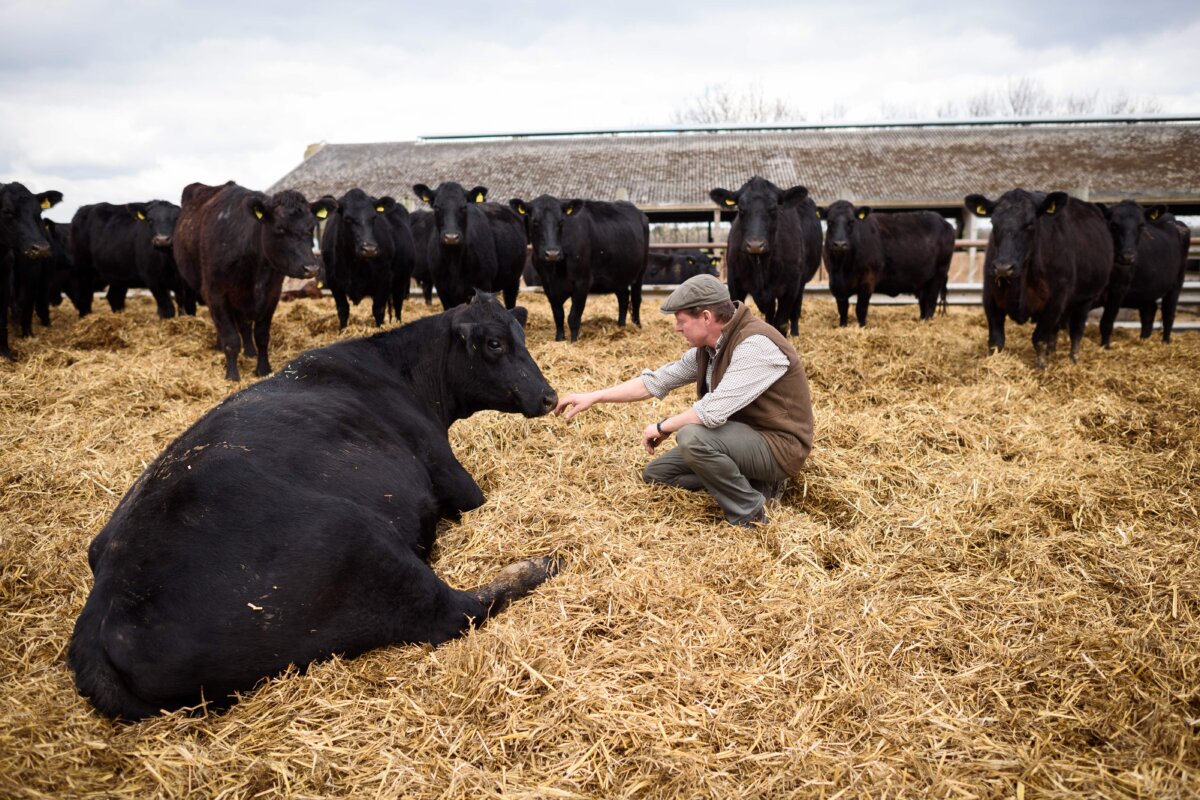
(Leon Neal/AFP via Getty Images)
Locked In To Low Volumes
Under the FTA, Australia can export up to 30,600 tonnes of beef (phased in over 10 years) and 25,000 tonnes of sheep and goat meat (phased in over seven years) to the EU. These amounts comprise a mix of duty-free and reduced-duty quotas.
However, Farmers Federation President Hamish McIntyre said what the government achieved fell well short of the amounts Australian producers wanted.
“This is a long-term, generational agreement … it’s for 10, 20, 30, 40 years,” he said. “We have locked ourselves into very low volumes for a long period of time. That’s where the great frustration is coming from.”
Sheep Producers Australia CEO Bonnie Skinner also said the deal for sheep meat was largely unchanged from the one Australia had earlier rejected.
“The increase in access is small and, critically, it does not unlock real commercial opportunities,” she said. “For a premium market like the EU, this falls short of what was needed.”
Australia–EU Red Meat Market Access Taskforce Chair Andrew McDonald also expressed his disappointment with the outcome of the FTA negotiations.
“The Australian red meat industry has been crystal clear that the FTA negotiations were the ideal mechanism to finally address the EU’s punitive and highly discriminatory import regime,” he said.
“Yet the agreement delivers just 30,600 tonnes of beef access over the next ten years, when a minimum of 50,000 tonnes was required simply to be in line with what the EU has offered our competitors.
“On sheepmeat and goatmeat, the result is equally disappointing: 25,000 tonnes over seven years, despite the Australian industry requesting a minimum of 67,000 tonnes.”
McDonald noted the quotas were in stark contrast to New Zealand’s 163,769 tonnes of red meat access, calling it an “outrageous discrepancy.”
 Friends Read Free
Copy
Facebook
Tweet
Friends Read Free
Copy
Facebook
Tweet