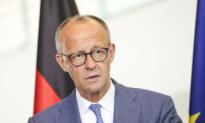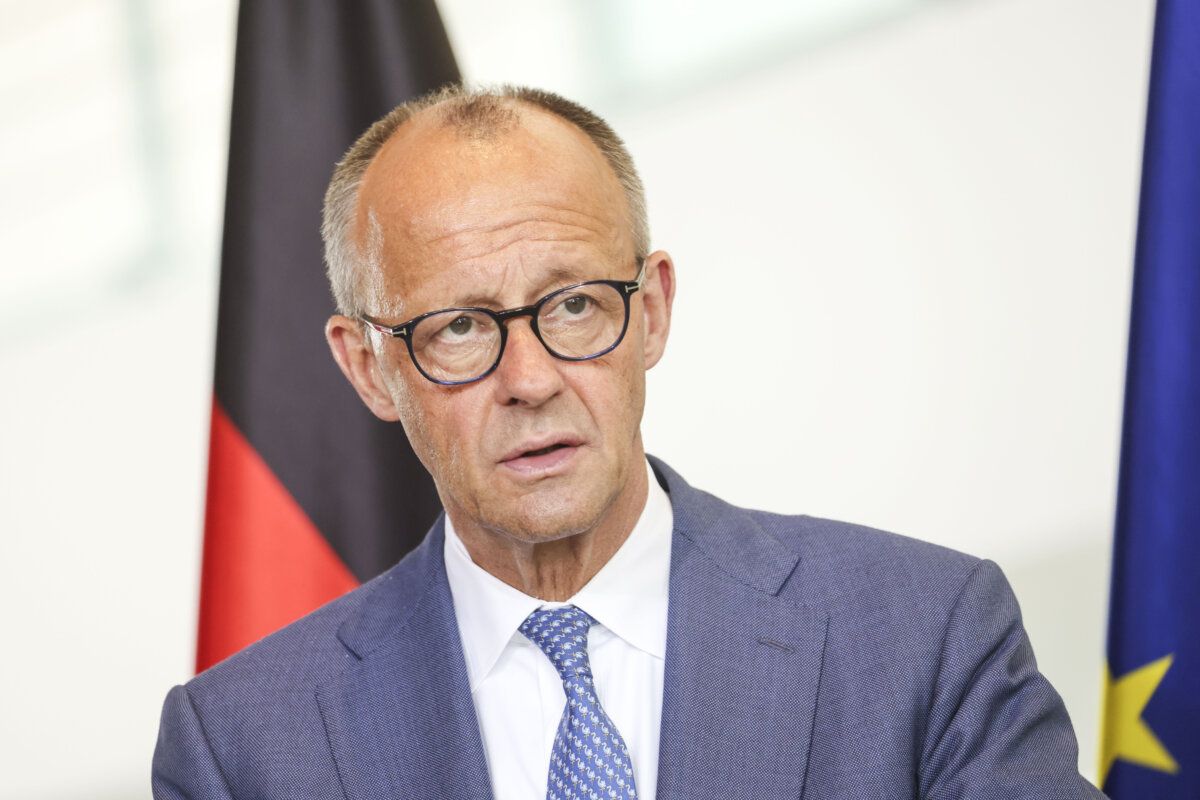

German Chancellor Friedrich Merz has urged the European Union to show that it is both willing and able to admit new members, as EU leaders met with Western Balkan counterparts seeking to join the bloc.
Merz made the comments at a summit in the Montenegrin coastal town of Tivat on June 5, where leaders discussed the future of EU enlargement amid renewed geopolitical pressure from Russia’s war in Ukraine and growing competition for influence in southeastern Europe.
“The European Union has to show that it is capable of enlarging and willing to enlarge, and we want to discuss that here,” Merz said.
“There are, of course, a whole range of questions that we must answer, that we must answer together, but above all else, it must be clear that this part of Europe belongs within the European Union’s future.”
Merz acknowledged that the bloc’s expansion process has stalled in recent years.
“The fact that we have not admitted any new members for 13 years now shows that there have also been shortcomings on the part of the European Union,” Merz said.
The summit brought together leaders from the six Western Balkan countries seeking EU membership, including Albania, Bosnia and Herzegovina, Serbia, Montenegro, North Macedonia, and Kosovo.
Each candidate is at a different stage of the accession process. The last country to join the bloc was Croatia in 2013. Before that, Bulgaria and Romania entered the EU in 2007.
Western Balkans
Despite growing political support for enlargement, joining the EU remains a lengthy and demanding process. According to the EU’s enlargement framework, any European country can apply for membership if it meets the Copenhagen criteria.
These requirements include stable democratic institutions, respect for human rights and the rule of law, a functioning market economy, and the ability to implement and comply with EU laws.
Each stage of the accession process requires approval from all 27 member states, often making negotiations lengthy and politically sensitive.
The six Western Balkan countries participate in a special accession framework known as the Stabilisation and Association Process. The program aims to prepare candidate countries for membership through economic reforms, closer political cooperation, and gradual integration with EU institutions.
Among the candidate countries, Montenegro is widely regarded as the most advanced applicant.
With a population of about 630,000 people, Montenegro is often viewed as one of the easier countries for the EU to absorb. However, officials and analysts say challenges remain, particularly in corruption, governance, and judicial reform.
Montenegro has set a goal of joining the bloc by 2028, though many observers consider that timeline ambitious.
Merz said in a June 5 post on X that Germany would want the Western Balkan states to join the EU “as quickly as possible.”
“The fact that we haven’t admitted any new members in 13 years also shows shortcomings of the EU,” he said. “We want to overcome those today.”
Ukraine’s EU Future
EU enlargement has gained renewed attention since the onset of the Ukraine war in 2022.
Ukraine has made membership a strategic priority, seeing EU accession as a way to anchor itself more firmly within European political and economic institutions.
Ukrainian Prime Minister Yulia Svyrydenko said in a June 3 post on X that Ukraine is “one step closer to the EU membership” after all 27 member states agreed to open negotiations with Ukraine and Moldova on the first cluster of issues in their accession talks.
Merz last month suggested granting Kyiv a new status of “associate member,” which would allow Ukrainian officials to participate in EU summits and ministerial meetings without voting rights.
The proposal would create an intermediate stage between candidate status and full membership.
Recently elected Hungarian prime minister Peter Magyar has suggested that his country’s objections to Ukraine’s EU membership could soon be resolved.
His predecessor, Viktor Orbán, strongly opposed Ukraine’s accession bid and described what he said was an EU effort to accelerate the war-torn country’s membership process as “an open declaration of war against Hungary.”
Markus Frohnmaier, a senior member of Germany’s largest opposition party, Alternative for Germany (AfD), criticized Merz’s support for Ukraine’s EU ambitions, in a June 5 post on X.
“Friedrich Merz is putting pressure on Hungary for an EU accession of Ukraine,” Frohnmaier wrote. “My position as the foreign policy spokesman of the AfD is clear: A EU accession of Ukraine is not in Germany’s interest.”
Frohnmaier said that Ukrainian membership would bring “immense financial burdens and the risk of war” for Germany and pledged that an AfD-led government would oppose Ukraine’s joining the bloc.
Reuters contributed to this report.
 Friends Read Free
Copy
Facebook
Tweet
Friends Read Free
Copy
Facebook
Tweet