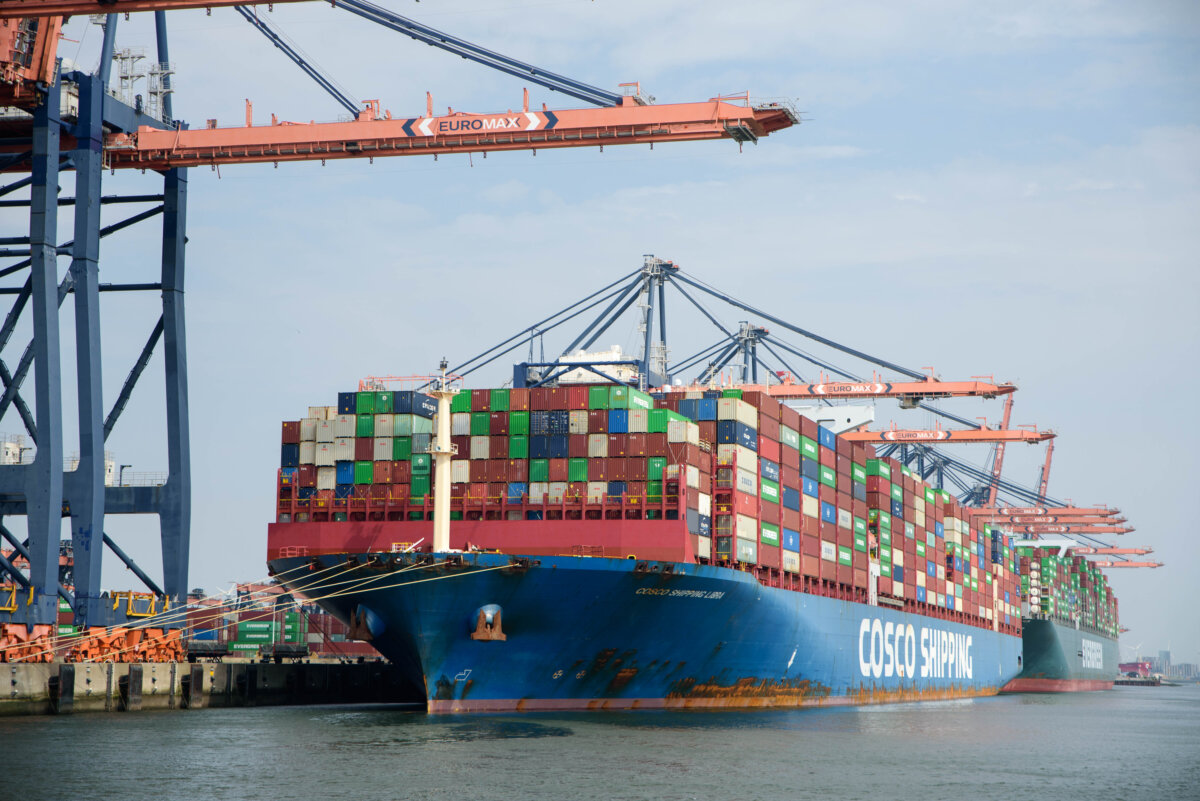

China’s economic woes and U.S. tariffs are turning the European Union into a vital outlet for Chinese overcapacity, leaving Beijing unable to afford a trade war with the bloc, experts say.
European manufacturers are losing ground in global markets to China’s industrial transformation, especially in machinery and transport equipment, the European Central Bank said Sept. 22.
German companies have suffered some of the heaviest blows, the bank said in an Economic Bulletin.
The analysis came days after European Commission President Ursula von der Leyen said in her annual State of the Union address to the European Parliament on Sept. 16 that the EU’s trade deficit with China, now 1 billion euros ($1.14 billion) per day, has reached a “tipping point.”
Brussels will use “all the tools” to rebalance the trade relationship with China, she said.
Meanwhile, Chinese Foreign Minister Wang Yi said in a Sept. 21 phone call with his German counterpart Johann Wadephul that China and the EU are comprehensive strategic partners and that “a trade war should not be waged between them.”
“Wang Yi is asking Berlin to keep the bloc from going harder on tariffs,” Alicia Garcia-Herrero, senior research fellow at Bruegel, told The Epoch Times.
“China is also dealing with the United States at the same time and does not want a second front.”
Garcia-Herrero said Germany is the EU economy that matters most inside Brussels, and European leaders are due to review the China deficit and possible new measures in October.
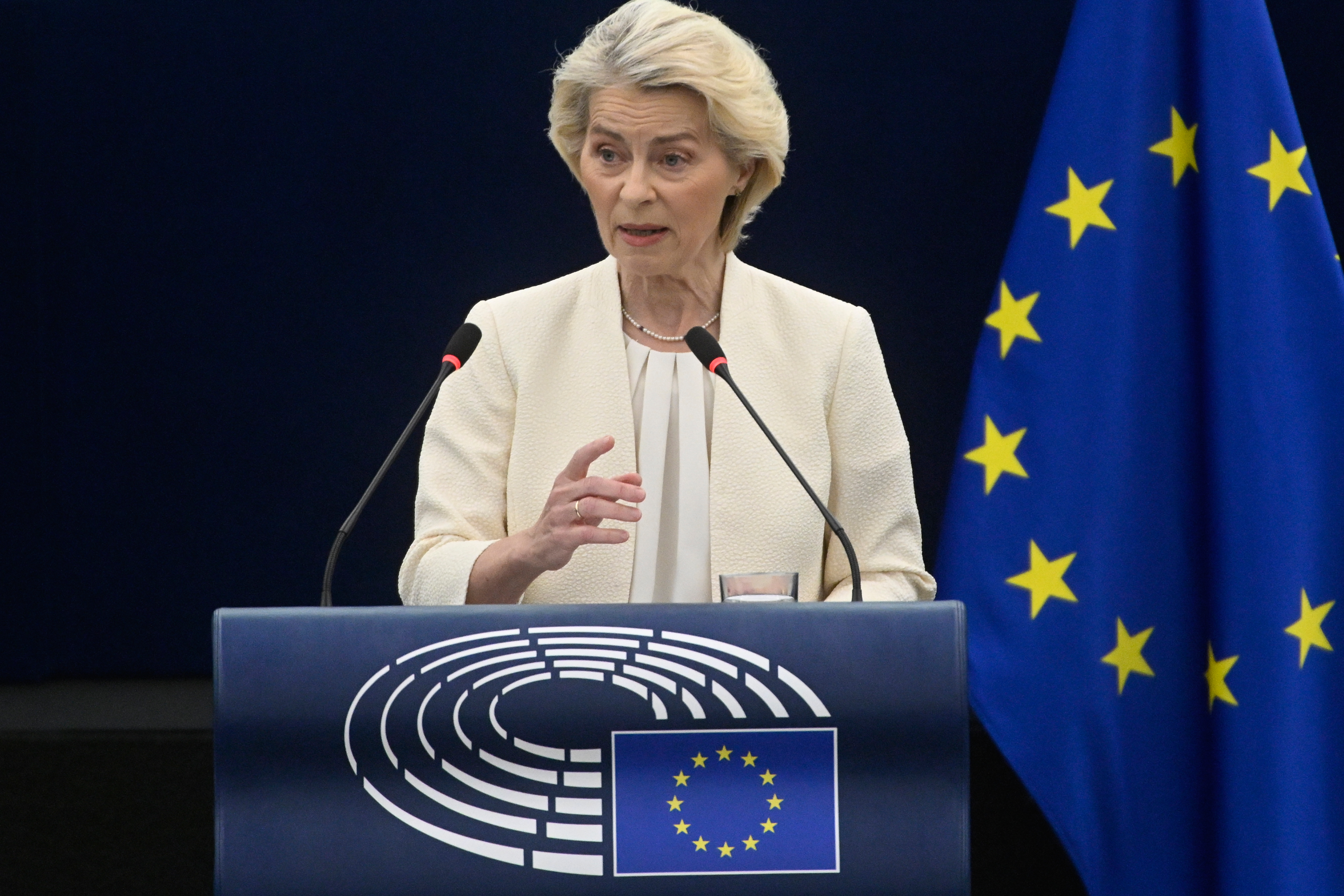 European Commission President Ursula von der Leyen delivers a speech at the annual State of the European Union at the European Parliament in Strasbourg, eastern France, on Sept. 16, 2026. (AP Photo/Pascal Bastien, File)
The EU accounts for about 25 percent of China’s electric vehicle exports, making the bloc the main destination for these shipments, according to a Bruegel report published in September.
Tsai Ming-fang, a professor of industrial economics at Tamkang University in Taiwan, said Brussels has repeatedly signaled plans to limit Chinese electric vehicles, leaving Beijing deeply concerned about further trade clashes with the bloc.
“Once a trade war with the EU breaks out, China will lose yet another high-value market,” Tsai told The Epoch Times.
“If the United States and the EU both turn away from Chinese goods, China’s overall foreign trade will take a massive hit.”
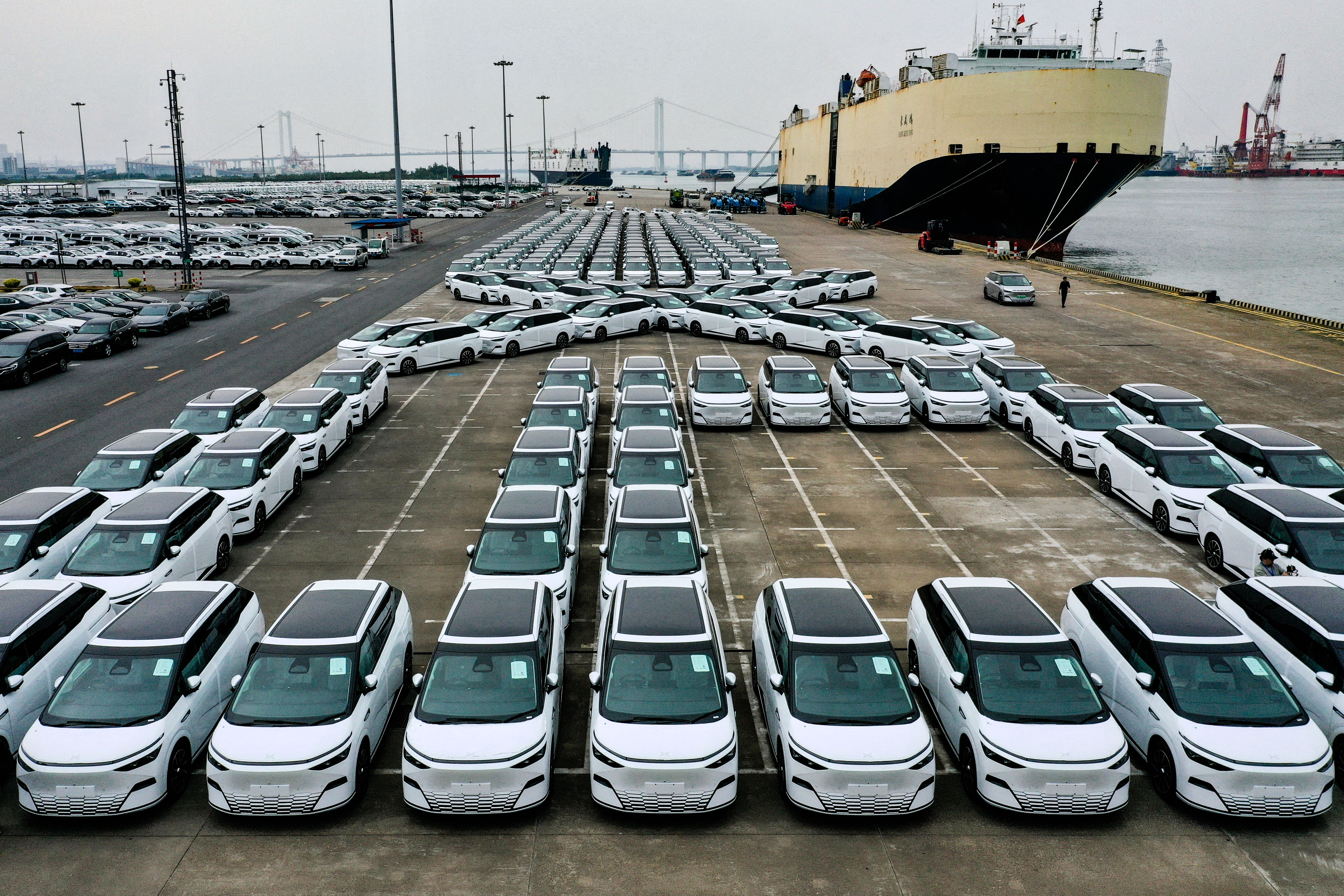 X9 electric vehicles from Chinese EV manufacturer XPeng wait to be exported to Thailand at the Port of Guangzhou, in China’s southern Guangdong province, on Feb. 22, 2025. (Pedro Pardo/AFP via Getty Images)
“[Electric vehicles] from China have already swept into the European market. If regulators do not keep up the pressure, Germany’s auto industry, and even the bloc’s, could be wiped out,” Tsai said.
China’s Economic Troubles
Tsai said Wang’s remarks also expose the depth of China’s economic troubles, especially feeble household spending.
“Consumption in China has been sluggish for a long time,” he said.
“Beijing’s decision in late August to stretch mortgages to 40 years as home prices plunged shows how badly the economy is faring.”
China’s retail sales grew just 0.4 percent in August from a year earlier, missing the 0.8 percent economists had forecast, according to data released Sept. 15 by the National Bureau of Statistics.
Tsai said shrinking domestic demand leaves China under persistent overcapacity pressure, and if exports also stall, it will be squeezed “from within and without.”
The regime’s biggest economic headache is that its cheap goods now alarm nearly every trading partner, prompting governments to steadily impose restrictions, Tsai said.
“It will become increasingly difficult for China to keep grabbing other countries’ markets with this low-price strategy,” he said.
 Office buildings and apartments in Tianjin, China, on July 14, 2026. (Adek Berry/AFP via Getty Images)
“Factories are producing more than Chinese households will buy,” she said.
“After U.S. tariffs, Europe is the largest market that can absorb that surplus.”
China’s trade surplus with the EU reached 1.67 trillion yuan ($248.8 billion) in the first eight months of 2026, about 30 percent of its total trade surplus, according to China’s General Administration of Customs.
Deindustrialization
Tsai said China’s industrial overcapacity and surging exports could speed up deindustrialization across the bloc.
“Deindustrialization means that as industries are gutted and fewer people buy their products, more and more factories close,” he said.
“Chinese products may be far inferior in quality, but fierce price competition is sharply eroding European manufacturers’ profit margins.”
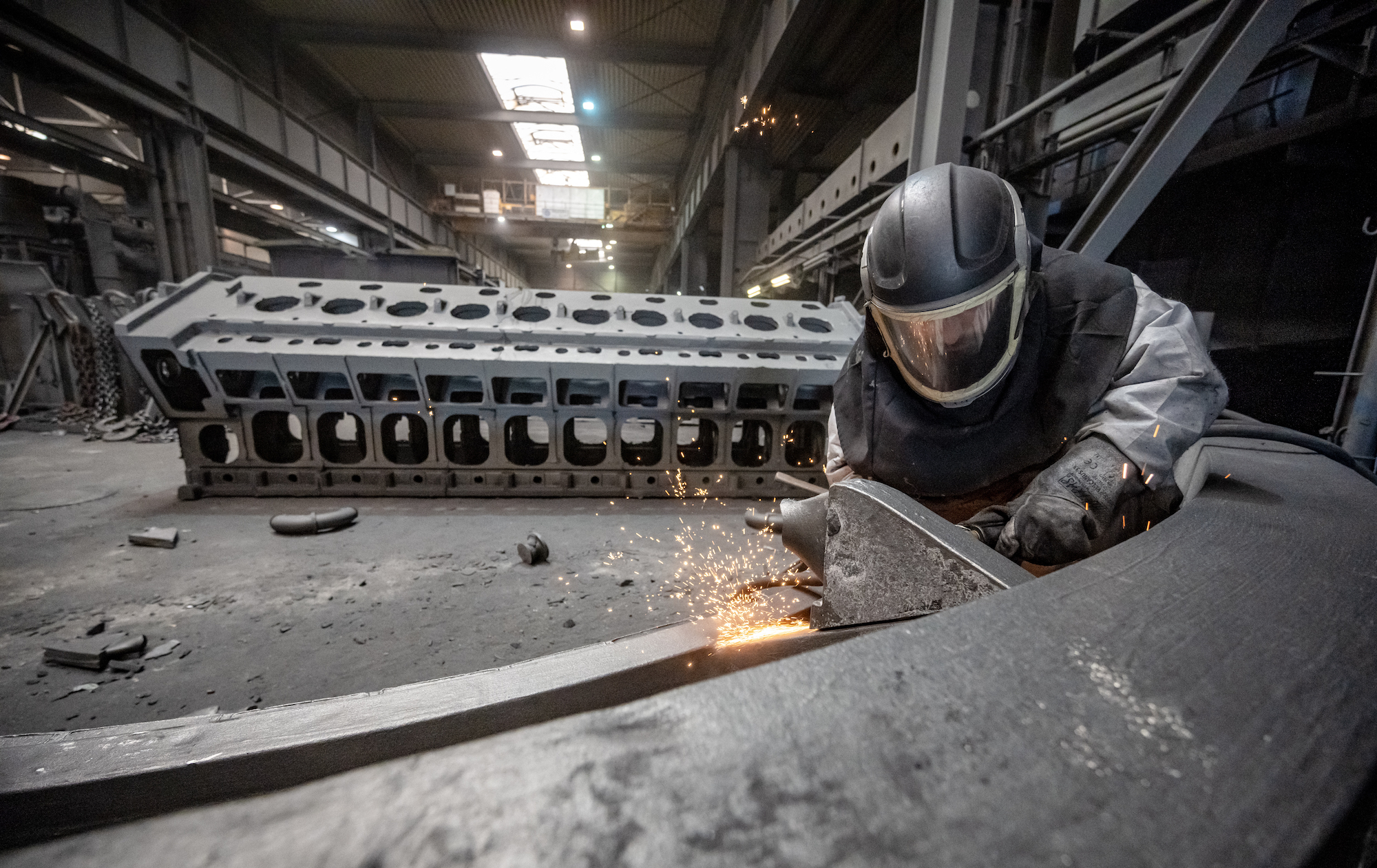 A worker deburrs a casting at the Siempelkamp Giesserei foundry in Krefeld, Germany, on April 21, 2022. (Sascha Schuermann/Getty Images)
“China has exported huge volumes of solar cells to Europe, forcing companies there to shut down.”
China accounted for 98 percent of the EU’s solar panel imports in 2024, according to an October 2025 news article by Eurostat, the bloc’s statistics agency.
No Easy Exit
Garcia-Herrero said China will try to sell more products to developing markets, build factories abroad, and exert pressure on supply chains.
“That can shift some exports,” she said.
But Garcia-Herrero said it cannot fully replace European demand.
“A lasting EU clash would force Beijing to lean even more on a growth model that is already under strain at home,” Garcia-Herrero said.
Tsai said that if trade ties with the EU sour, China will most likely dump its goods in Southeast Asia—the country’s largest export market—but the move could backfire in the long run.
“The damage is twofold: First, if China is left with only Southeast Asian buyers, its profits will shrink, because prices there must be even lower than in Europe,” he said.
“Second, Chinese manufacturers, which already have many factories and goods in Southeast Asia, would be locked in cutthroat competition with one another.”
Tsai said Chinese “origin washing” would likely grow more rampant if the EU and the United States both impose broad curbs on Chinese goods.
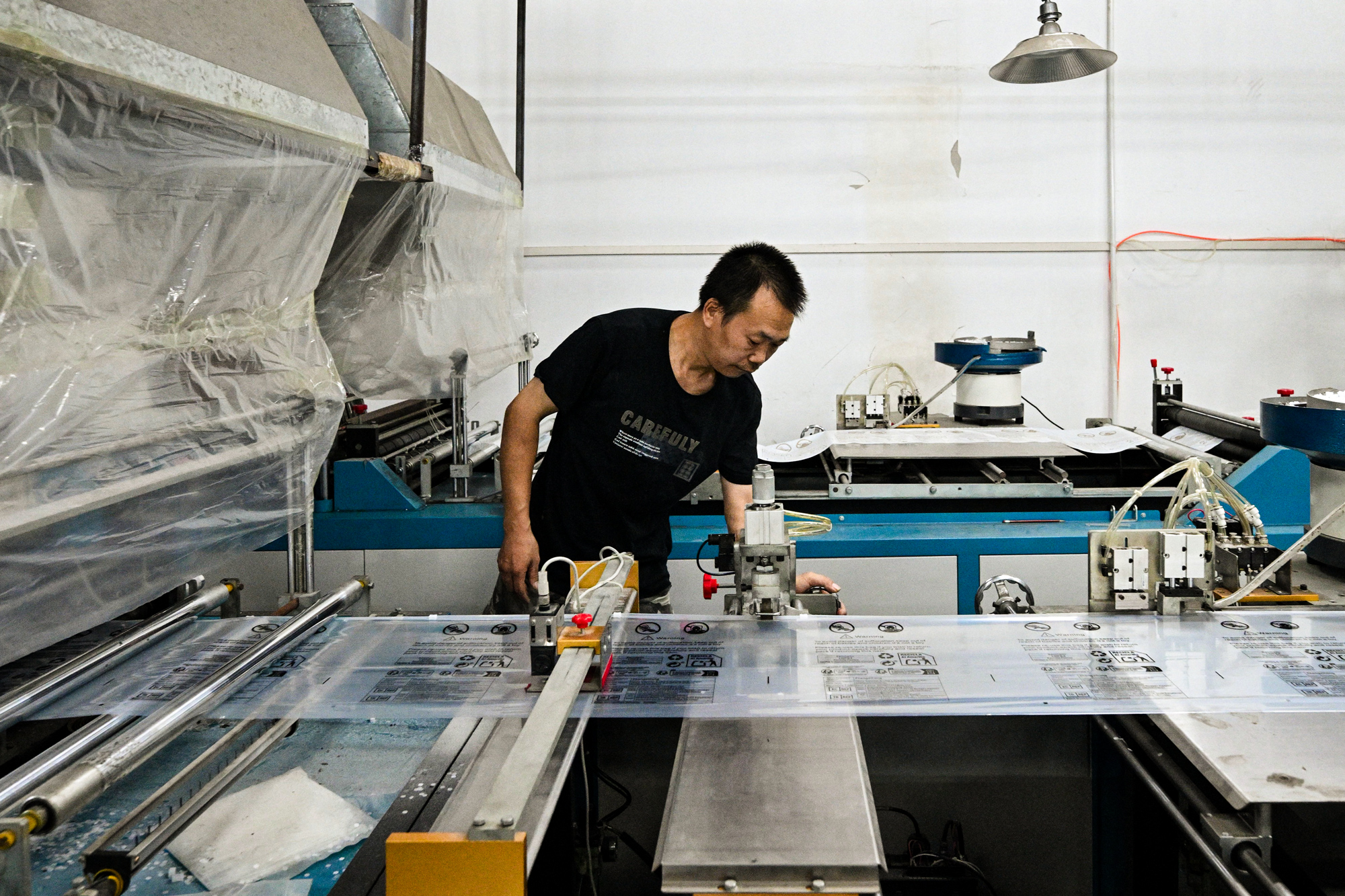 A worker handles packages for a delivery firm serving online shopping giant Temu, in Guangzhou, Guangdong Province, China, on Aug. 12, 2025. (Adek Berry/AFP via Getty Images)
“Whatever happens, any higher barrier to the European market can only mean bad news for Chinese exporters.”
 Friends Read Free
Copy
Facebook
Tweet
Friends Read Free
Copy
Facebook
Tweet