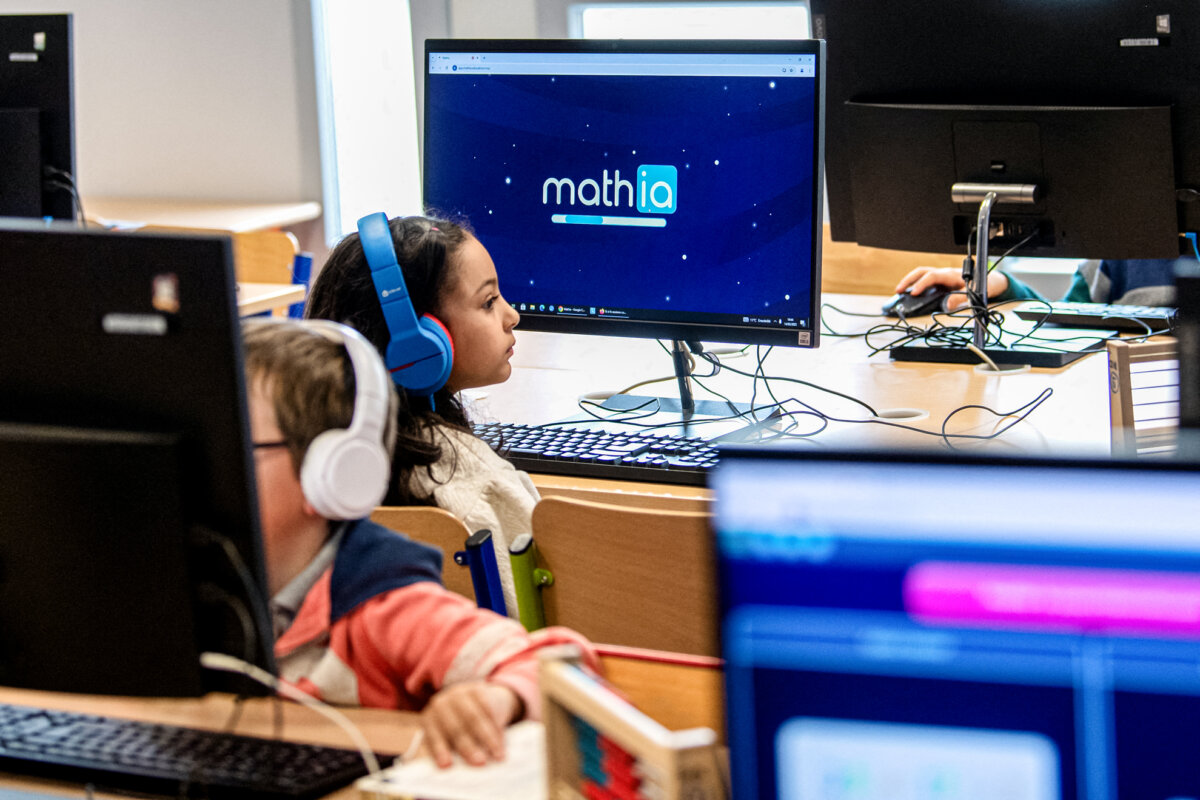

More than 40 percent of middle and high school teachers say they believe more than half their students use artificial intelligence to complete their homework, a new survey says, with most respondents reporting declines in students’ critical-thinking, writing, and analytical skills.
More than 95 percent of the 756 teachers in grades 6 to 12 who responded to a Leger poll commissioned by the Fraser Institute, said they think at least some students use AI for homework, while 42 percent said they believe more than half do. Teachers estimated that 56 percent of students use AI “inappropriately” to do their work for them, while 44 percent use it “reasonably.”
Nearly 84 percent of respondents reported a decline in students’ critical-thinking skills compared to five years ago, while just under 73 percent said students’ in-class writing and analytical skills have worsened.
Among those who reported on writing and analytical skills, 38 percent said they were “somewhat worse,” and 34.9 percent said they were “much worse.” Only 8.1 percent said those skills were “somewhat better,” while 6.2 percent said they were “much better.”
“The teachers who responded to this poll report significant shares of students using AI for homework, and believe many of those students are using AI inappropriately to do their homework for them instead of assisting them,” Fraser Institute senior fellow Paige MacPherson said in a news release.
“At the same time, the majority of those surveyed report a decline in their students’ abilities to write and analyze material in class with worsened critical thinking skills compared to students five years ago,” she added. “This is a significant concern.”
More than 78 percent of teachers surveyed said some students’ in-class work was of lower quality than their take-home assignments, while 91 percent said the difference has been increasing over time.
At the same time, more than 67 percent of surveyed teachers said they use AI to support their teaching, and 68 percent of that group said they use it weekly.
Teachers reported using AI for a variety of purposes. Seventy-two percent said they use it to prepare class content or lesson plans, and nearly 47 percent use it to summarize texts, books, or other content to prepare lessons. Another 35 percent use it for scheduling or administrative tasks, 25 percent use it to help students who require extra support, and 11.5 percent use it for marking.
Among teachers who use AI in their work, 75 percent said it has made them more effective, including 30.5 percent who said it made them “much more effective” and nearly 45 percent who said they were “somewhat more effective.” Only 0.8 percent said AI made them less effective.
However, many teachers also said they have not received training on using or identifying AI.
Forty-nine percent of respondents said their school or school board has provided AI training for in-class lessons and materials, while nearly 64 percent said they had received no training on using the technology reasonably, and and just under 65 percent said they had received no training to identify AI use among students.
Only 35 percent of teachers polled said their school has a policy governing staff use of AI, while 42 percent said their school has a policy for students using AI.
“Newer teachers were much more likely than those teaching for 10 years or more to indicate that school or school board AI policies were in place and that any type of AI training was provided,” the report said.
“This suggests a discrepancy in policy awareness, or perhaps a generational difference in openness to AI policies and training.”
 Friends Read Free
Copy
Facebook
Tweet
Friends Read Free
Copy
Facebook
Tweet