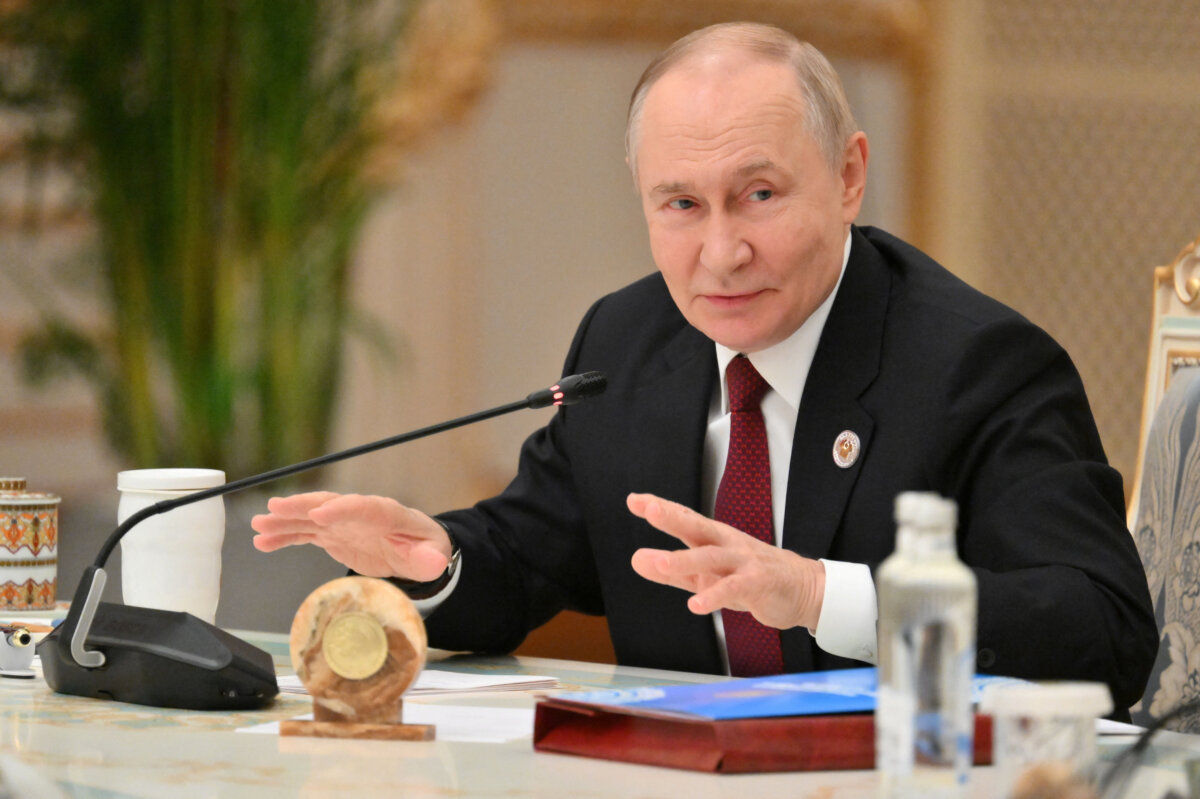

Moscow has no plans to seize European assets, including from companies and banks, but will reconsider its position if the European Union confiscates frozen Russian assets, Deputy Finance Minister Alexey Moiseev said on Oct. 22.
As much as $250 billion worth of Russian assets have been frozen in the European Union since the United States and its allies banned transactions with Moscow’s central bank and Ministry of Finance after Russia invaded Ukraine in February 2022.
Discussions within the EU are underway to find a method to use the frozen assets to further finance Kyiv’s defense and the reconstruction of the country without directly confiscating them, due to legal issues.
Though many within the bloc have thrown support behind the idea, others, including several member states such as Luxembourg, Belgium, and Hungary, as well as organizations such as the European Central Bank, have voiced concerns.
In comments to reporters, Moiseev said Europe had so far avoided outright confiscation of the frozen assets and said Moscow would do likewise unless the situation changes.
“We are not confiscating anything yet. The Europeans haven’t called for confiscation, so we won’t confiscate anything until they do. If they do end up confiscating, then we will consider it,” he said.
He added that a recent presidential decree on the accelerated privatization of state assets was in no way linked to plans to seize European sovereign assets.
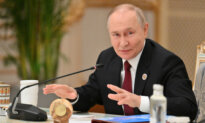
In the Sept. 30 decree, Russian President Vladimir Putin appointed PSB, a bank that is under Western sanctions, as the Kremlin’s agent in state property sales.
The decree said the measures were “in connection with the unfriendly actions of the United States of America and the foreign states and international organizations that have joined them,” which prompted speculation that it was brought in to help Russia swiftly return the favor if its frozen assets were seized.
Moiseev said that private European companies and banks that are still operating in Russia had not been seized by the state and were therefore not subject to the new decree.
“Forget about European assets. No one is considering or discussing these issues,” he said, adding that the purpose of the decree was to create a fresh channel for property sales.
Russian authorities have seized assets worth about $50 billion since the start of the war in Ukraine, including the assets of Western companies leaving the country.
Major domestic companies have also changed hands based on corruption claims or alleged privatization violations, or due to poor management.
The same day Moiseev made his comments, Italian Prime Minister Giorgia Meloni said any steps taken by the EU to use the Russian assets it has frozen must respect international law.
“It is well-known that we are discussing with EU and G7 partners additional possible measures concerning frozen Russian assets,” she told the Italian Senate.
“However, we believe—and we are not alone—that it is necessary to respect international law and the principle of legality; to protect the financial and monetary stability of our economies and of the euro area; and to ensure the sustainability of any step that might be taken.”
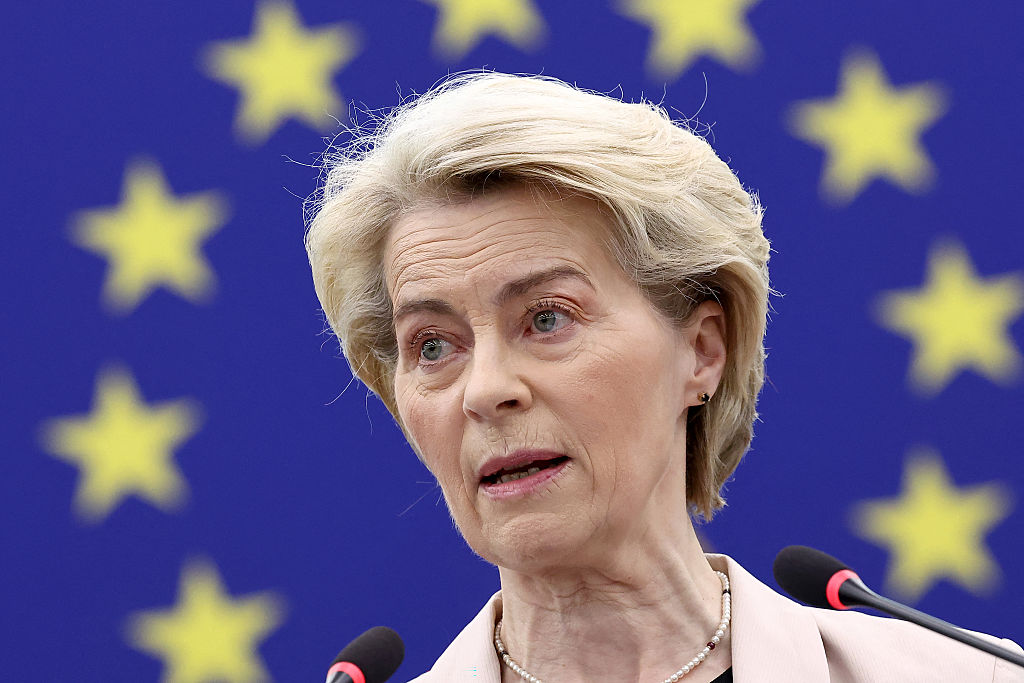
Last month, European Commission President Ursula von der Leyen said that part of any loan given to Ukraine by the EU that’s funded by frozen Russian assets would go to fund the bloc’s defense industry. Precise details of how the plan would be put into action and the exact amount of money that would be loaned to Kyiv have not yet been revealed.
The plan is likely to be discussed further at an upcoming meeting of the European Council in Brussels on Oct. 23.
Russia has in the past said that any such move would be illegal and would harm the global economy.
“Those who are smarter do not want [to take Russia’s frozen assets]. Yes, it is true, without any irony and without ‘attacking’ those who are stupider, because those who are smarter are people who deal with finances, economy,” Putin said on Sept. 3, according to Russian state-owned news agency TASS.
“They understand that this will completely destroy all principles of international economic and financial activities, and will undoubtedly cause enormous harm to the entire global economy and international finance.”
Reuters contributed to this report.
 Friends Read Free
Copy
Facebook
Tweet
Friends Read Free
Copy
Facebook
Tweet