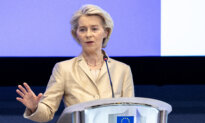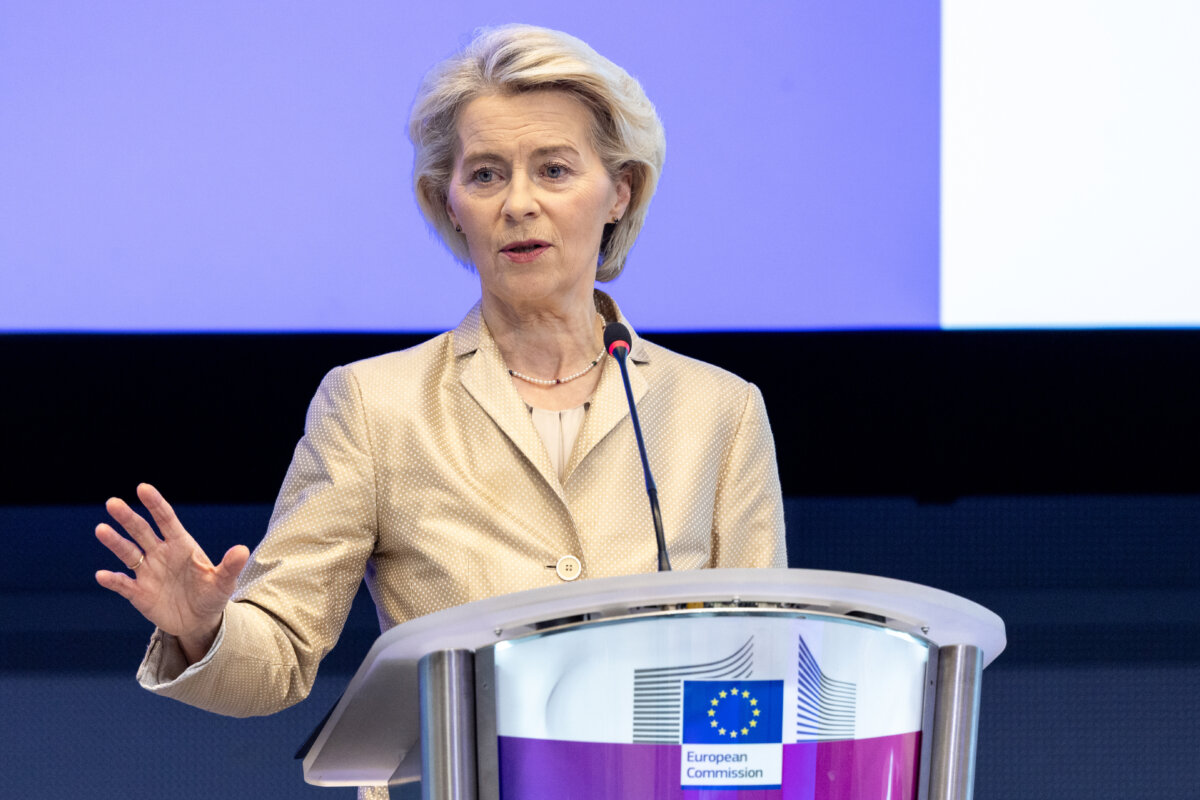

A European Union loan to Ukraine paid out of frozen Russian assets would be used to fund the bloc’s defense industry, European Commission President Ursula von der Leyen said on Sept. 30.
Speaking alongside NATO Secretary General Mark Rutte in Brussels, von der Leyen said that though economic sanctions on Russia were working, a more “structural solution” for military support to Kyiv was necessary.
“This is why I have put forward the idea of a Reparations Loan based on immobilized Russian sovereign assets,” she said.
“The Loan would not be disbursed in one go. But in tranches, and with conditions attached. And we will strengthen our own defense industry by ensuring that part of the loan is used for procurements in Europe and with Europe.”
She went on to say that the move would not involve seizing assets, but that “Ukraine has to repay the loan, if Russia is paying reparations.”
“The perpetrator must be held responsible,” von der Leyen added.
Precise details of how the plan would be put into action and the exact amount of money loaned to Ukraine have not yet been revealed.
So far, the EU has taken only interest generated from Russian assets, which were frozen after Moscow invaded Ukraine in February 2022, amid concerns expressed by Germany and France over its legality.
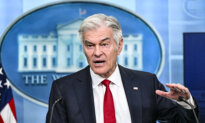
However, von der Leyen’s comments come just days after German Chancellor Friedrich Merz made a similar call to use the frozen assets as part of the war effort, indicating a marked change in Berlin’s attitude towards the idea.
Merz set out his proposal in an article in the Financial Times on Sept. 26, and also outlined his plans in a series of posts on X.
The German leader suggested the EU give Ukraine an interest-free loan of almost 140 billion euros ($164.5 billion).
“That loan would only be repaid once Russia has compensated Ukraine for the damage it has caused during this war. Until then, the Russian assets will remain frozen, as decided by the European Council,” Merz wrote.
He went on to say that the assistance “will require budgetary guarantees from member states” initially, but that those bilateral guarantees should be replaced by a collateralized EU guarantee once the bloc’s next Multiannual Financial Framework is in place in 2028.
“We need a new impetus to change Russia’s calculations,” Merz added in the commentary.
“Now is the moment to apply an effective lever that will disrupt the Russian president’s cynical game of buying time and bring him to the negotiating table.”
He went on to propose that EU member state leaders should—at the European Council to be held at the end of this month—“give the mandate to prepare this instrument in a legally secure manner.”
Russia has in the past said that any such move would be illegal, and earlier this month Russian President Vladimir Putin said that it would harm the global economy.
“Those who are smarter do not want [to take Russia’s frozen assets]. Yes, it is true, without any irony and without ‘attacking’ those who are stupider, because those who are smarter are people who deal with finances, economy,” Putin said on Sept. 3, according to the Russian state-run news agency TASS.
“They understand that this will completely destroy all principles of international economic and financial activities, and will undoubtedly cause enormous harm to the entire global economy and international finance.”
It is likely the plan will be discussed at the summit of EU leaders set to take place in Copenhagen, Denmark, on Oct. 1, along with discussions on other factors surrounding support for Ukraine and Kyiv’s path towards joining the bloc.
 Friends Read Free
Copy
Facebook
Tweet
Friends Read Free
Copy
Facebook
Tweet