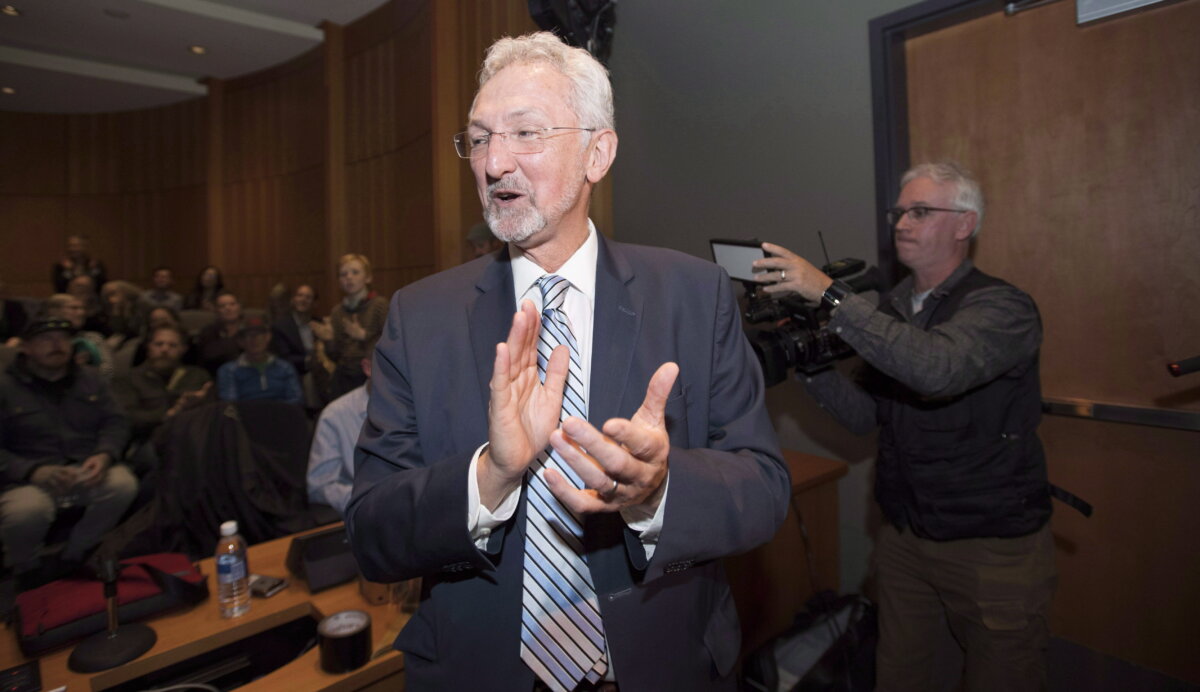

The city council in Nanaimo, B.C., has rejected building a fence around the city hall parking lot, saying it would not effectively protect staff from the violence and disorder associated with a next-door supervised drug consumption site.
Although Mayor Leonard Krog originally considered the fence proposal to deal with increased levels of street disorder, violence, and drug activity on city hall property from the provincially managed Overdose Prevention Site (OPS), he joined other councillors at a July 16 city council meeting in deciding the fence would not be effective.
“I’m just not satisfied that the fence is going to provide the security and safety or make much of a difference,” Krog said at the meeting, noting he doesn’t see the fence providing the value to justify its cost.
In an interview with The Epoch Times, Krog said the city is obligated under WorkSafe BC regulations to provide a safe work site and that provincial and federal authorities should address the issue.
“It is immoral that in the 21st century, in a modern, liberal, stable democracy, that we should have these many of our fellow citizens living in the streets and literally dying in the streets, because we don’t have a system of care, whether it’s voluntary or involuntary,” Krog said.
The OPS was relocated to its Albert Street location next to city hall’s parking lot in December 2022. Since then, the area has experienced a “significant increase in disorder” around city hall and its service and resource centre, according to a city staff report presented to council on July 16.
Staff proposed building a 1.83-metre-high fence, which would cost an estimated $412,000, out of safety concerns from employees related to “intimidation and harassment.” Staff cited damage to to the city’s HVAC system, fencing, landscaping, and staff vehicles, as well as drug trafficking, vandalism, graffiti, litter, fires, human waste, and overall deterioration of the area.
Drug Consumption Sites
Drug consumption sites have been a controversial topic in B.C., with nine centres in B.C. hospitals and 58 OPS sites across the province.
The province’s NDP government has supported OPS, saying they’re needed to save lives in a drug crisis. Provincial authorities say the sites reduce rates of overdose, substance-related health conditions, and public drug use.
The sites have been opposed by the B.C. Conservatives, who have called the centres “drug dens” and “hotbeds” for crime.
On Sept. 15 of last year, Premier David Eby said the province would respond to the increasing addiction-related challenges by opening secure facilities to provide involuntary care for those with severe addictions or who are mentally ill. In February, B.C. ended its take-home “safer supply” model to require that opioid recipients take their prescriptions under medical supervision. The province has maintained its supervised consumption sites.
Last year, Ontario brought in legislation to ban supervised consumption sites within 200 metres of schools and child care centres. Nine sites were converted into addiction recovery hubs as of April 1, 2025. The sites were located in Toronto, Ottawa, Hamilton, Kitchener, Guelph, and Thunder Bay.
Premier Doug Ford called the sites “the worst thing that could ever happen to a community,” at an unrelated press conference in St. Catharines in August last year.
Justice System
Mayor Krog told The Epoch Times that the municipal government hired 15 more RCMP officers over the last five years, created a team of a dozen community safety officers, and budgeted for more policing and community safety officers in this year’s budget in an effort to curb the criminal acts.
However, he added that it is the province’s responsibility to deliver mental health, addiction, and recovery services. He said another problem is the justice system, as “people who are out there causing trouble in the streets” get released on bail.
“I’ve called frequently for over five and a half years for secure involuntary care for some folks, where necessary, supportive housing for others, and then just plain old housing,” Krog said.
“But governments have to address this, because this is the topic that we hear most about at the city. Ultimately, the province, and to a lesser extent, the federal governments, need to do a lot more.”
Chandra Philip and Matthew Horwood contributed to this report.
 Friends Read Free
Copy
Facebook
Tweet
Friends Read Free
Copy
Facebook
Tweet