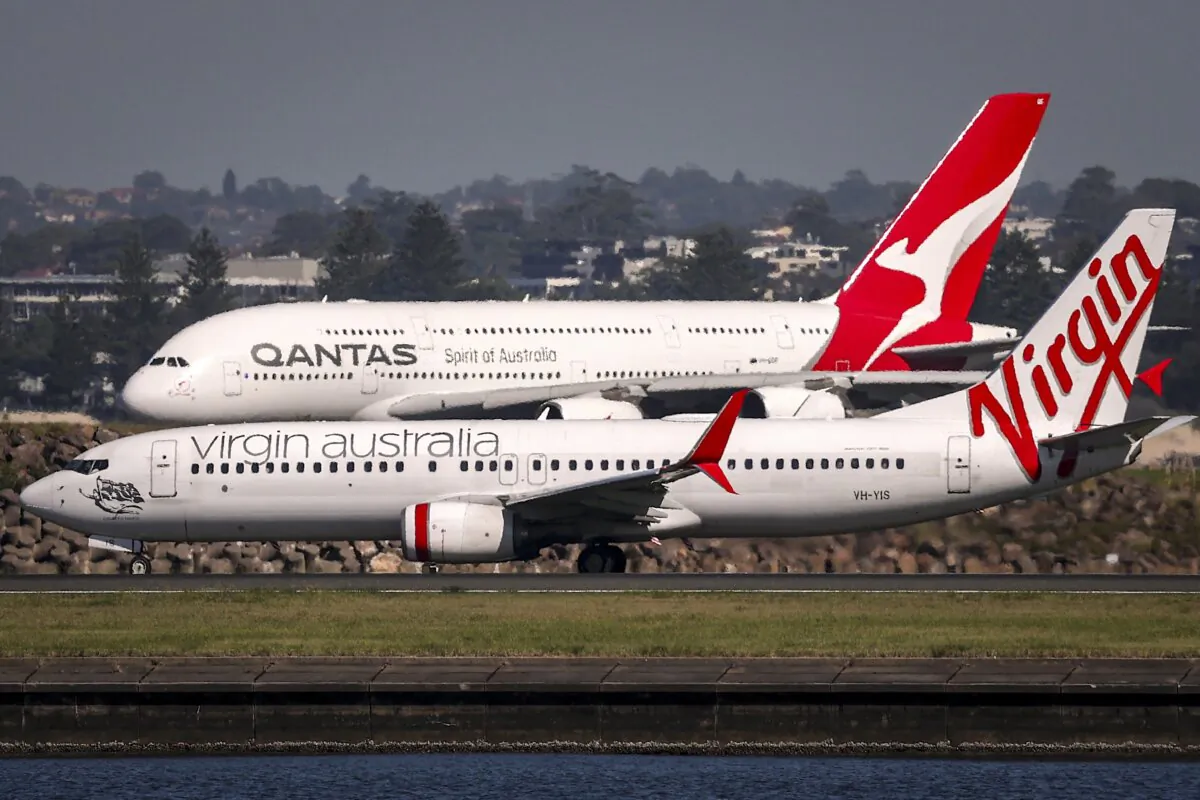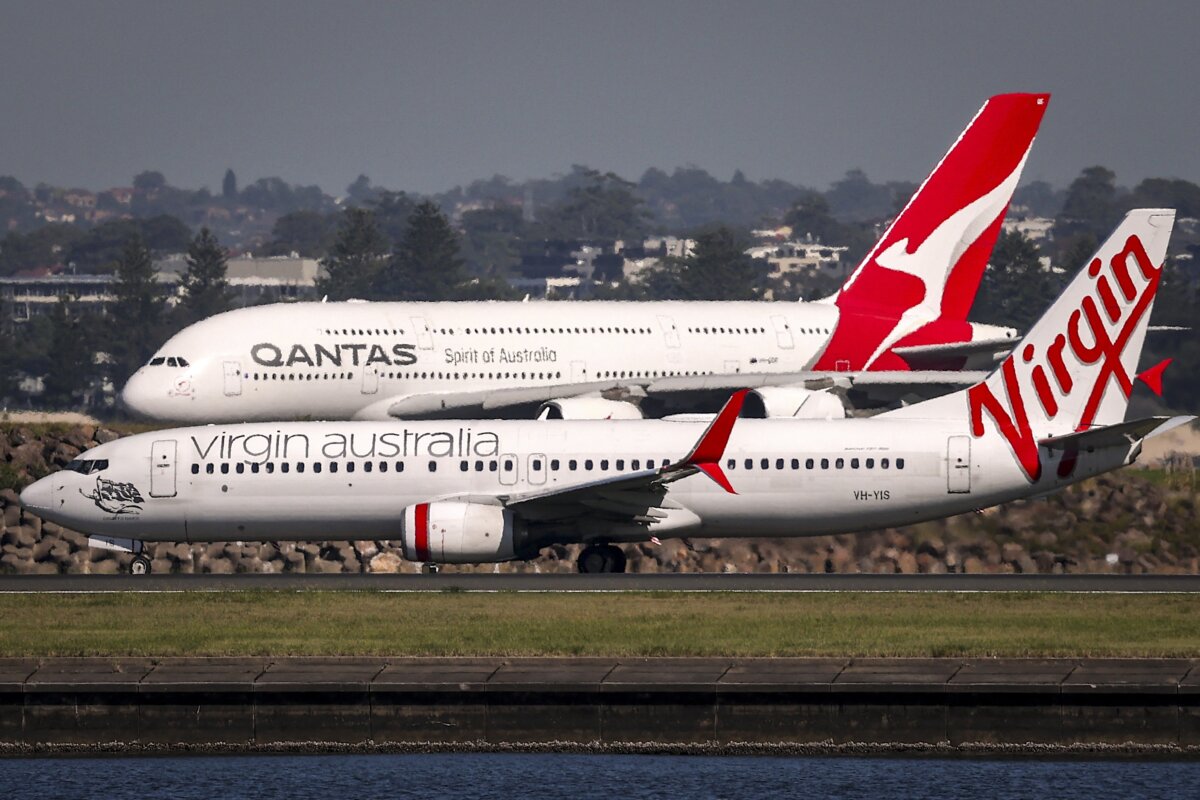

A proposed new law that would impose penalties on airlines for service delays would end up penalising consumers, a Senate inquiry has been told.
The Standing Committees on Rural and Regional Affairs and Transport is considering the Aviation Consumer Protection Bill and associated legislation, which aims to create a consumer protection charter that will set minimum standards for airline and airport services and establish the Aviation Consumer Ombuds Scheme, an independent dispute resolution body.
“While airline performance, including on-time performance, has improved recently, particularly since the COVID-19 pandemic, there is still a broader need to better protect aviation consumers,” the explanatory memorandum (pdf) for the bill said.
“A more coherent Aviation Consumer Protection Framework will be capable of both assisting consumers to resolve disputes and encouraging improved service standards across the aviation sector.”
Ballooning Costs
Stephen Pearse, executive director of the Board of Airline Representatives of Australia—whose airlines provide over two thirds of all international passenger flights to and from Australia—warned the committee that “overly prescriptive service remedies” can lead to a range of consequences, including increased costs to consumers.
“The cost imposed from similar consumer protection schemes overseas, likewise all introduced with good intentions, have ballooned, and these costs simply result in higher airfares than would have otherwise been available,” he said.
“It incentivises complaints as well,” claimed Stephen Beckett, CEO of Airlines for Australia and New Zealand (AANZ).
“So in Europe, [there has been] the growth of complaint agents and ‘no win, no pay,’ where you’ll get off at Heathrow, and there’ll be a [sign asking] ‘Was your plane delayed? We might be able to get you money.’ And anywhere from 40 to 60 percent of the compensation is actually being withheld by these corporates that are now running complaints.
“So it requires more people to complain, because it’s just simple to do, and you can hand it off to someone, even if you really aren’t that particularly upset.”
Beckett also noted that artificial intelligence is being used to lodge large volumes of complaints.
Existing Laws Adequate: Ex-ACCC Boss
AANZ chairman, Graeme Samuel—a former head of the Australian Competition and Consumer Commission (ACCC)—argued that existing consumer laws already covered airline delays.
“These prescriptions just don’t meet the required benchmark of common sense, and that’s why I love the two lines that are in section 61 of the Australian Consumer Law,” he said.
The section mandates that services provided to a consumer must be reasonably fit for any specified purpose, and must yield the result that the consumer made known to the supplier prior to entering into the contract.
However, in 2023, the ACCC said a scheme to force airlines to provide compensation entitlements for delayed or cancelled flights had merit.
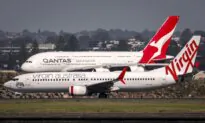
At the time, the regulator’s chair, Gina Cass-Gottlieb, said in a statement: “Without a real threat of losing passengers to other airlines, the Qantas and Virgin Australia airline groups have had less incentive to offer attractive airfares, develop more direct routes, operate more reliable services, and invest in systems to provide high levels of customer service.”
Rebecca Walker, general manager of legal for Virgin Australia, echoed the warning that airfares would increase, saying the airline did not believe that “pay on delay” schemes deliver the right outcomes for consumers.
“The two big pay-on-delay schemes currently in place are the EU model and the Canadian model. And what we’ve seen in both of those jurisdictions is significantly increased costs to airlines,” she said.
Walker cited a report by the EU Commission which found that the cost of the EU scheme to airlines was around $8.9 billion in 2018, while Canada’s pay-on-delay scheme cost airlines about $340 million in 2023.
Risk of Undercompensation, Virgin Claims
The Virgin representative also claimed the legislation could result in consumers being undercompensated if it becomes law.
“In some cases, fixed compensation can overcompensate customers, and in other circumstances, it may actually undercompensate customers compared with what they might be entitled to under the existing consumer protections regime,” she said.
Stephanie Tully, CEO of Jetstar, described the proposed charter as a “prescriptive one-size-fits-all draft which … would undermine Jetstar’s existence.”
“We’ve got to make sure that this is workable. There are many things that we are seeing in the charter that are just not pragmatic,” he said.
In the explanatory memorandum, the government said, “concerns about the adequacy of aviation consumer protections have been raised over an extended period. The 2009 National Aviation Policy White Paper … led to the establishment of an Airline Customer Advocate [ACA] in 2012, reflecting an expectation that industry would develop an independent mechanism to assist consumers with unresolved complaints.”
However, a white paper in 2024 concluded that the ACA had failed to deliver an effective or trusted complaint resolution mechanism and that government intervention was needed to strengthen consumer protections.
Bureau of Infrastructure and Transport Research Economics (BITRE) data (pdf) showed that for the year ending Dec. 31, 2025, domestic on-time performance averaged 76.9 percent for arrivals, 77.7 percent for departures, and a cancellation rate of 2.5 percent.
These results were below the long-term averages of 80.5 percent for arrivals and 81.6 percent for departures and above the long-term cancellation rate of 2.2 percent.
 Friends Read Free
Copy
Facebook
Tweet
Friends Read Free
Copy
Facebook
Tweet