U.N. Secretary-General António Guterres’s second five-year term will run out later this year, and a replacement will be chosen in June.
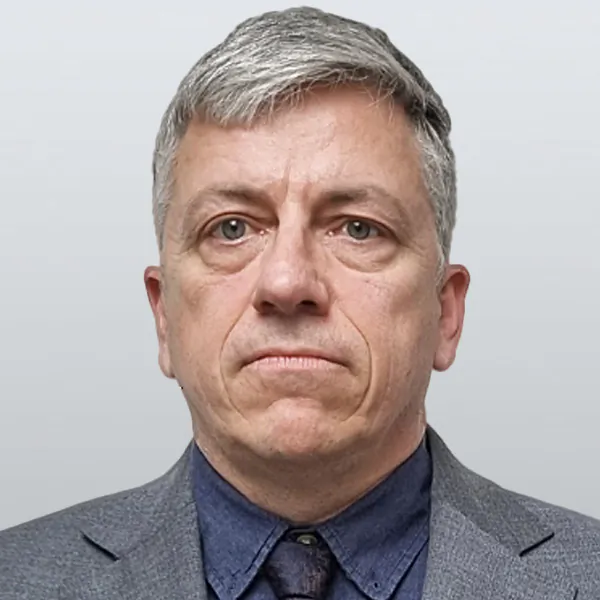
Despite a campaign for the United Nations to get its first female secretary-general, it appears as if the favored—and only—candidate so far is Rafael Mariano Grossi, head of the International Atomic Energy Agency.
Experts said the 10th secretary-general will have to show supreme levels of diplomacy to encourage U.S. President Donald Trump to re-engage with the U.N., after he set up the Gaza Board of Peace and suggested that it could replace the 80-year-old organization.
The new leader of the U.N. will also have to work hard to stave off bankruptcy for the New York City-based body.
“Rafael Mariano Grossi is a serious diplomat with technical credibility, particularly on nuclear non-proliferation,” Hillel Neuer, executive director of U.N. Watch, told The Epoch Times. “That said, the U.N.’s crisis today is not technical, but rather moral and institutional.”
“The real question is whether any candidate is prepared to confront entrenched politicization, corruption, and double standards inside the U.N. system,” Neuer said.
Jeremy Rovinsky, a prosecutor and judge who has taught international law at Mitchell Hamline School of Law in Minnesota, said that although he thinks that Grossi would be an improvement on Guterres, he is still “a U.N. insider” who has not been tough enough on Iran’s nuclear enrichment program.
“The only real hope for the U.N. would be for an outsider to come in and reform it,” Rovinsky told The Epoch Times.
Grossi was in charge of the International Atomic Energy Agency when its board declared Iran in breach of its obligations under the Nuclear Non-Proliferation Treaty in June 2025, hours before Israel began bombing Iran’s nuclear facilities.
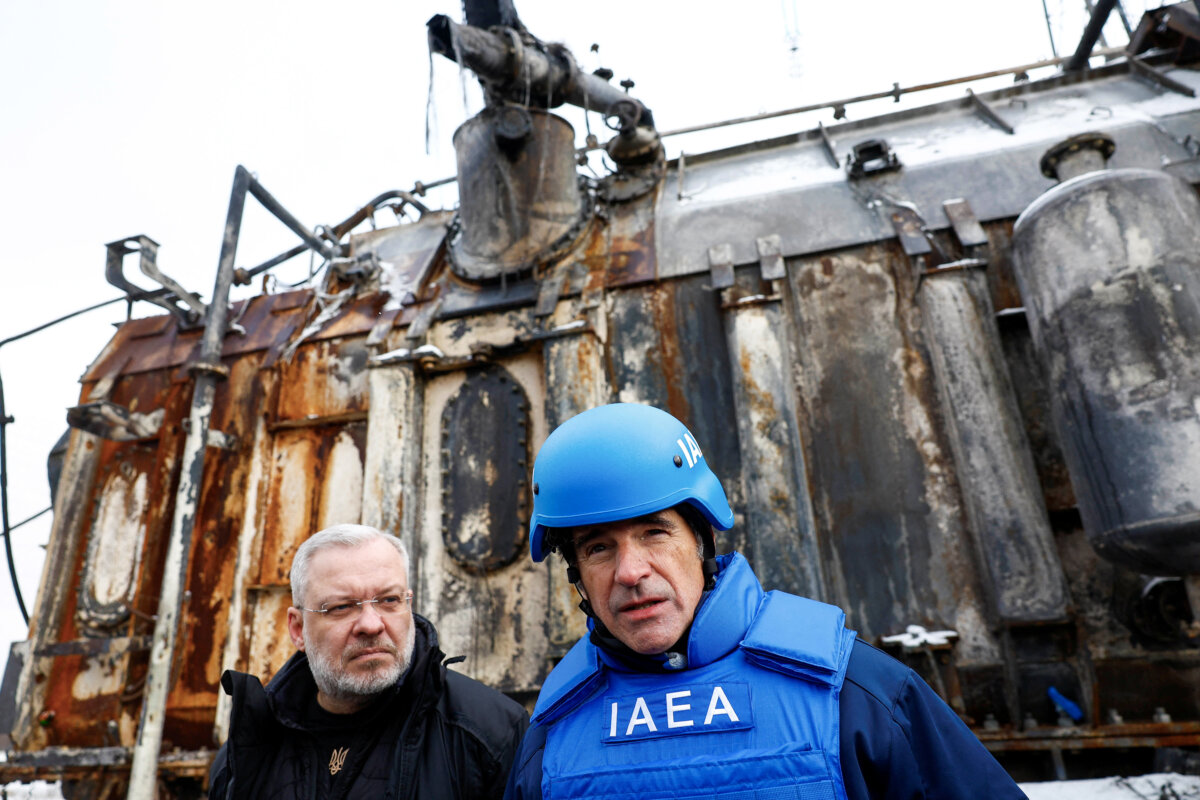
It is expected that Grossi will be joined by other candidates in the next three months.
In a letter to the permanent representatives in November 2025, the president of the U.N. General Assembly, Annalena Baerbock, encouraged member states to “strongly consider nominating women as candidates.”
Elika Dadsetan, founder and executive director at Massachusetts-based nonprofit Enroot, said Grossi’s ability to succeed will depend on whether member states are willing to back “meaningful reform” and allow a secretary-general to be politically independent.
“The U.N.’s legitimacy is tied to whether it reflects the world it serves,” Dadsetan, who has spent much of her career working with U.N. agencies, told The Epoch Times.
“There are many extraordinarily qualified women globally who could lead the organization, and competence, courage, and independence should remain the core criteria for any candidate,” she said.
Michelle Bachelet, the 74-year-old former Chilean president and U.N. human rights commissioner, has been mentioned as a possible secretary-general.
She was criticized in May 2022 for holding a video meeting with Chinese leader Xi Jinping during a six-day trip to China’s Xinjiang region a day after new documents detailing the regime’s human rights abuses targeting Uyghurs were published.
Western officials and human rights advocates said the meeting allowed the Chinese regime to stage-manage her trip and use it for propaganda purposes.
Although Chilean President Gabriel Boric said in September 2025 that he would nominate Bachelet, he subsequently lost an election to conservative José Antonio Kast, who is unlikely to put her name forward.
In October 2025, Costa Rican President Rodrigo Chaves Robles said he would be nominating his compatriot and political ally, Rebecca Grynspan.
“Competence, courage, and independence should matter far more than gender,” Neuer said. “The U.N. does not need symbolic milestones, it needs leadership willing to challenge internal dysfunction and external pressure.”
The U.N. recently announced that the candidates would face “interactive dialogues” in the week of April 20, during which member states will be able to ask them questions.
Guterres, who will be 77 when he steps down, was a former Portuguese prime minister and U.N. high commissioner for refugees when he was picked for his first term in 2016.
“Under his leadership, the organization became more politicized, less principled, and increasingly disconnected from its founding mission,” Neuer said.
Dadsetan said Guterres has led the organization through a turbulent period with the COVID-19 pandemic, wars, climate events, and intensifying rivalry between the great powers.
The permanent members of the Security Council—Russia, China, France, the UK, and the United States—have veto power over the secretary-general selection.
In 1953, the Soviets vetoed the appointment of Lester Pearson, who later became prime minister of Canada, and in 1996, the United States vetoed a second term for Boutros Boutros-Ghali.
UN Budget, US Exit
In October 2025, Guterres said the U.N. faces a “race to bankruptcy” unless member states pay their dues in full and on time.
“Any delays in collections early in the year will force us to reduce spending even more,” he said, having already cut the U.N. budget and reduced the number of people employed by the organization from 13,809 to 11,594.
As of Sept. 30, 2025, $1.8 billion was still owed to the U.N. by member states, of which nearly $1.5 billion was from the United States.
On Jan. 20, the U.N. said only 22 member states have paid their assessed contributions in full. This includes the UK ($127 million) and Canada ($81 million).
Those sums are dwarfed by the contributions made by the United States.
For calendar year 2025, the United States was due to contribute $820 million, or 22 percent of the budget.
But that figure does not include voluntary contributions to the U.N., and in total, the United States pays it $9.7 billion per year. The next highest contributor is Germany, which pays $3.4 billion.
China pays $1.3 billion.
Trump has highlighted the funding issue.
“To honor the people of our nations, we must ensure that no one and no member state shoulders a disproportionate share of the burden, and that’s militarily or financially,” Trump said in a speech in September 2017.
On Jan. 7, the Trump administration issued a memorandum that ordered all executive departments and federal agencies to “cease participating in and funding 35 non-United Nations (U.N.) organizations and 31 U.N. entities that operate contrary to U.S. national interests, security, economic prosperity, or sovereignty.”
U.S. Secretary of State Marco Rubio said, “[The Trump administration] has found these institutions to be redundant in their scope, mismanaged, unnecessary, wasteful, poorly run, captured by the interests of actors advancing their own agendas contrary to our own, or a threat to our nation’s sovereignty, freedoms, and general prosperity.”
According to a State Department statement from Dec. 29, 2025, U.S. contributions to the U.N. have “skyrocketed” in recent years, while many U.N. bodies have abandoned their original missions and too often espoused “radical social ideologies” that undermine American interests and values.
The Trump administration has rejected the U.N.’s 17 Sustainable Development Goals—which include “no poverty,” “zero hunger,” “reduced inequality,” and “climate action”—that were announced in 2015 and are supposed to be achieved by 2030.
“Put simply, globalist endeavors like Agenda 2030 and the [Sustainable Development Goals] lost at the ballot box,” U.S. diplomat Edward Heartney said in a statement in March 2025, when the U.S. government formally called for a vote on a resolution at the U.N. General Assembly’s 58th plenary meeting.
“Therefore, the United States rejects and denounces the 2030 Agenda for Sustainable Development and the Sustainable Development Goals, and it will no longer reaffirm them as a matter of course,” Heartney said.
Neuer said the next secretary-general would not be able to persuade Washington with rhetoric alone.
“Large parts of the U.N. have embraced an ultra-liberal ideological agenda that is detached from reality and intolerant of dissent,” he said. “This has alienated not only President Trump, but many democratic governments. The U.N. was meant to be a forum, not a political movement.”
He said the U.N. will need to demonstrate “accountability, transparency, and neutrality” to rebuild trust.
“The burden of proof lies with the U.N., not the United States,” Neuer said.
An Alternative to the UN?
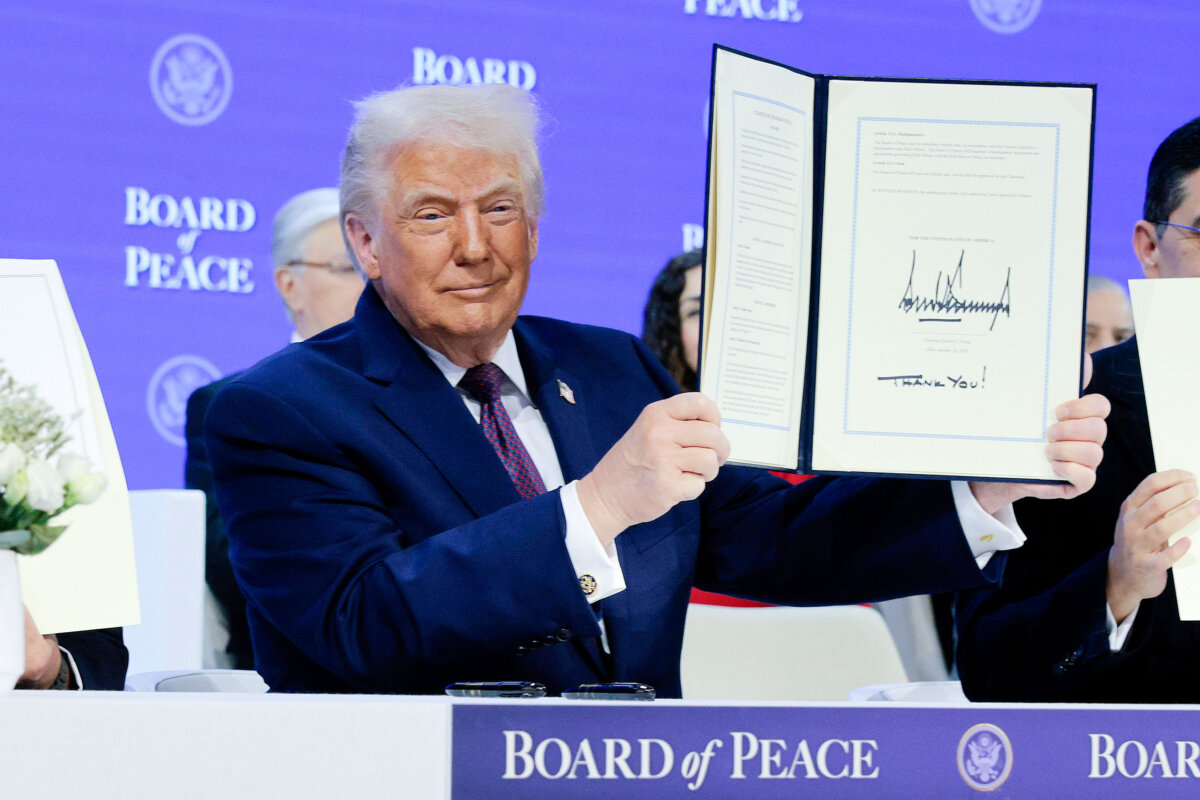
The text of the charter of Trump’s recently formed Board of Peace, according to The Times of Israel and other media outlets, mentions “the need for a more nimble and effective international peace-building body.”
The Board of Peace has initially been tasked with overseeing the peace process between Israel and the Hamas terrorist group and with stabilizing and rebuilding the Gaza Strip.
Trump announced that the executive board includes Rubio, presidential special envoy Steve Witkoff, Trump adviser Jared Kushner, and former British Prime Minister Tony Blair.
“I wish the United Nations could do more,” Trump said during a White House news briefing on Jan. 20. “I wish we didn’t need a Board of Peace, but … with all the wars I settled, the United Nations never helped me on one war.”
When a reporter asked the president whether the Board of Peace could replace the U.N., he replied, “It might.”
He said the U.N. has never lived up to its potential but that the U.N. should continue “because the potential is so great.”
“I think the combination of the Board of Peace, with the kind of people we have here, coupled with the United Nations, could be something very, very unique for the world,” Trump said.
Rovinsky said he believes that the Trump administration is frustrated with the U.N. and views it as an institution that has a noble purpose but that has become ineffective at best and destructive at worst.
“I think Trump is concerned with his legacy and would like to see if he can put together an alternative international organization that may be more effective and authentic in promoting global peace initiatives,” he said.
Meanwhile, the U.N. is observing how the Board of Peace develops.
“We would have to see in terms of details what the Board of Peace becomes as it actually is established to know what sort of relationship we would have with it,” deputy U.N. spokesperson Farhan Haq said on Jan. 19.
China said on Jan. 21 that it had received an invitation to join the Board of Peace but that it had reaffirmed its commitment to the U.N.
 Friends Read Free
Copy
Facebook
Tweet
Friends Read Free
Copy
Facebook
Tweet