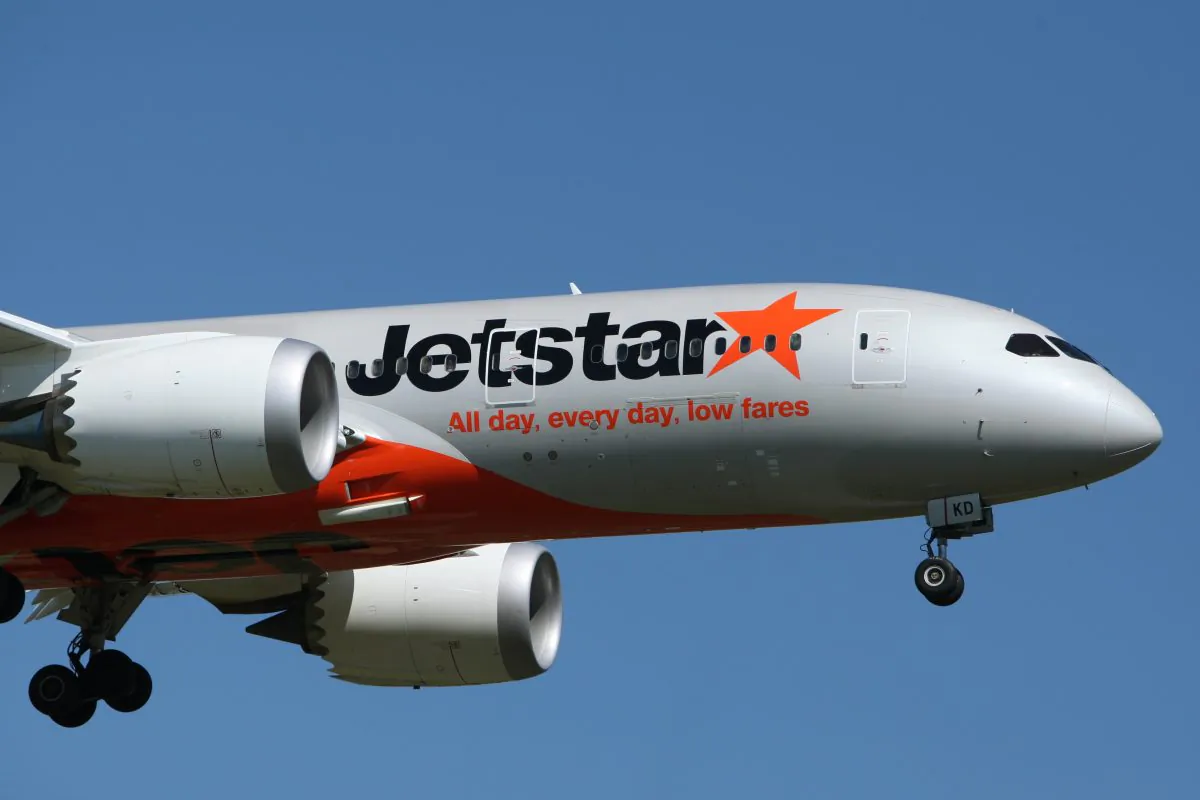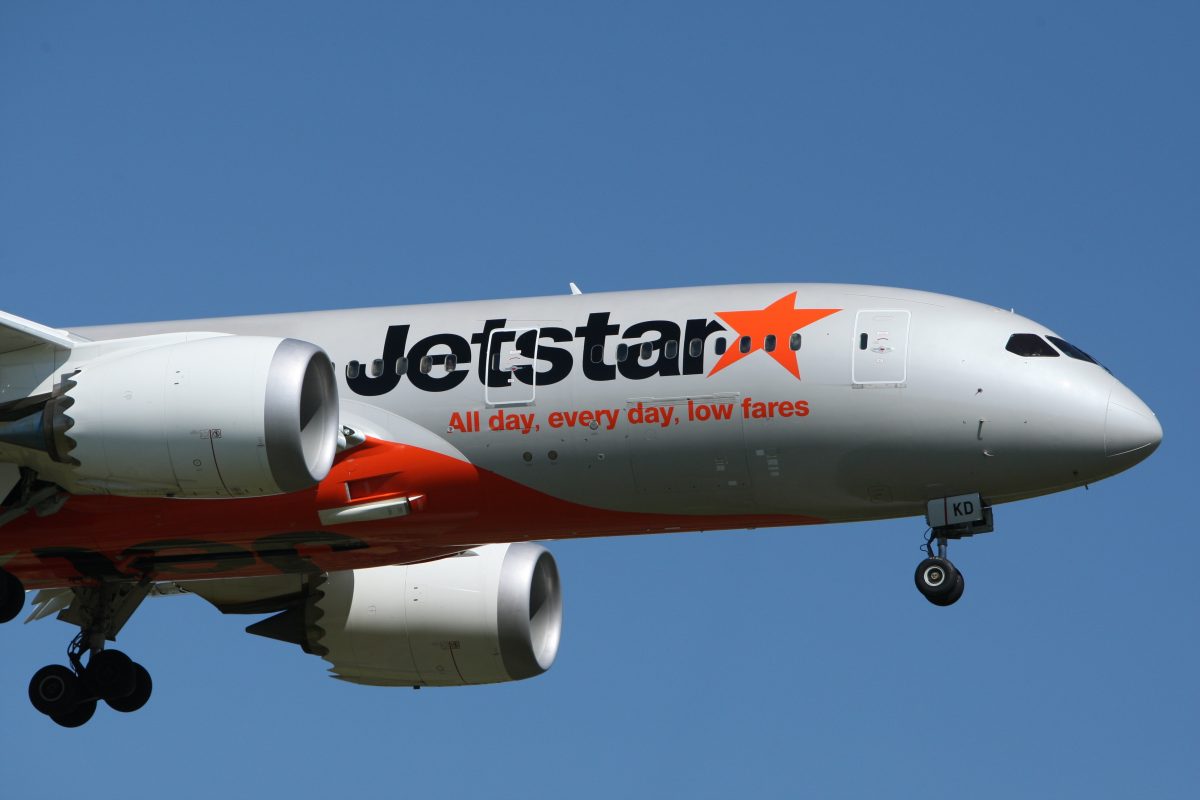

Low-budget airline Jetstar, which is owned by Qantas, has been found guilty of more than 20 charges under New Zealand’s Fair Trading Act and fined $2.25 million (US$1.33 million).
The offences occurred over a two-year period, between January 2022 and March 2024, and relate to information provided to passengers about their compensation entitlements when a flight was delayed or cancelled.
The charges were laid by the Commerce Commission in January this year, after the company failed to comply with warnings issued in 2015 and 2021.
Jetstar faced similar charges by the Australian Competition and Consumer Commission in 2018.
The fact that the airline continued to provide incorrect information despite two warnings and an overseas prosecution is why the NZ regulator sought a fine at the higher end of the range, with a starting point of $2.5 million.
In the Auckland District Court on Sept. 1, Judge Brooke Gibson agreed, but gave a 25 percent discount for an early guilty plea in April, and another 10 percent for not having had any previous convictions in New Zealand.
Countering that, however, was the Commission’s request for a 25 percent “uplift” given Jetstar’s size and financial capacity.
The Court of Appeal has found uplifts can be imposed so that the fine has the effect of deterrence and denunciation.
Gibson agreed with the Commission, which took the final discount to 10 percent.
He said that around 98,000 customers were affected by Jetstar’s misleading representations.
Passengers Were Told Compensation Was Capped
New Zealand aviation law stipulates that airlines are liable for damages caused by delays on domestic flights.
That liability is broad and applies unless the airline can prove that the delay was caused by certain reasons outside of its control or that it had taken measures to avoid the damage. Similar rules apply under the Montreal Convention for international flights.
Instead, Jetstar had told customers that there was a monetary cap on claims for accommodation, meals, transport, and compensation in the event of cancellations or delays due to reasons that were within the airline’s control, such as engineering issues, internal IT outages, and staffing issues.
Customers were also told they were only entitled to compensation or accommodation provided the airport was over 15 kilometres away or not their home airport. Also, if they bought a more expensive replacement flight with another airline, they were told they wouldn’t be entitled to compensation for the fare difference.
The Commission’s General Manager for Competition, Fair Trading, and Credit, Vanessa Horne, said it was disappointing that an airline promoting itself as “low cost” had acted in a way that resulted in thousands of consumers being left out of pocket after their claims were unfairly denied, especially when people often had to spend extra on last-minute flights and accommodation.
“Jetstar’s conduct was serious, widespread, and deserving of one of the biggest penalties ever imposed under the Fair Trading Act,” Horne said.
“Our investigation found that the misleading practices were the result of embedded shortcomings in Jetstar’s internal policies and instructions, which enabled staff to decline legitimate claims to compensation.”
Jetstar has now compensated 2,692 affected customers, paying them a total of $1,039,390.
 Friends Read Free
Copy
Facebook
Tweet
Friends Read Free
Copy
Facebook
Tweet