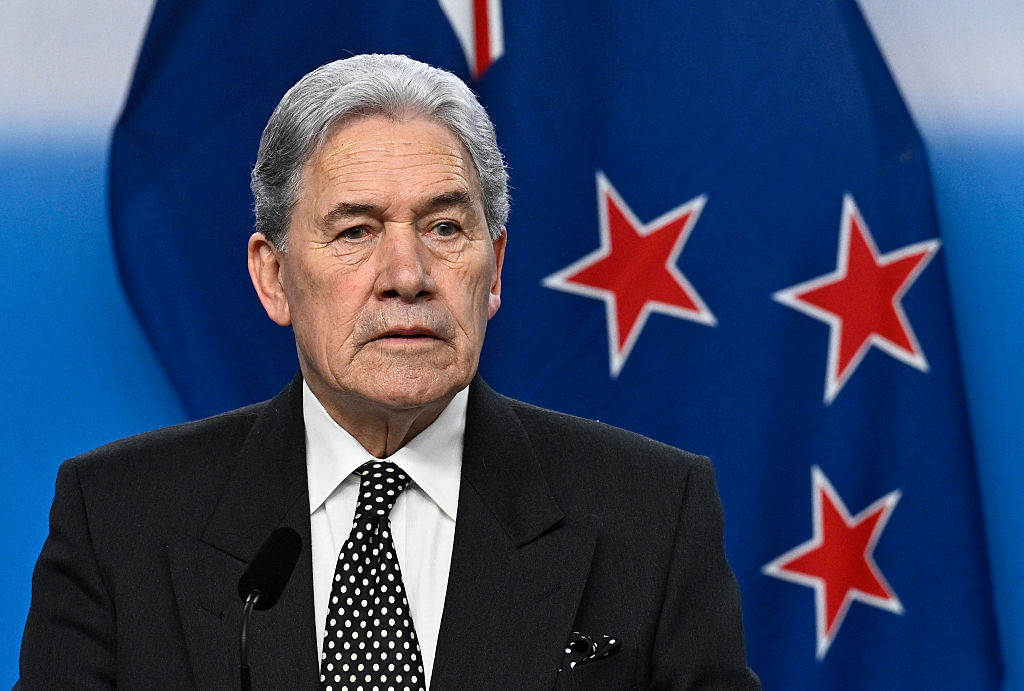

New Zealand First (NZ First) has announced that in this year’s election campaign, the nationalist-leaning party will push for a referendum challenging the future of Māori seats.
These seats were first introduced in 1867 and are aimed at guaranteeing Māori representation in the nation’s parliament.
In a post on X, NZ First leader Winston Peters said the time has come for the public to decide whether the Māori seats remain necessary in the nation’s political landscape.
He wants to abolish the seats for the 2029 New Zealand election.
In the current system, voters are able to enrol in the general or the Māori roll, where their votes count for a general electorate representative or a Māori electorate representative respectively.
“It has been said many times but is a vitally undeniable fact–the Royal Commission into the electoral system in 1986 stated that with the implementation of [Mixed Member Parliament or MMP] it would create a more representative Parliament and the original justification for separate Māori seats would no longer exist. This point cannot be ignored,” Peters said.
He also criticised the conduct of the Māori Party (Te Pāti Māori), calling their actions in the last two years “the last straw.”
The party currently hold six of the seven electorates, and is accused of failing to represent voters.
“They hold the majority of the Māori seats and do not turn up to parliament, disregard the rules and processes, and show utter disdain for the system that gives them the very seats they hold–they represent no one.”
In 1867, when New Zealand politics was established, Māori voters were given four seats, whereas the rest of the country was given 72.
Since the introduction of MMP, the number of Māori representatives have increased across the board.
NZ First says about 27 percent of the House of Representatives have a Māori background.
Peters says this is “far higher than the often claimed 17 percent of the country’s Māori population.”
Maori Party Responds
Co-leader of the Te Pāti Māori, Rawiri Waititi, accused Peters of “race baiting” aimed at capturing right-leaning voters.
“I would hope that New Zealand is mature enough to see the value in the Māori seats sitting here in Parliament,” he told RNZ, arguing that the Māori seats offer a unique voice to Parliament.
Labour Party MP Kieran McAnulty also criticised Peters, claiming this is a “cheap and cynical attempt to get some cheap votes.”
New Zealand Prime Minister Christopher Luxon said the topic was not something that is being discussed. His party, the National Party, governs in coalition with NZ First and the libertarian ACT Party.
Meanwhile, the ACT party deputy leader Brooke van Velden said her party believes a referendum is not needed.
“We actually don’t believe it needs to go to a referendum,” she told Newstalk ZB. “Why not just do it through an act of Parliament rather than through a referendum?”
NZ First has previously campaigned on this issue during the 2017 election.
 Friends Read Free
Copy
Facebook
Tweet
Friends Read Free
Copy
Facebook
Tweet