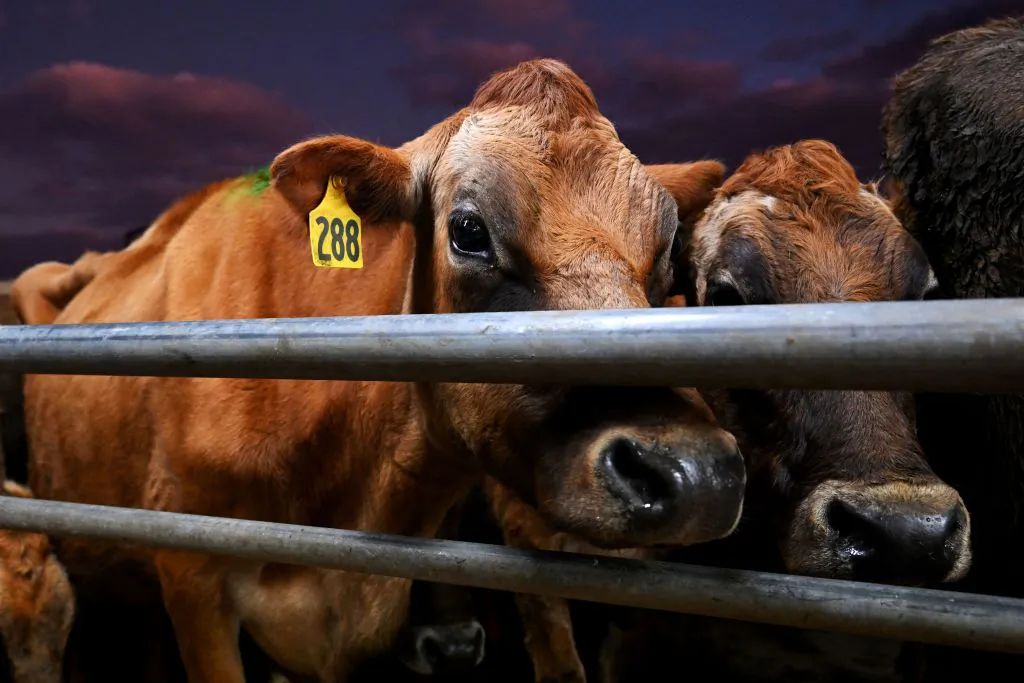

In the minds of most of its trading partners, New Zealand is still defined by its exports of lamb, dairy, and the Lord of the Rings trilogy, according to a survey of foreign consumers by government agency New Zealand Story.
Each year, the survey asks people from other countries about three randomly selected attributes of 35, which together measure a nation’s “soft power”—its ability to attract investment, trade, tourism, education, and talent through reputation and brand perception—rather than through “hard power” or coercion.
NZ Story, which is tasked with monitoring, protecting, and influencing the country’s national reputation abroad, both with businesses and consumers, notes the country ranks 25th out of 193 nations, a relatively high score given its five million population.
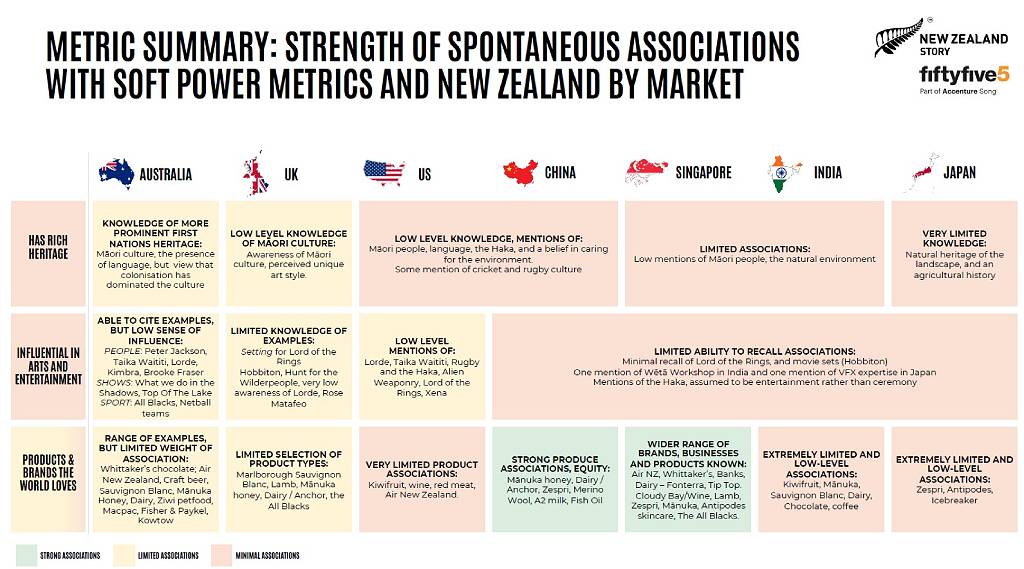
This year’s topics were New Zealand’s heritage, its arts and entertainment sector, and products and brands.
Researchers spoke to people in Australia, China, India, Japan, Singapore, the UK, and the United States.
On the plus side, the report reveals that people see New Zealand as having strong moral values and a global reputation as a safe, principled, and progressive nation. It’s also perceived as having a sustainable future, a strong and stable economy, and being easy to do business with.
However, it has “limited influence beyond that halo,” and little is understood overseas about New Zealand’s Māori culture—knowledge is, at best, at “surface level”—or its creative industries.
“Deepening and authentically sharing our cultural heritage can help New Zealand own a distinctive global positioning that other nations can’t mimic,” NZ Story says.
“Consumers in key export markets are interested in seeing more of Māori culture, as it is key to the perception of New Zealand as a country with rich heritage.”
Though tangible goods still account for 70 percent of exports, it is the services sector that is showing stronger growth.
Yet overseas consumers still overwhelmingly perceive New Zealand as an agricultural exporter, which potentially makes it harder for other industries to establish a foothold.
Poor Brand Recognition
Worryingly, many don’t recognise specific New Zealand brands, which is a barrier to exporters being able to add value, rather than purely being a source of raw ingredients.
“Origin stories must be made explicit if we want value over volume,” the report explains. “Sauvignon Blanc, honey, lamb, dairy, kiwifruit, and wool are spontaneously linked to New Zealand, unlike specific brands.”
People overseas have little knowledge of New Zealand’s creative industries despite it being the site of several international production and post-production facilities (including Lord of the Rings director Peter Jackson’s Weta Workshop), and many prominent entertainment figures not known to be connected with New Zealand.
The Lord of the Rings and Hobbit franchises are still associated with the country, but New Zealand is primarily known as the setting, scenery, and backdrop for moviemaking rather than the minds behind the films’ creation.
The association between those movies and the country in which they were conceived and made is beginning to show signs of “aging out” and being lost to new generations.
Across Australia, the UK, and the United States, a small, limited sample of performers or productions were known as being from New Zealand, but even then they were not perceived as reflecting a unique national point of view, traits, or characteristics.
In China, Singapore, India, and Japan, significant language and cultural barriers mean only a small handful of productions are associated with New Zealand.
“When shown examples, some actors and performers are known, but are viewed as simply more examples among many Western performers,” the study says.
New Zealand’s first export of frozen lamb was in February 1882, its first export of dairy products was a 40 lb consignment of cheese in 1846, and the first instalment of The Lord of the Rings trilogy was made in 2001.
How Other Countries See Themselves
Americans questioned as part of the survey described the United States as innovative but also regressing in terms of international influence, facing an uncertain future, and increasingly inequitable.
Australians saw their country as stable, capable, and lucky, but also stagnating for want of a clear direction.
Those from India perceived it as rapidly progressing, influential, and—despite internal political conflicts—unified, but also challenged by poverty, safety, hygiene, pollution, corruption, and deeply rooted regressive social attitudes, especially about women.
 Friends Read Free
Copy
Facebook
Tweet
Friends Read Free
Copy
Facebook
Tweet