

Liquidations of New Zealand companies have increased significantly, despite positive lending trends and eased interest rates.
The latest Centrix Credit Indicator shows a year-on-year rise of 26 percent, driven by increased enforcement activity by the Inland Revenue Department (IRD).
This year’s budget included an increase of around $64 million (US$37.7 million) in funding for IRD’s enforcement activities, intended to boost collection efforts and encourage tax compliance.
The government has said it expects the department to eventually generate $8 for every dollar it spends on the investigation and collection process.
The construction industry was the worst affected, with a total of 765 companies liquidated in the last year, an increase of 46 percent compared to the previous year. However, the rate of growth now appears to be stabilising.
Hospitality was the second-largest industry contributing to company liquidations, with 297 recorded in the past year—up 49 percent.
“This also continues to be a challenging period for SMEs, with elevated stress across multiple sectors,” Cenrtix said in its report (pdf).
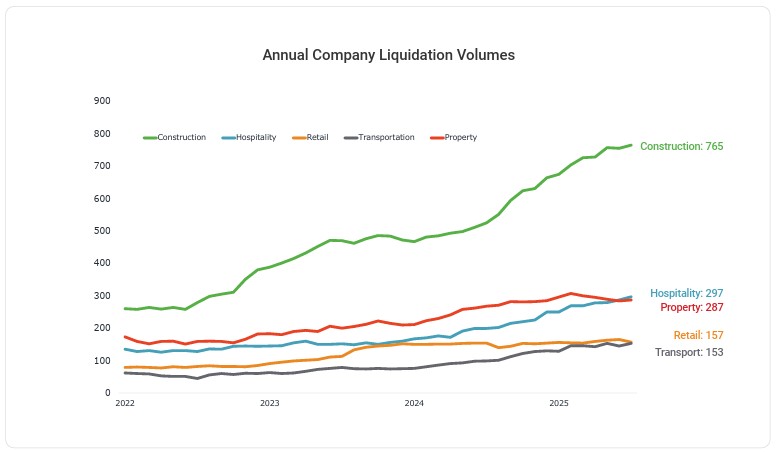
High interest rates combined with weaker migration figures created a tough environment for property companies, with 287 placed into liquidation, up from 268 in the same period last year. Residential property developers experienced the highest volume of liquidations.
There are over 110,000 companies operating in the rental, hiring, and real estate sector, equating to 15 percent of all registered businesses.
Business credit defaults are up 8 percent across the board year-on-year; however the rate of growth continues to ease. The manufacturing industry is the worst hit, with credit defaults up 19 percent from last year, followed by the property / rental sector with credit defaults up 13 percent.
The recent easing of the Official Cash Rate (OCR) by the Reserve Bank of New Zealand (RBNZ) is expected to alleviate some stress in this sector.
Investors have also been impacted as rental yields remain under pressure.
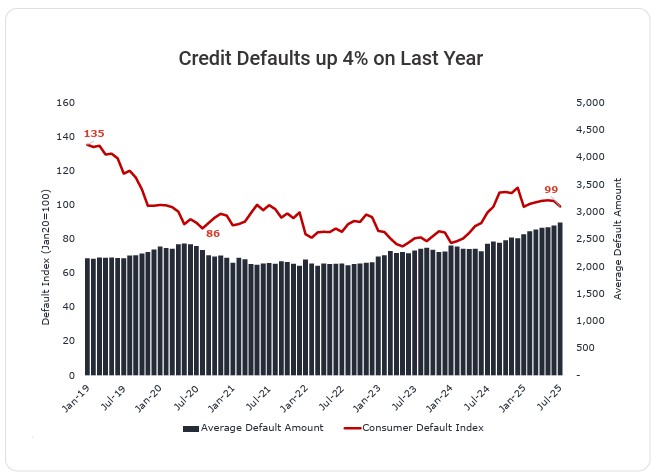
Meanwhile, individuals are still struggling with the cost of living, as evidenced by the fact that consumer arrears have risen to 12.41 percent of New Zealand’s credit-active population in July, 1.3 percent higher than a year ago.
The number of people behind on payments increased by 48,000, an increase of 2,000 on the number in June. Consumer credit defaults are up 4 percent year-on-year; however, the rate of increase has eased in recent months.
In another sign that things may be slowly improving, the volume of court judgements peaked last year, and are down 4 percent so far in 2025.
The proportion of credit application enquiries returning financial hardship alerts remains just above 0.5 percent, and the number of personal insolvencies is largely unchanged year-on-year.
Meanwhile, mortgage arrears improved to 1.38 percent in July, with 21,200 home loans past due—400 fewer than the previous month.
 Friends Read Free
Copy
Facebook
Tweet
Friends Read Free
Copy
Facebook
Tweet