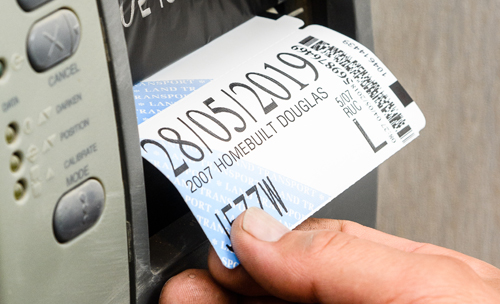

In what Transport Minister Chris Bishop has called the biggest change to how New Zealand funds its road network in 50 years, the government has announced its intention to abolish petrol taxes and replace them with electronic road user charges (RUCs) for all light vehicles.
Heavy vehicles, diesel-powered machinery such as utes and farm equipment, and electric vehicles already pay under an RUC system.
Motorists currently pay fuel excise duty of about 70 cents a litre at the pump, as well as GST on that amount, which people have long complained is a “tax on a tax.”
“For decades, petrol tax has acted as a rough proxy for road use, but the relationship between petrol consumption and road usage is fast breaking down,” Bishop explained.
“Petrol vehicles with better fuel economy contribute less per kilometre towards road maintenance, operations, and improvements.
“We are also seeing a fast uptake of fuel-efficient petrol hybrid vehicles. In 2015, there were 12,000 on our roads, while today there are over 350,000.
Changing the Fleet Has Necessitated the Switch
Bishop said the shift was necessary to keep the system fair.
“As our vehicle fleet changes, so too must the way we fund our roads. It isn’t fair to have Kiwis who drive less and who can’t afford a fuel-efficient car paying more than people who can afford one and drive more often.”
The government aims to phase in the new system by 2027, beginning with legislative and regulatory reform to modernise the current RUC system and support private sector innovation.
“The current RUC system is outdated,” Bishop said.
“It’s largely paper-based, which means people have to constantly monitor their odometers, and requires people to buy RUC (credits) in 1,000 km chunks.
“We’re not going to shift millions of drivers from a simple system at the pump to queues at retailers. So instead of expanding a clunky government system, we will reform the rules to allow the market to deliver innovative, user-friendly services for drivers.
He said several companies already offer digital RUC services for heavy vehicles and could expand that to light vehicles.
“Eventually, paying for RUC should be like paying a power bill online, or a Netflix subscription. Simple and easy,” he said.
Opposition Raises Concerns Over Timing
Labour leader Chris Hipkins acknowledged that moving to a system was inevitable, but expressed concerns about the timing.
“I’m concerned that the government are proposing to hike up fuel excise straight after the election—by 12 cents a litre—at the same time as shifting to road user charges.
“That could be a real burden, particularly for New Zealanders who are struggling with the cost of living at the moment, and [the government hasn’t] set out a transition plan for how they’re going to make sure that Kiwis don’t get absolutely clobbered by this change.”
He said he would need to see the finer details of the system’s implementation before Labour could commit to supporting it.
 Friends Read Free
Copy
Facebook
Tweet
Friends Read Free
Copy
Facebook
Tweet