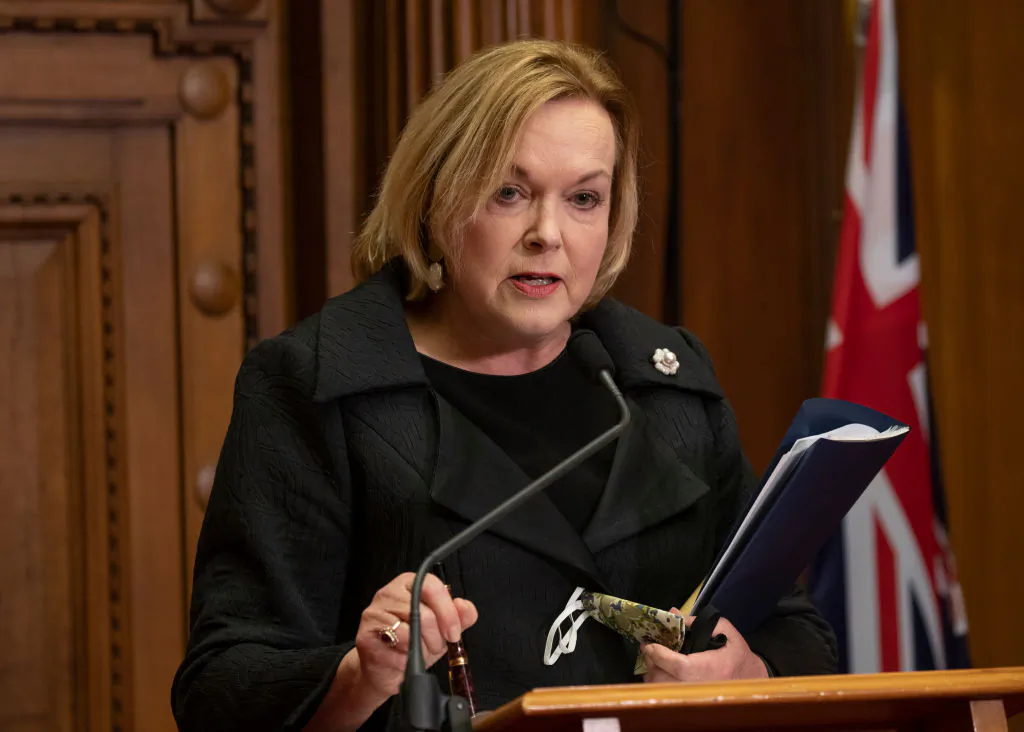

New Zealand and the United Kingdom have updated their decade-old defence cooperation agreement to reflect what the Defence Minister Judith Collins called a “rapidly changing world.”
Collins, who signed the new joint statement in London with UK Defence Secretary John Healey, said the agreement was needed as global threats intensified.
“Russia’s illegal and unjustified invasion of Ukraine, increasing strategic competition in the Indo-Pacific, and attacks on commercial shipping in the Middle East are among the issues affecting both of our regions,” she said.
“It is vital that we stand firm in the face of current and future threats.”
Collins said the pact would help New Zealand and UK forces to work more closely together to keep both countries secure.
“The international rules-based order that both countries rely on for economic prosperity is under increasing threat,” Collins said.
“Our countries’ militaries already train, deploy, and operate side-by-side.”
He highlighted New Zealand’s involvement in UK-led operations in the Indo-Pacific.
“Our army personnel have been working with UK counterparts to train Ukrainian recruits,” he said.
The new agreement enhances existing ties and will explore new opportunities for closer cooperation, including innovation, defence industrial supply chains, and common equipment.
“In a deteriorating global environment, New Zealand is committed to working with like-minded partners to uphold the international rules-based order that is fundamental to our security and prosperity,” Collins said.
The announcement follows Australia’s move in July to sign a similar long-term defence treaty with Britain, linked to the AUKUS nuclear submarine partnership.
New Zealand has also pledged to lift defence spending to 2 percent of GDP over the next eight years. It has already set aside $9 billion, with a focus on working more closely with Australia’s forces.
 Friends Read Free
Copy
Facebook
Tweet
Friends Read Free
Copy
Facebook
Tweet