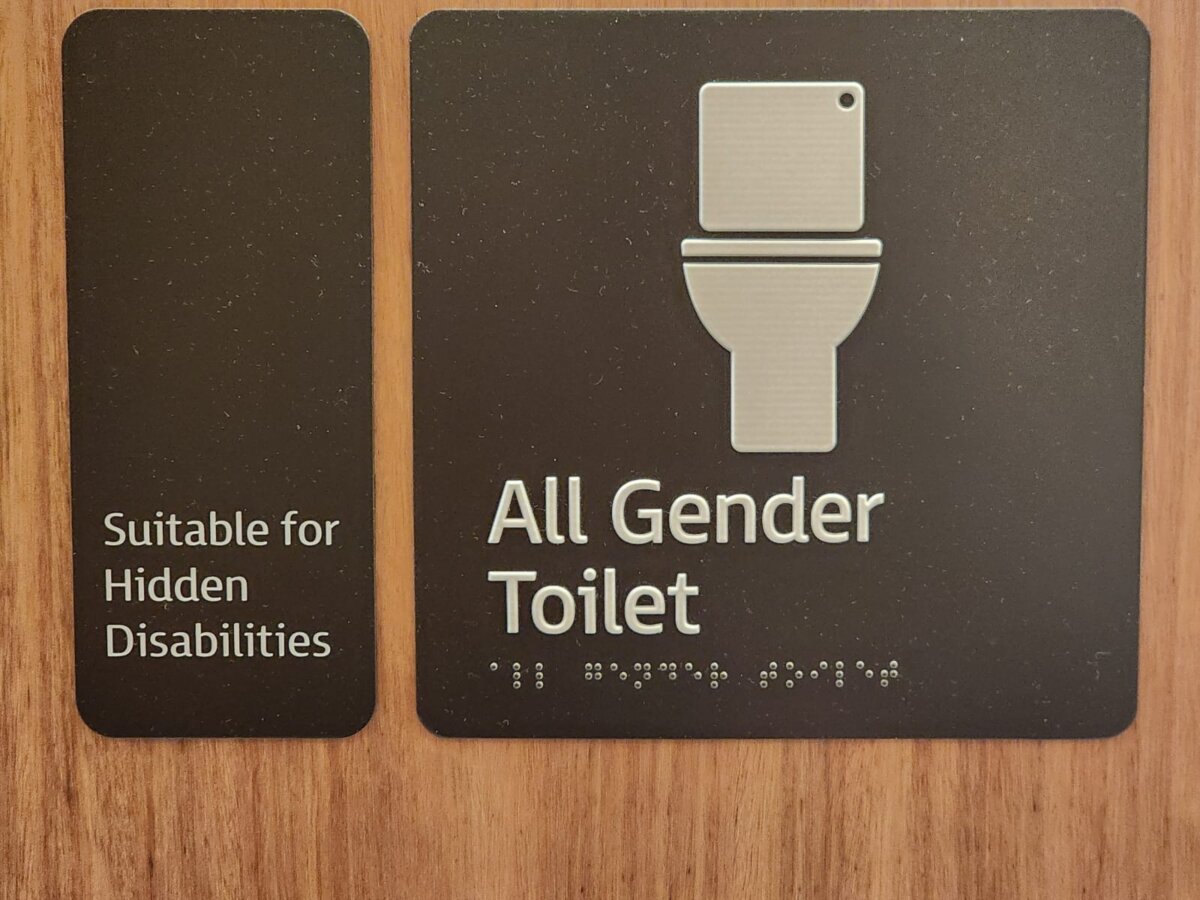

Rachel Merton, a Liberal member of the New South Wales Legislative Council, has taken aim at a proposed change to building standards that would allow male and female toilets to be converted into all-gender facilities in public buildings, saying it harms women’s rights.
In February, the Australian Building Codes Board released a draft of the National Construction Code outlining a range of changes to building standards that can be adopted by states and territories from May 1, 2026.
Under the draft, builders would be allowed to include all-gender toilets in certain public buildings as an optional alternative to separate male and female facilities.
Liberal Member of the New South Wales (NSW) Legislative Council Rachel Merton argued the proposal elevated gender ideology over women’s rights.
“The biological rights of women and girls, once again, will come last under the proposed new building code that could see as many as half of all new public toilets designated as ‘gender neutral’,” she wrote in a Facebook post on April 23.
“This push for shared public toilets is the latest activist attempt to prioritise radical gender ideology over common sense and the rights of girls and women to privacy, safety and dignity.”
Rachel Merton also criticised the NSW government for not taking a position on the issue, saying she would raise it when state parliament resumes in May.
How Will it Work?
According to the draft code (pdf), smaller public buildings may be able to use all-gender toilets in place of separate male and female facilities, subject to minimum requirements.
In larger buildings, up to half of the required male and female toilets can be converted, as long as the changes are split evenly between them.
However, the proposal does not require the removal of male and female toilets, and the minimum number of toilets that must be provided does not change. Private homes are not impacted.
The Australian Christian Lobby, which is campaigning against the changes, said the reforms are optional for developers but not for women and children, who could face fewer single-sex toilets if all-gender facilities are installed.
“This will completely undermine privacy, safety and dignity for women, girls, victims of sexual violence, and those from religious or cultural communities,” it said.
NSW Will Not Adopt New Code Until 2027
In NSW, the state government has confirmed it will not adopt the new code until May 1, 2027, providing a 12-month transition period for industry.
NSW Minister for Building Anoulack Chanthivong said the delay was intended to support a smooth transition for the construction sector.
“We want to make sure this does not cause disruption to the construction sector’s ability to deliver homes and meet housing demand in NSW, which is why we have provided a 12-month transition period to the new NCC requirements,” he said.
“This transition period will also minimise future compliance risk by allowing industry to plan for the changes in the NCC 2025 and factor them into their new projects ahead of time.”
 Friends Read Free
Copy
Facebook
Tweet
Friends Read Free
Copy
Facebook
Tweet