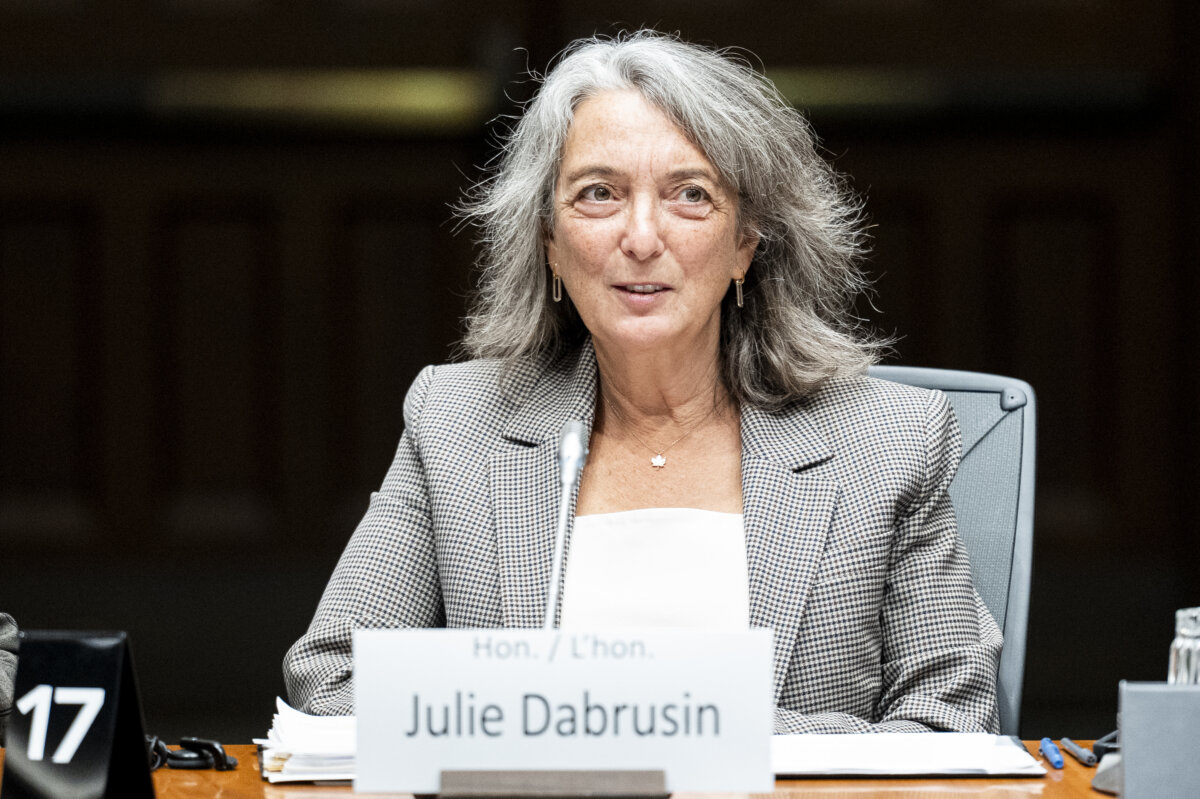

Environment Minister Julie Dabrusin says the Liberal government is dropping its plan to implement a ban on the export of single-use plastics, saying the measure is not expected to lead to a net decrease in plastic waste.
“At a time of ongoing economic uncertainty, shifting supply chains, and increased trade pressures, we recognize the importance of protecting Canadian jobs and supporting industries that contribute to our national prosperity, while maintaining our commitment to environmental responsibility,” Dabrusin said in an Oct. 20 statement.
She said the ban wouldn’t have led to a net decrease in plastic waste since few peer countries would have followed suit, and many international buyers would have moved away from Canadian suppliers.
Ottawa’s decision to drop its plan follows a review of the current policy landscape, global trade conditions, and domestic economic challenges, and aligns with the approach of several international partners, such as within the European Union, Dabrusin said.
Meanwhile, she said Canada’s domestic single-use plastics ban is “working,” citing a reduction in observable waste and litter. She added that Ottawa is committed to further reducing plastic pollution by collaborating with international partners.
“We are committed to building on the successes of these measures, while making necessary changes where previous policies have not achieved desired results,” Dabrusin said.
Alberta Response
Alberta Environment Minister Rebecca Schulz reacted on social media to Dabrusin’s statement, saying she congratulates Ottawa on abandoning its plastic export ban, which was first introduced in 2022 by then-Environment Minister Steven Guilbeault. The export ban was set to take effect by the end of 2025.
However, she said she is “disappointed” to see Dabrusin defend the “failed” single-use plastics ban.
“The ban is an attack on Canada’s plastics industry – which employs thousands of Canadians and attracts billions in investment – while creating the plastics needed for every modern convenience, from surgical gloves to iPhones,” Schulz said in an Oct. 21 X post.
She noted that when Alberta took the federal government to court over the ban in 2023, the ban was found to be “unreasonable and unconstitutional.” While Ottawa appealed the court decision, Schulz said Alberta “fought back” and is currently awaiting the Federal Court of Appeal’s decision.
“Silly statements about plastics bags and styrofoam litter is divorced from reality,” Schulz said. “There is no legal, policy, economic or scientific justification for the ban.”
Plastics Ban
Guilbeault introduced regulations in 2022 for the manufacturing and importation of single-use plastics, including checkout bags, cutlery, food service containers, ring carriers, stir sticks, and straws in an attempt to reduce plastic pollution.
The ban on manufacturing and importing for most of the products took effect in December 2022, while the ban on selling the products came into force a year later. The ban on manufacturing, importing, and selling the products for export was set to take effect in December 2025.
The government intended to label “plastic manufactured items” as “toxic” under the Canadian Environmental Protection Act, but in 2023, the Federal Court rejected the cabinet order that classified the items as such, calling the order “invalid and unlawful.”
The Federal Court also called cabinet’s assertion that all plastic-manufactured items are toxic “unreasonable and unconstitutional,” noting the order exceeded Ottawa’s ability to make criminal law. Meanwhile, Guilbeault said scientific evidence had shown plastic pollution to have a negative impact on human health.
“We’re finding microbeads of plastics in our brains,” he told reporters in 2023. “It’s affecting fetuses. It’s affecting the growth of our kids. We have to put a stop to that.”
Alberta Premier Danielle Smith had also raised concern about Ottawa’s decision to list plastics as “toxic,” calling it “federal overreach.” She urged the federal government to listen to the federal courts and delete “plastic manufactured items” from the toxic substance list.
Saskatchewan Premier Scott Moe joined Smith in calling on Ottawa to make changes to several of its federal policies, including abandoning any regulations involving plastics. The premiers said the changes would help strengthen Canada’s economy.
During his election campaign, Conservative Leader Pierre Poilievre said his government would remove the Liberal government’s ban on single-use plastics and put a stop to regulations on “plastic-free” packaging, saying these regulations increase the cost of food for Canadians.
Matthew Horwood contributed to this report.
 Friends Read Free
Copy
Facebook
Tweet
Friends Read Free
Copy
Facebook
Tweet