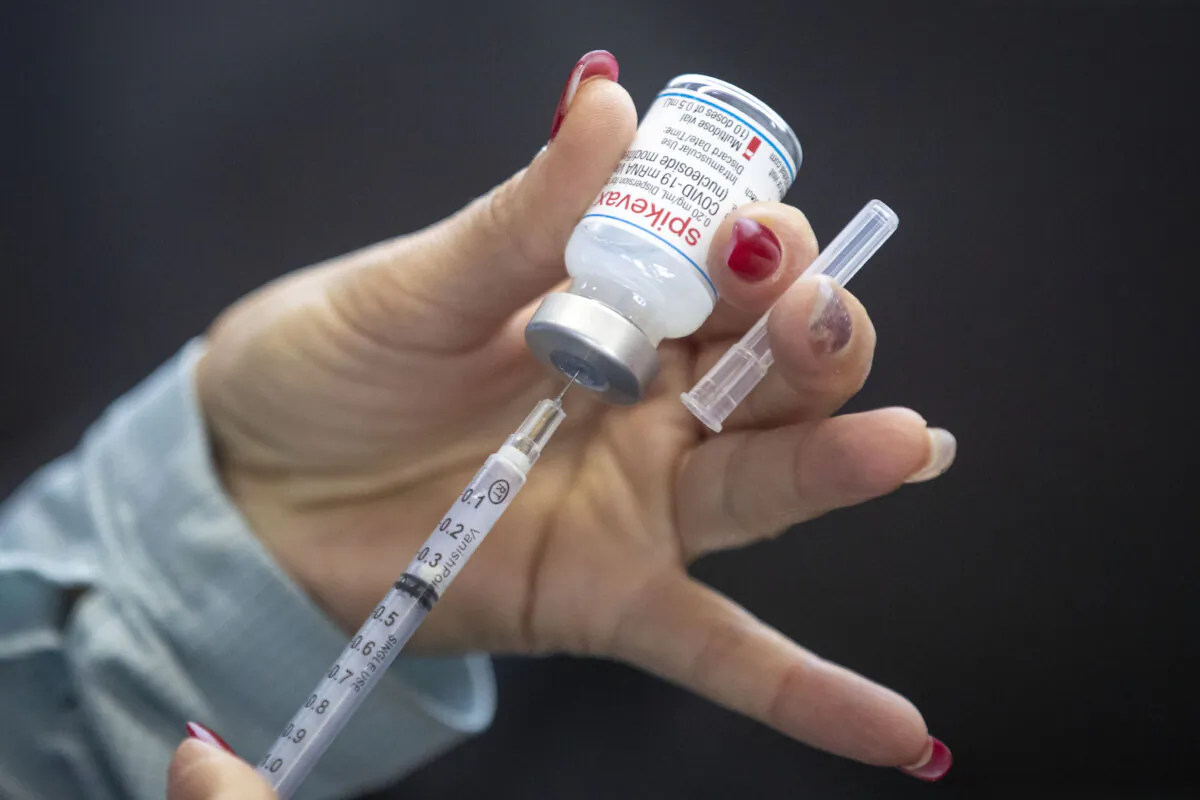

Canadians seeking compensation for vaccine injuries will soon be able to follow the progress of their applications online as the federal government takes over a national program meant to support the vaccine-injured.
After years of criticism tied to delays, backlogs, and program management, the federal Public Health Agency of Canada (PHAC) has taken control of the Vaccine Injury Support Program (VISP). It has now been renamed the Vaccine Impact Assistance Program (VIAP) and promises a series of measures to improve efficiency and transparency.
The program, previously run by third-party technology services firm Oxaro, will soon introduce an online portal to better track and communicate information, Public Health Agency of Canada said in a March 31 news release.
What’s New
Oxaro’s contract to administer the program had expired March 31 and PHAC took over April 1, pledging greater efficiency.
“In the coming months, the new program will introduce enhanced digital services for applicants, including a secure online client portal,” the agency said.
Through the portal, applicants will be able to check the status of their application in real time and view documents related to their file. They will also be able to update contact and other personal information and upload key documents securely, according to PHAC.
Although it has offered few details beyond the plans for an online platform, PHAC said it now aims to “address the existing backlog of applications, while improving the consistency and transparency of the claims process.”
What Stays the Same
Despite the administrative overhaul, the program’s core structural elements remain unchanged.
Applicants must still demonstrate that their injury is “serious and permanent” and that there is a likely causal relationship between the injury and the vaccine.
As under the old program, determination of a vaccine injury must be made through a medical review process, consistent with international approaches to vaccine injury compensation. The program does not provide automatic compensation and each case is assessed individually.
To date, these standards have contributed to relatively low approval rates compared to the total number of claims filed. The requirement to establish causality—rather than simply temporal association—means many applications can still fail to meet compensation criteria.
A total of 3,317 claims had been received by VISP as of June 1, 2025. While 2,699 of those were admissible, 266 are pending eligibility, and 352 were rejected. A total of 234 claims had been approved and were eligible for payment, while 420 Canadians have submitted appeals after their claims were rejected.
The federal government has indicated that bringing the program in-house will improve oversight and streamline operations. It has given no specific timelines for reducing the backlog or processing new claims.
Whether or not the in-house shift addresses longstanding concerns about efficiency and fairness will become clearer as the new system takes shape. Increased transparency in reporting—particularly around processing times and decision criteria—will likely factor into how the rebranded version is evaluated.
As for claimants, judging the effectiveness of the overhaul is much simpler: how quickly cases are resolved and how clearly those decisions are communicated.
Delays and Complaints
PHAC’s takeover of the program comes after a Global News investigation found that neither the federal government nor Oxaro anticipated the volume of applications the program received. Some claimants said their applications were delayed for months or years, while others reported receiving decisions based on reviews conducted by medical professionals they had never met. Complaints also included lost paperwork and limited communication about the status of claims.
Several Canadians also told The Epoch Times in 2024 that the program was being insufficiently run, with long wait times, poor communication, a high turnover rate for case workers, and insufficient payouts for injuries.
As of last summer, according to the Global News investigation, $50.6 million in taxpayer funding had been allocated to the program. Of that amount, $33.7 million had been spent on administrative costs, while $16.9 million had been paid out to claimants.
The program was introduced during the national COVID-19 vaccination rollout, when governments across Canada implemented measures to encourage uptake. In some sectors, including federal employment and federally regulated transportation, vaccination was required to continue working. Among the general public, those who did not get vaccinated were denied access to domestic air and rail travel for a period of time.
 Friends Read Free
Copy
Facebook
Tweet
Friends Read Free
Copy
Facebook
Tweet