
Year in Review
Prime Minister Mark Carney pushed this year for Ottawa to assume a larger role in advancing major projects to boost economic growth, but the approach has not achieved consensus and results are uncertain, especially in relation to a new pipeline.
The push has been in line with Carney’s campaign pledge to launch “nation-building” projects deemed to be in the national interest, in a bid to build the “strongest economy in the G7.”
The Liberals have dealt with critics on both sides, saying Ottawa is moving either too fast or too slow. In any case, 2026 is just around the corner, and apart from announcements and a new office to “fast-track nation-building projects,” notable Ottawa-enabled building developments are still pending.
Carney’s first move to speed up project development involved fulfilling his election promise of passing legislation on major projects and interprovincial trade barriers before Canada Day. Bill C-5, also known as the One Canadian Economy Act, was introduced on June 6 and became law on June 26.
The Building Canada Act, introduced and enacted as part of Bill C-5, enables Ottawa to designate projects deemed to be in the “national interest” and have them bypass certain laws. Among them is the Impact Assessment Act, legislation that the Tories say makes it impossible to build new pipelines.
The Conservatives have said that the government should remove measures like the Impact Assessment Act and “get out of the way” of businesses, instead of choosing project winners by selecting a few “nation-building” projects and maintaining the regulatory regime for the rest of the private sector.
The Building Canada Act is one of Ottawa’s responses to trade tensions with the United States, enacted as a means to create economic growth with new infrastructure and projects serving internal and external trade.
Opposition to Bill C-5
Bill C-5 moved quickly through Parliament as the Conservatives voted alongside the Liberal government. The Tories said that they supported the bill as a “better than nothing” approach but that it would have been preferable to repeal Liberal laws instead of simply creating an exemption process.
The Bloc Québécois, NDP, and Green Party did not support the bill.
The Bloc accused the Liberals of putting a “gag order” on Parliament in debate about the bill because parliamentary committees were only given a few days to study it. The Bloc also said Ottawa was granting itself extraordinary powers with the bill.
The NDP also voiced concern about the bill undermining democratic process, the rights of indigenous Canadians, and environmental protections.
While Ottawa had said indigenous consultation was a priority of Bill C-5, noting that its new Major Projects Office would be supported by an Indigenous Advisory Council, several indigenous groups said the bill could potentially weaken existing requirements related to indigenous consultation and environmental protections.
The Assembly of First Nations said the bill’s fast-tracking of project approvals would provide indigenous people with “minimal opportunity” to influence decisions that impact them.
Major Projects Office
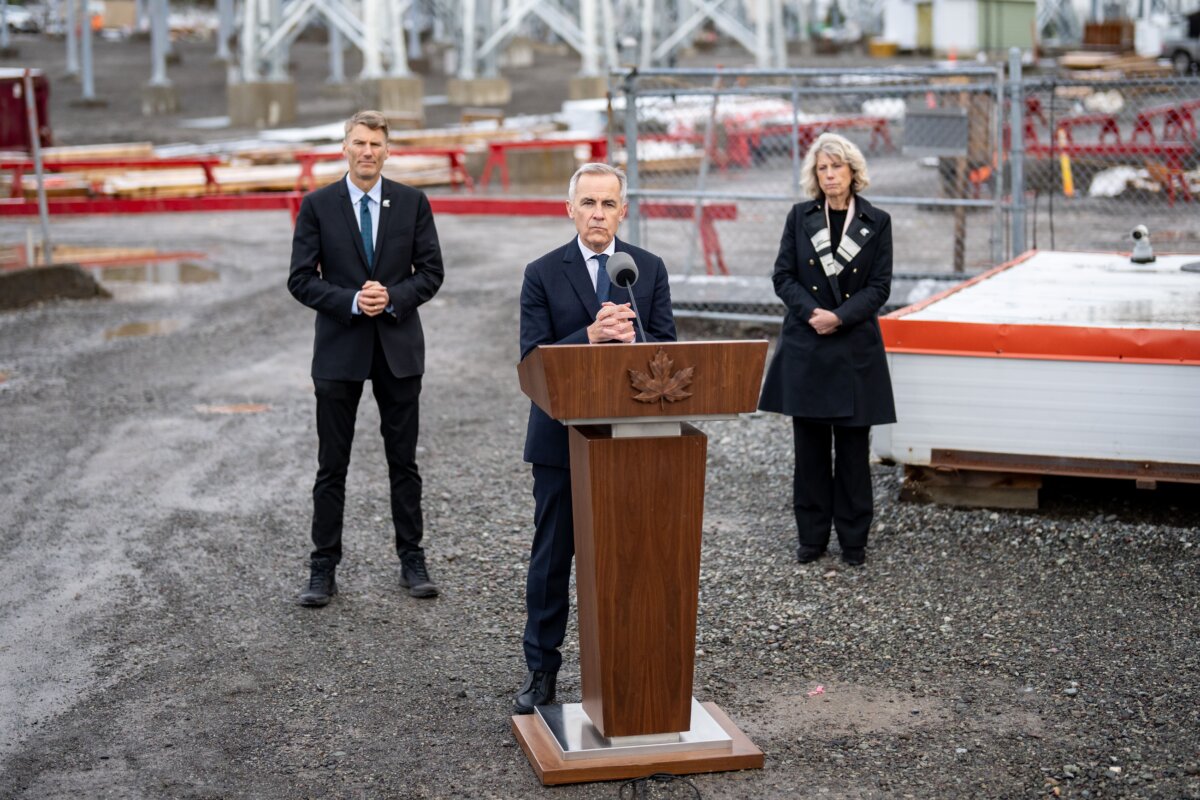
The Liberal government created a new bureaucracy in a bid to help steer projects at the federal level.
Carney launched the Major Projects Office (MPO) in August with the goal of fast-tracking projects by streamlining regulatory approval processes and coordinating financing.
Former Trans Mountain Corporation head Dawn Farrell was appointed as the first CEO of the MPO, which is based in Calgary.
Canada’s premiers submitted the projects they wanted to be prioritized through the office ahead of the first major projects announcement. Alberta pushed for energy infrastructure, Ontario wanted commitments to further develop minerals in its Ring of Fire region, Manitoba wanted icebreakers to increase shipping capability through Hudson Bay, while Nova Scotia asked for electricity infrastructure.
The Conservatives criticized the launch of the MPO, saying that it introduces an additional bureaucratic layer. The party said that contemplating the approval of a project “won’t get anything built.”
First Round of Major Projects
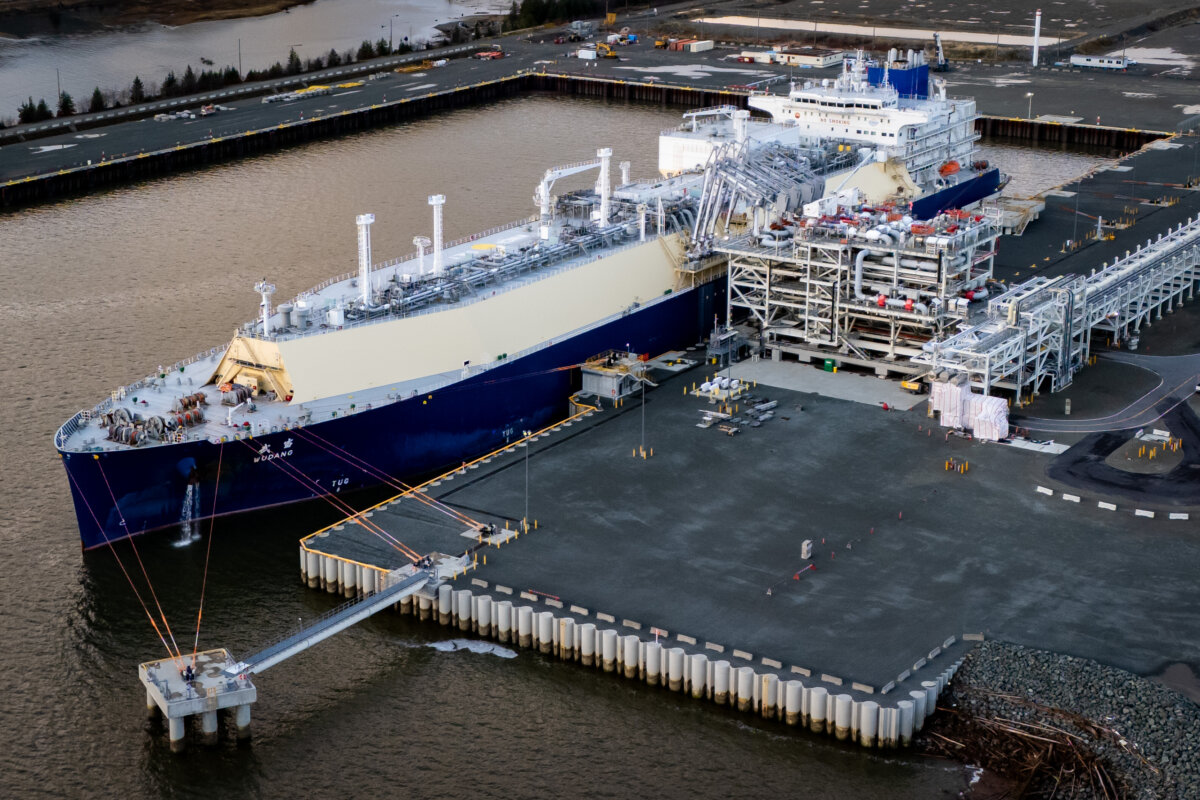
Carney on Sept. 11 announced the first set of five projects his government would refer to the MPO. Among them was the second phase of LNG Canada in B.C. to double its production of liquified natural gas (LNG), and the Darlington New Nuclear Project in Southern Ontario to create small modular reactors.
The Contrecœur Terminal Container Project to expand the Port of Montreal was also included, as well as the McIlvenna Bay Foran Copper Mine Project in Saskatchewan to mine copper and zinc, and the expansion of the Red Chris Mine in northwestern B.C. to mine copper and gold.
The projects selected for the first round were largely already in advanced stages of approval and had mostly cleared indigenous consultations.
Carney also announced six “strategies” for projects at earlier stages that require more development, including critical minerals projects in areas like Ontario’s Ring of Fire, the Wind West Atlantic Energy project in Nova Scotia, emissions reduction via the Pathways Plus carbon capture and storage project in Alberta, the Arctic Economic and Security Corridor infrastructure project, the Port of Churchill Plus project to expand trade corridors in Manitoba, and a high-speed railway from Toronto to Quebec City.
Second Round of Major Projects
The prime minister on Nov. 13 announced the second set of six major projects to be referred to the MPO. They included three mining projects: the Northcliff Resources’ Sisson Mine in New Brunswick to produce tungsten used in steel production and defence, the second phase of the Nouveau Monde Graphite’s Matawinie Mine project in Quebec to produce graphite used in defence and battery supply chains, and the Canada Nickel’s Crawford project in Northern Ontario to produce nickel used in batteries and green steel.
Two electricity-related projects were also among the second set of projects, including the Iqaluit Nukkiksautiit Project in Nunavut that features a 15–30 megawatt water power plant, and the North Coast Transmission Line, which is expected to feature new 500-kilovolt transmission lines and associated infrastructure from Prince George to Terrace, B.C.
Another LNG project in British Columbia, Ksi Lisims LNG, was also included in the second round of projects and is expected to become Canada’s second-largest LNG facility and “one of the world’s lowest-emission LNG operations,” according to the Prime Minister’s Office.
There is currently a large appetite for LNG around the world, and Ottawa has identified the commodity as key as it seeks to expand trade to markets outside the United States. Carney has labelled LNG as an “essential fuel for the energy transition” and said it can “help Canada build new trading relationships, especially in fast-growing markets in Asia.”
The second round of projects included more projects at earlier stages of approval compared to the first round, including Ksi Lisims LNG, the Crawford project, and the Iqaluit Nukkiksautiit Project, which are currently undergoing environmental assessments and indigenous and public consultations. The North Coast Transmission Line is also undergoing studies and regulatory approvals.
Poilievre, for his part, criticized Carney’s second announcement, saying that most of the projects “were on the verge of happening anyway.”
Both sets of major projects were heavy on critical minerals, with five mining projects now referred to the MPO, which aligns with Ottawa’s push to develop Canada’s critical minerals sector. Finance Minister François-Philippe Champagne said on Nov. 10 that refining critical minerals is “the name of the game” for Canada to become a competitive supplier. Budget 2025 includes a number of measures to help develop Canada’s critical minerals industry.
Alberta Oil Pipeline
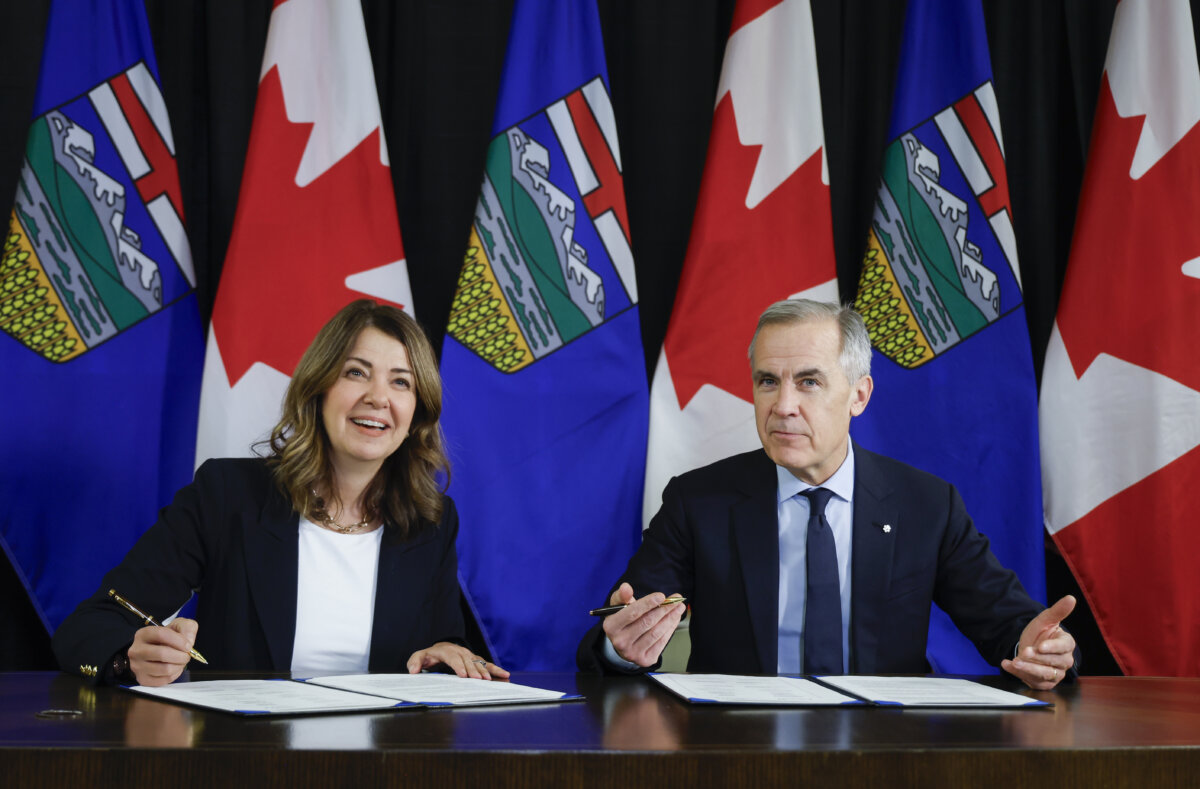
While the Liberal government did not refer an Alberta project, such as an oil pipeline sought after by the province, to the MPO in either announcement, Carney and Alberta Premier Danielle Smith signed an agreement on Nov. 27 to pave the way for a new West Coast pipeline. The memorandum of understanding (MOU) also removes some Trudeau-era energy policies in exchange for additional emission-reduction commitments from Alberta.
The MOU between Ottawa and Alberta allows for one or more privately financed pipelines to be built, including a proposed route capable of carrying roughly one million barrels a day of bitumen to Asia. The application for the pipeline will be ready to submit to the MPO on or before July 1, 2026, according to the MOU document.
The pipeline project is tied to the creation of Alberta’s proposed Pathways Alliance carbon capture project, which would compress CO2 into liquid form, ship it through a pipeline, and store it in a facility more than 1,000 metres underground.
Smith has pushed for a carbon capture project for more than a year, calling it a “grand bargain,” as its $10 billion to $20 billion cost would be paid for with revenues generated by additional oil sold to international markets. Carney made the deal with Alberta in an effort to repair strained relations and boost economic activity.
The MOU makes several changes to Trudeau-era energy policies, such as potentially adjusting the oil tanker ban to allow oil to be shipped to Asia via oil tankers, removing the planned emissions cap, exempting Alberta from Canada’s Clean Electricity Regulations, and creating a “cooperation agreement” on the Impact Assessment Act by April 1, 2026.
In the deal, Carney also obtained Smith’s commitment to strengthen Alberta’s industrial carbon tax. Smith froze the price at $95 a tonne earlier this year, citing its negative impact on businesses. According to the MOU, the carbon price will need to reach $130 a tonne in Alberta.
Smith described the agreement as a “win for Alberta,” noting that seven out of what she had called the “nine bad laws” relating to the energy sector are addressed by the deal.
Pipeline Reactions
Then-Culture Minister Steven Guilbeault, formerly environment minister from October 2021 to March 2025, announced he was resigning from cabinet later on the same day as the MOU was signed on Nov. 27. While he said he would remain in the Liberal caucus as the MP for his Quebec riding, he noted that he “strongly” opposed the agreement due to his commitment to “fighting climate change and protecting our environment.”
Guilbeault, a longtime climate-change activist, said that “environmental issues must remain front and centre.” He expressed disappointment with the Carney government’s changes to the policies he brought in as environment minister and said the decision to exempt Alberta from Canada’s Clean Electricity Regulations in exchange for stricter industrial carbon pricing rules and the Pathways project was a “serious mistake.”
The MOU calls for immediate engagement with B.C. on the project and meaningful discussions with indigenous peoples in Alberta and British Columbia, but the B.C. government, as well as some Liberal MPs and First Nations in the province, have expressed opposition to parts of the pipeline plan.
Some Liberal MPs have also criticized the MOU, including Guilbeault. Meanwhile, Energy Minister Tim Hodgson told reporters on Dec. 9 that the Liberal caucus supports the MOU.
B.C. Premier David Eby expressed concern that he wasn’t “at the table” for the project’s discussions and that it would distract from other projects in his province that already have indigenous support. He said the pipeline still doesn’t have a private proponent to build it, nor does it have support from B.C.’s Coastal First Nations.
Smith says that not all indigenous communities oppose the pipeline and that the project would bring them prosperity.
With opposition from B.C. and some First Nations as well as the need to find a private investor, it could be many years before a pipeline to the B.C. coast is built, despite the MPO aiming to reduce approval times to two years. The Trans Mountain Expansion pipeline project took approximately six years to build, from the start of construction in 2018 to becoming fully operational in 2024.
Conservatives on Pipeline
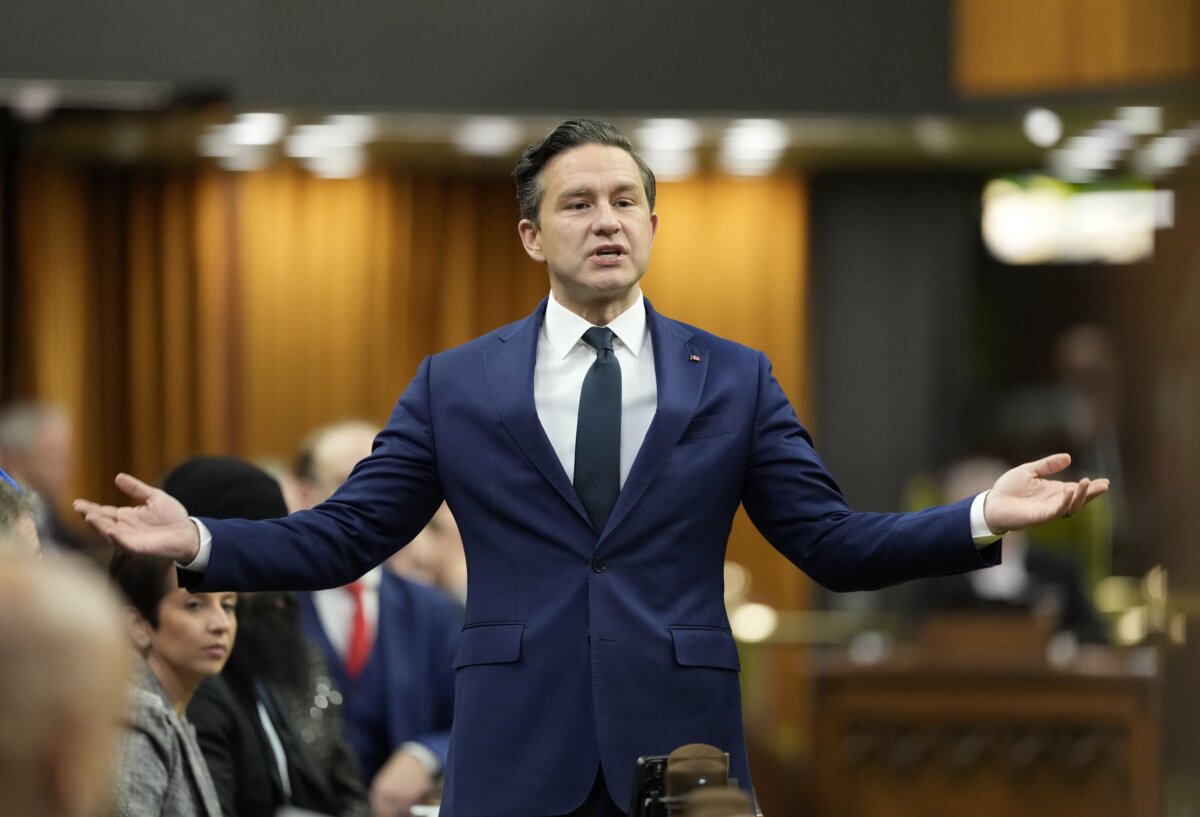
Poilievre criticized the MOU, saying that the agreement doesn’t promise a pipeline will be built but instead, “seven months from now, a pipeline proposal will be referred to a federal office for two further years of study.”
The Conservatives put forward a motion asking MPs to support the oil pipeline using language from the MOU, but it was defeated by other parties in a Dec. 9 vote. Conservative MP and Deputy Leader Melissa Lantsman had said prior to the vote that the motion would clarify where the Liberals stood on the pipeline deal, because some Liberal MPs had voiced positions different from that of their leadership.
Following the vote, Poilievre said in a social media post that the Liberals had “voted against their own deal — blocking a pipeline to the Pacific and keeping Canadian energy landlocked.”
Energy Minister Hodgson told reporters on Dec. 9 that the move by the Tories was a “cheap political stunt.” Other Liberal cabinet members expressed opposition to the motion, saying it was too narrow in scope in asking for a “yes” or “no” in support of the pipeline.
Support for Pipeline
The pipeline deal has largely received support from Canadians, two recent polls suggest. An Abacus Data survey conducted within 24 hours of the MOU agreement being signed indicated that 55 percent of respondents support the concept of the pipeline, while 18 percent oppose it.
Similarly, a Leger poll conducted between Dec. 5 and 7 indicated that 50 percent of Canadians polled support the proposed project, while 17 percent oppose it. Support for the pipeline was most prominent in Alberta and among Conservative voters, while it was lowest in Quebec, both polls reported.
Matthew Horwood, Noé Chartier, and Paul Rowan Brian contributed to this report.
 Friends Read Free
Copy
Facebook
Tweet
Friends Read Free
Copy
Facebook
Tweet