
Three officials with Global Affairs Canada (GAC) who are working to update Canada’s Indo-Pacific Strategy said the new plan will focus on boosting trade to the region as well as building stronger defence ties with regional allies.
Canada’s Indo-Pacific plan is undergoing a “recalibration” to meet growing energy demand from Asia and significant opportunities to increase trade and form stronger defence ties with allies throughout the Indo-Pacific region, the officials said during testimony Nov. 19 before the Senate Committee on Foreign Affairs and International Trade.
“Much more must be done for Canada to continue to diversify its exports in line with the prime minister’s objective of doubling Canada’s non-U.S. exports over the next decade,” said Weldon Epp, assistant deputy minister of GAC’s Indo-Pacific branch. Epp added that the update is actively “underway” and won’t “take very long.”
On Oct. 22, Prime Minister Mark Carney said Canada aims to double its non-U.S. exports in the next 10 years, noting that he expects the move to generate an additional $300 billion in trade revenue.
According to the director general of Indo-Pacific Strategy Planning at GAC, Valérie Samaan, her department has been consulting with all provinces and territories this week to ensure every stakeholder gets to provide input on the new strategy. The previous Indo-Pacific Strategy was released in 2022 under then-Minister of Foreign Affairs Mélanie Joly.
Epp, Samaan, and Aly-Khan Rajani, director of GAC’s Indo-Pacific Regional Coordination in the Policy and Planning division, said Canada will focus on being a dependable supplier of energy and critical minerals to the Indo-Pacific region as well as building stronger defence partnerships amid Russia’s ongoing war against Ukraine.
“The world of 2025 is not the same as the world of 2022,” Epp told senators, mentioning the ongoing war in Ukraine as well as U.S. tariffs as ruptures in the current geopolitical landscape. “It is good timing to have a review, and that’s underway.”
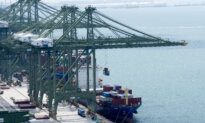
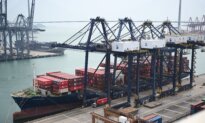
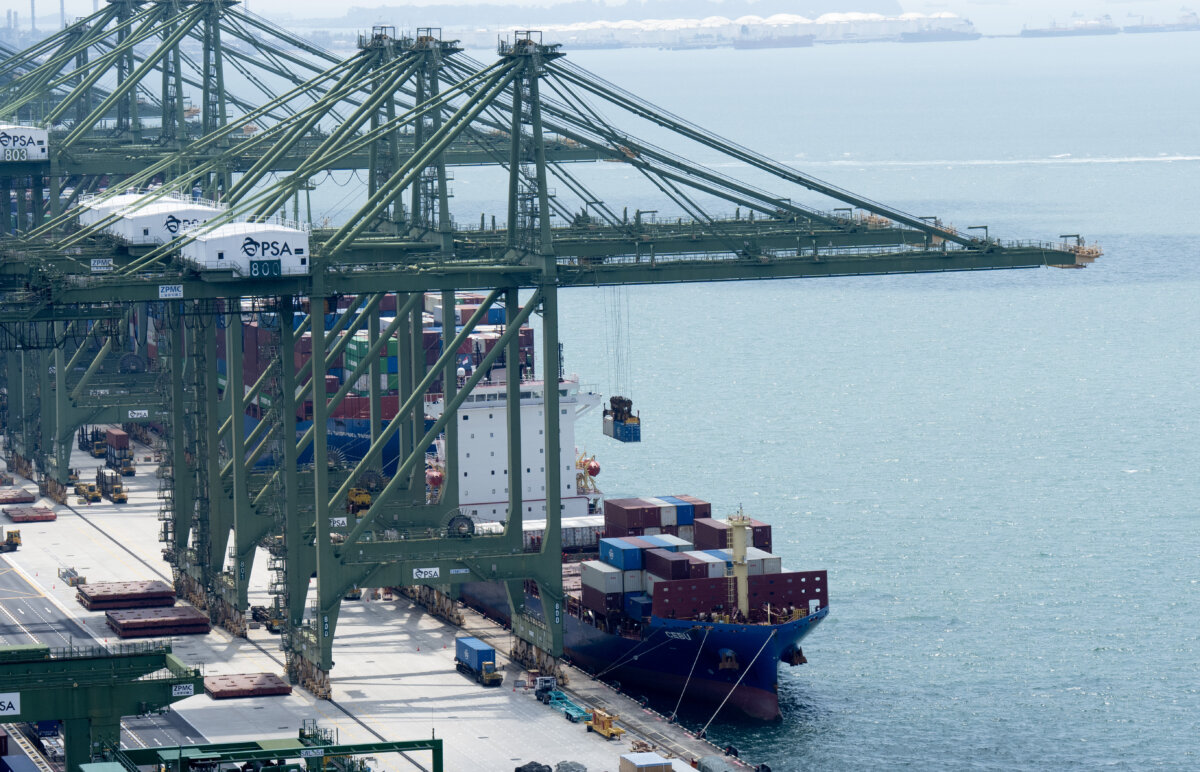
Epp noted that two-way trade with the Indo-Pacific region hit $261 billion last year and five of Ottawa’s top 10 trading partners are in the region. GAC officials said that trade deals with the Association of Southeast Asian Nations, the Philippines, and Thailand should be finalized as soon as possible, and the officials observed momentum from Canada’s Sept. 24 signing of the Canada–Indonesia Comprehensive Economic Partnership Agreement and last year’s foreign investment protection arrangement with Taiwan.
In addition to growing trade, GAC officials said defence and security will be a cornerstone of the updated Indo-Pacific Strategy, with Epp highlighting a boosted Canadian naval presence of three Royal Canadian Navy frigates per year going to the region and a number of defence agreements with Japan, Indonesia, South Korea, and the Philippines.
Epp remarked in particular on the Dark Vessel Detection program, where Canada helps identify illegal and unregistered ships off the coast of allied nations, but noted that an “active conversation” is currently happening about whether to continue funding for the program when it runs out in two years.
India
Epp said engagement with India and forming a stable bilateral relationship with the country is key for trade diversification and security. Relations have been warming in recent months after a diplomatic break in 2023 when former Prime Minister Justin Trudeau accused the Indian government of involvement in the assassination of B.C. Sikh separatist Hardeep Singh Nijjar. India said it had no involvement in Nijjar’s murder.
“None of [the challenges] should stop Canada and India from developing more stable relations across the board,” Epp said.
Rajani and Samaan also said Canada’s Indian diaspora will be an asset in engaging with India, as well as something to be managed in terms of potential dangers of foreign interference that might arise.
“[We are trying] to change the channels in order to be able to manage risks and opportunities,” Rajani said.
The Carney government has restarted relations with India, with Carney meeting with Indian leader Narendra Modi this past June.
Foreign Affairs Minister Anita Anand announced Oct. 30 that Canada would be updating its Indo-Pacific Strategy during testimony before the House Committee on Foreign Affairs and International Development, saying the new strategy will focus on giving the region “more Canada,” including exports of liquefied natural gas.
“The world has changed since the Indo-Pacific Strategy was released, and we need to ensure that our foreign policy is responsive to Canada’s needs now,” Anand said at the time.
China
Epp noted that the updated Indo-Pacific Strategy will also include engagement with China, as did the previous strategy, particularly in ensuring continuation of agricultural trade between Canada and China.
“We see indications that China is changing its Canada policy. If it’s possible now for ministers to travel to China and be met by their counterparts, that’s good news,” Epp said.
Carney in recent months has moved to seek closer ties with China, meeting with Chinese leader Xi Jinping at the end of last month in South Korea. Carney called the meeting with Xi a “turning point,” and has said Canada must be “pragmatic” about engaging with China. Anand said Canada has a “strategic partnership” with China during a mid-October visit to Beijing.
Carney had previously called China the biggest national security threat to Canada. A public inquiry formed by the government said in January that China is the most active foreign power meddling in Canada’s affairs.
 Friends Read Free
Copy
Facebook
Tweet
Friends Read Free
Copy
Facebook
Tweet