The Public Health Association of Australia (PHAA) has voted to establish an Indigenous “voice” within its organisation.
The PHAA is Australia’s peak non-government public health body with over 2,000 members and specialises in advocacy and policy development, as well as research.
The First Nations Collective Co-Design Project had almost unanimous support from its members to vote and change the PHAA’s constitution.
The “voice” was led by former PHAA vice president and Indigenous woman Dr. Alana Gall, with the group consisting of elders, early and mid-career Aboriginal researchers, practitioners, and senior PHAA staff.
“A huge amount of work by myself and nine other Indigenous people—all volunteers—went into the two-year project to co-design the Indigenous governance model for the PHAA Collective,” Dr. Gall, based at Southern Cross University, said in a statement.
“To see it accepted by most of the PHAA membership gives me hope post the failed [federal] Voice referendum, and makes all the hard work worth it.”
The Co-Design Project aims to “actively privilege” the views of Aboriginal members in the “decision making of our Association,” according to its website.
However, further details of what the Project will aim to do next are yet to be decided with Associate Professor Summer May Finlay tasked with working this out.
Finlay is the incoming Indigenous vice-president for Aboriginal and Torres Strait Islanders.
“We’ve had 230 years plus of colonisation, which has seen, quite frankly, poor health outcomes for our mob,” Finlay told AAP.
“What this (voice) means is Aboriginal and Torres Strait Islander people are going to be front and centre on matters that impact us.”
The PHAA says it is hopeful the move would encourage other organisations to take the same course in setting up their own Indigenous group.
“The country may have chosen in late 2023 to not accept the invitation to create a Voice to Parliament, but the PHAA has chosen to proceed with an Aboriginal and Torres Strait Islander voice to its operations,” PHAA President Professor Caroline Miller said.
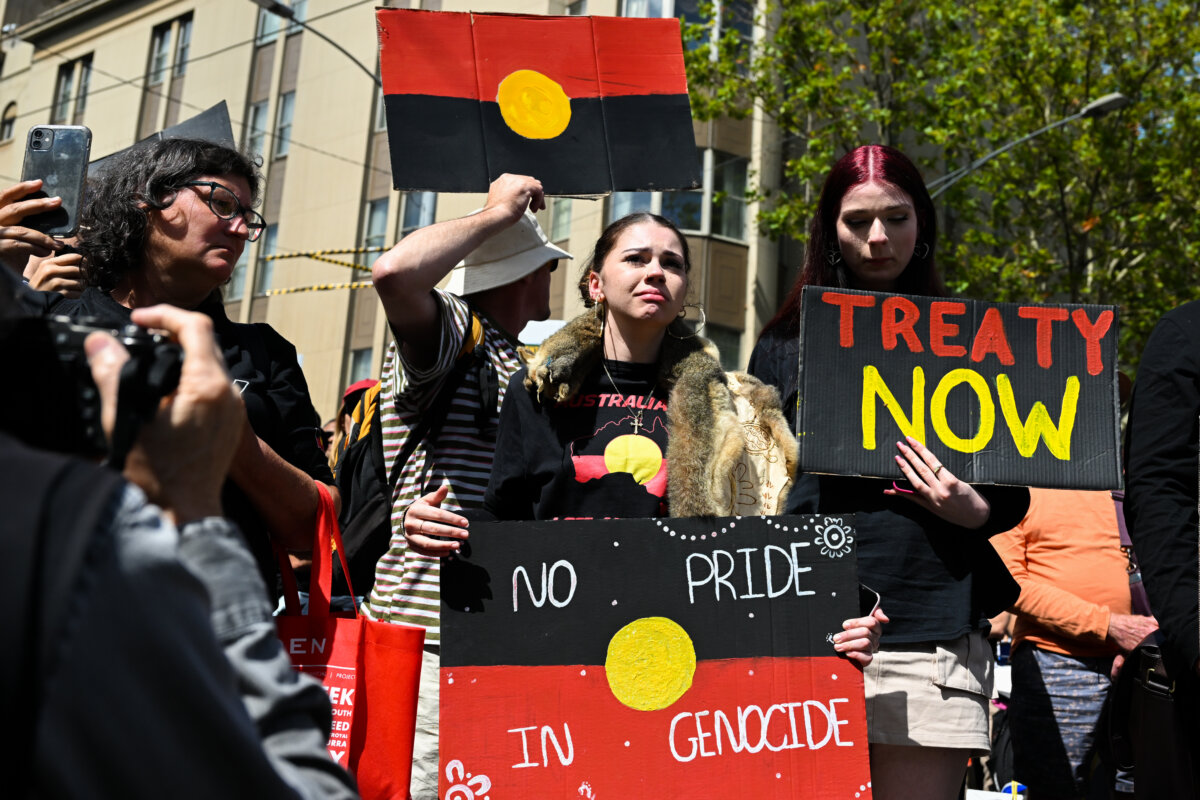
The PHAA says it supports the “Uluru Statement from the Heart” movement, which seeks to establish a treaty between the government and Aboriginals.
In the Australian context, a treaty represents a type of formal recognition of Indigenous sovereignty and seeks to reimburse communities through a range of initiatives including education, public recognition of Aboriginal culture and ownership, and in some cases, reparations.
The move comes after both South Australian and Victorian governments both introduced state-level Indigenous “voice” bodies into their parliaments.
South Australia announced it would legislate an Indigenous “voice” in 2023, while in 2025, Victoria announced it would make its First Peoples’ Assembly of Victoria an official body at a state level, bypassing the need for a referendum.
 Friends Read Free
Copy
Facebook
Tweet
Friends Read Free
Copy
Facebook
Tweet