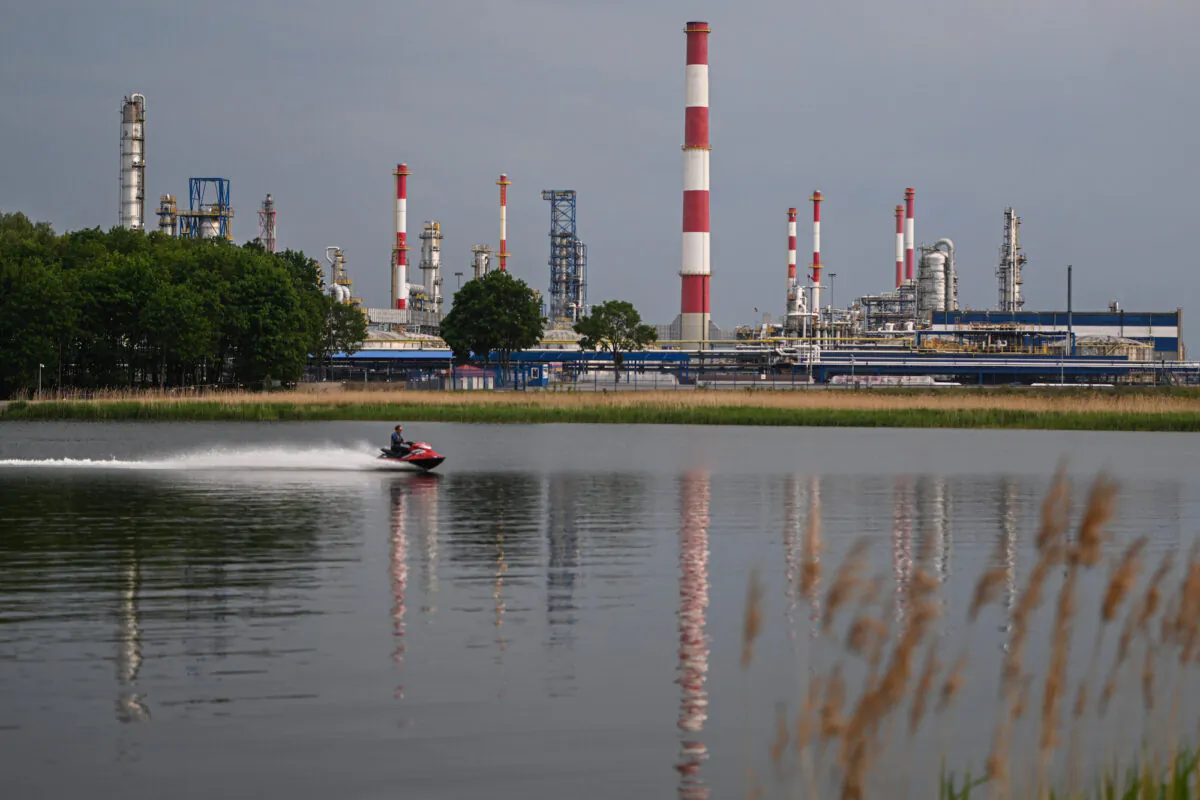

Poland urged European Union member states that are still buying Russian oil to end those imports by the end of 2026, Polish Energy Minister Milosz Motyka said on Sept. 17.
The European Commission, the bloc’s executive branch, announced that it would propose speeding up the elimination of fossil fuel imports from Moscow on Sept. 17 following a phone call between European Commission President Ursula von der Leyen and U.S. President Donald Trump, but it did not name a specific date.
The EU previously set Jan. 1, 2028, as the date to cut itself off from Russian energy; however, Motyka said this should happen two years earlier, particularly in light of Russian aggression.
His comments come after multiple Russian drones entered Poland’s airspace last week.
“Poland consistently works to ensure the energy security of the region and of Europe as a whole,” Motyka told the Polish Senate. “Today, I have addressed a letter to the energy ministers of the EU member states appealing for a common goal—a complete end to Russian oil imports by the end of 2026.”
“This is a clear signal that Europe can act with solidarity and decisiveness in the face of Russian aggression,” he said. “Poland has already achieved independence from Russian fuels—now it’s time for joint, ambitious action by the entire EU.”
In the letter to fellow EU energy ministers, which was also posted on X, Motyka wrote, “Such a commitment would enhance the coherence of our actions, establish a clear timeline, and demonstrate our resolve to achieve independence from oil supplies burdened with political and strategic risks.”
Brussels has imposed extensive sanctions on most Russian oil imports, but Slovakia and Hungary still receive Russian supplies via the Druzhba (meaning “friendship” in Slavic languages) oil pipeline.
That pipeline was recently damaged in an attack Hungary blamed on Ukraine, an allegation Kyiv did not appear to deny.
Budapest and Bratislava maintain closer ties with Moscow than the rest of the bloc and have defended their continued purchase of Russian oil, saying alternatives are too expensive.
Hungarian Prime Minister Viktor Orban has repeatedly called for the EU to drop its plan to stop Russian energy from being imported, and his environment minister, Aniko Raisz, echoed those sentiments on Sept. 18.
“I think you know our position. We are one of the few landlocked countries in the region. So, our position has always been guided by the energy security for Hungary,” Raisz told reporters in Brussels.
“We know that we have important, important tasks ahead of us, but let’s not daydream.”
Slovak Prime Minister Robert Fico has also said previously that he would block future EU sanctions against Russia if they harm Slovakia’s national interests.
“If there is a sanction that would harm us, I will never vote for it,” he said on June 8.
“Before we can fully commit, we need to have the right conditions in place—otherwise we risk seriously damaging our industry and economy,” Slovak Economy Minister Denisa Sakova told reporters in Bratislava on Sept. 17, Bloomberg reported.
“As long as we have an alternative route, and the transmission capacity is sufficient, Slovakia has no problem diversifying,” she said, adding that a complete severing of Russian supplies would pose a risk, because Slovakia is located at the very end of alternative supply routes coming from the West.
Russian Response
The Kremlin dismissed the latest moves by the EU, saying that further sanctions would not affect Russia.
“The European Union and individual EU countries, many of them, continue to pursue a rather hostile stance toward Russia. They mistakenly believe that continuing sanctions could influence Russian policy,” Kremlin spokesman Dmitry Peskov said, according to TASS.
“This has been eloquently demonstrated by the 18 previous packages over the past three years. In this case, the EU is continuing this destructive course. As for assessing the threats, let’s wait for the wording and then we’ll evaluate it.”
Correction: A previous version of this report incorrectly stated the title of Slovak Prime Minister Robert Fico. The Epoch Times regrets the error.
 Friends Read Free
Copy
Facebook
Tweet
Friends Read Free
Copy
Facebook
Tweet