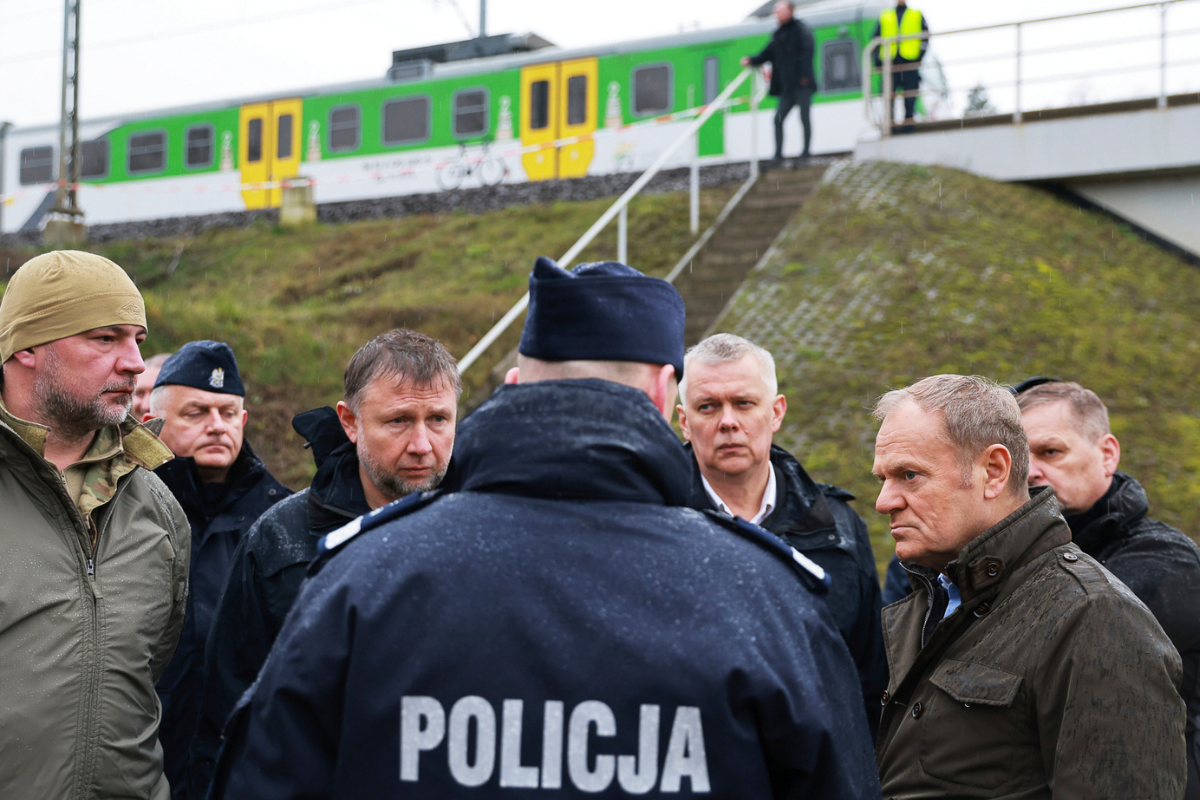

An explosion over the weekend that damaged a railway track linking Warsaw to southeastern Poland was an “act of sabotage,” the country’s prime minister said on Nov. 17.
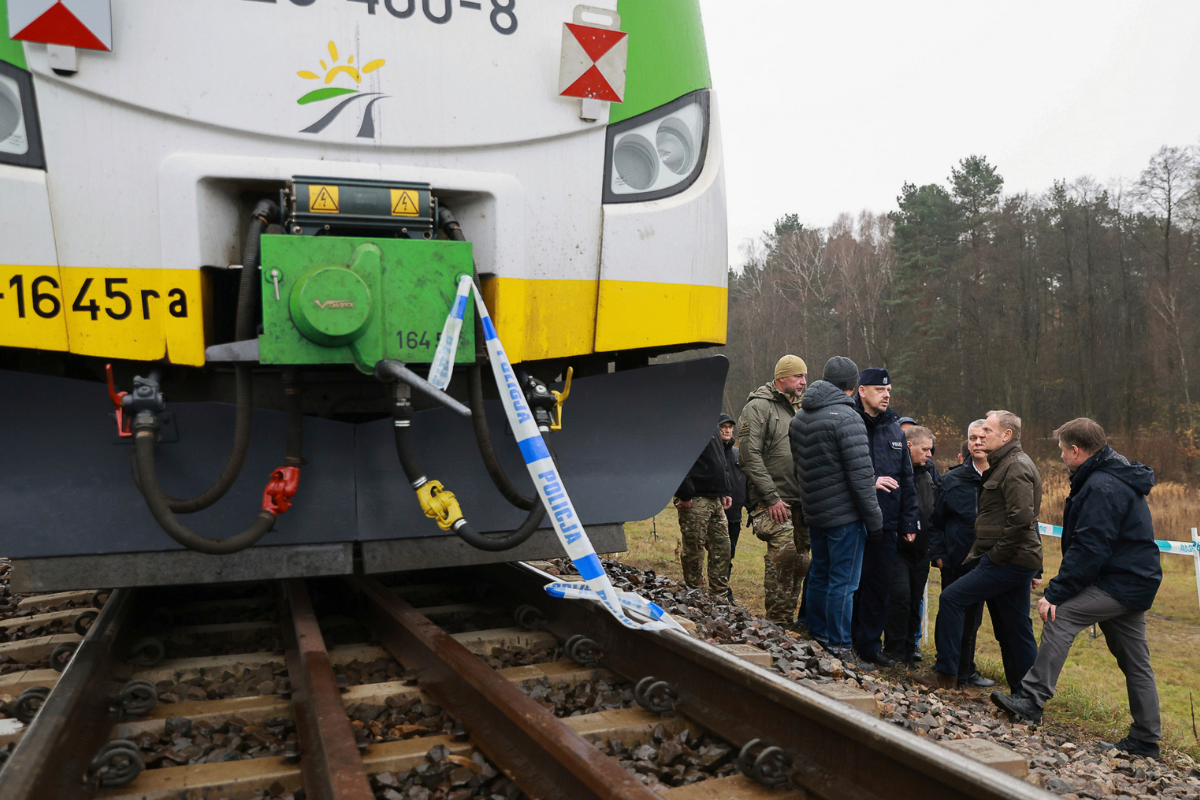
According to the Polish Press Agency, Poland’s national news agency, a train driver on the Warsaw-Lublin line had reported track irregularities near Mika, about 62 miles southeast of Warsaw, at 7:39 a.m. on Nov. 16.
Emergency services inspected the line and found two damaged rails.
Two passengers and several staff were aboard the morning train, but officials said no injuries were reported.
The line connects the Polish capital to the Ukrainian border.
Tusk wrote in a post on X on Nov. 17: “Blowing up the rail track on the Warsaw-Lublin route is an unprecedented act of sabotage targeting directly the security of the Polish state and its civilians. This route is also crucially important for delivering aid to Ukraine.
“We will catch the perpetrators, whoever they are.”
Tusk announced later that the government’s National Security Committee will hold an extraordinary meeting on the morning of Nov. 18, to be attended by military commanders, heads of services, and the president’s representative.
Tomasz Siemoniak, Poland’s coordinator of special services, said in a post on X on Nov. 17: “Everyone who threatens the security of the Republic and its citizens will be held accountable with all the firmness of the law and the means at the disposal of the Polish State. The services are acting and will continue to act very effectively.”
Polish Deputy Interior Minister Maciej Duszczyk was not willing to jump to conclusions and attribute blame for the incident to Russia, telling Polsat television on Nov. 16, “Russia isn’t so powerful that every arson, every situation of this kind, is provoked by Russia.”
However, Duszczyk also said that “this cannot be ruled out or ignored in any way.”
‘Growing’ Threats to Europe
Ursula von der Leyen, the president of the European Commission, said in a post on X that the threats to European security “are real and growing” and that the continent “must urgently boost capacity” to protect its skies and infrastructure.
Von der Leyen made the remarks in response to a spate of drone sightings over Europe that began with incursions into Poland in September. Other suspected incursions were reported in the following months over several more countries, including Romania, Belgium, Sweden, and Denmark.
European officials have blamed some of the incursions on Russia, but Moscow has denied any connection to the incidents.
Last month, the European Commission stated that Europe must prepare to combat new forms of warfare, including sabotage of undersea cables, cyberattacks, and drone incursions.
The Associated Press contributed to this report.
 Friends Read Free
Copy
Facebook
Tweet
Friends Read Free
Copy
Facebook
Tweet