

The Bondi Beach mass shooting targeting a Jewish festival has raised immediate questions over Australia’s gun licensing laws, after it was confirmed one shooter legally held a firearms licence for about a decade and owned six registered weapons.
Fifteen people, including a child, were killed during the Hanukkah gathering, and 40 more were injured on Dec. 14 after the father-son duo opened fire.
National Cabinet, a combined meeting of the country’s state and territory leaders with the prime minister, agreed on Dec. 15 on developing Australia’s National Firearms Register.
Allowing for criminal intelligence to be used to determine gun ownership, limiting firearms per person, limiting the type of guns available, and make citizenship a condition of owning a weapon.
There will also be moves to further limit customs restrictions on weapons imports like 3D printing, novel technology, and equipment that can store large volumes of ammunition.
“Leaders agreed that strong, decisive and focused action was needed on gun law reform as an immediate action, including renegotiating the National Firearms Agreement, first established after the 1996 Port Arthur tragedy, to ensure it remains as robust as possible in today’s changing security environment,” the National Cabinet said.
Prime Minister Anthony Albanese had earmarked some of the reforms before the meeting.
“A review of licenses over a period of time—people’s circumstances change, people can be radicalised over a period of time. And checks of course, making sure those checks and balances are in place as well,” he told reporters on Dec. 15.
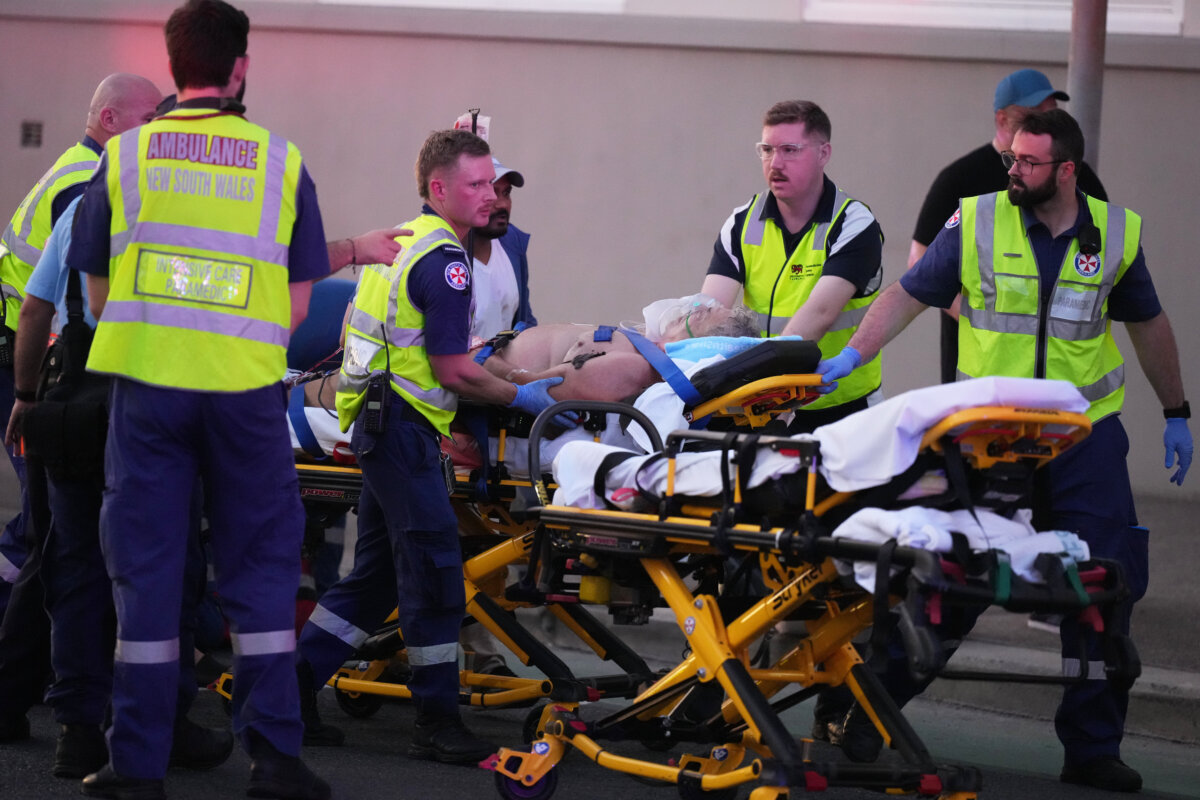
Meanwhile, New South Wales Premier Chris Minns acknowledged the seriousness of licensing gaps, and said the government is already examining whether the law needs to change.
“I won’t hesitate to move legislation if it’s required,” he said, describing the inquiry as only in its early stages, adding it must be comprehensive.
“New South Wales (NSW) Police need to provide all the details of this inquiry to the government. But I made it clear last night that we will take every step we possibly can to keep our community safe and we’ll be looking at law reform along that route.”

Shooter Held Licence for 10 Years
Police have since confirmed the 50-year-old gunman held a firearms licence for about 10 years.
Both the father and son, residents of Bonnyrigg in Sydney’s multicultural west, and were staying in an Airbnb in the suburb of Campsie in the days leading up to the attack.
Asked whether police should have identified the father and his 24-year-old son as threats earlier, Police Commissioner Mal Lanyon defended the force’s position, saying the licence had attracted no red flags.
“There was very little knowledge of either of these men by the authorities. The person was determined to be entitled to have a firearms licence and had a firearms licence. The person had a firearms licence for a number of years for which there were no incidents, and it was regulated.”
Gun Licensing Rules Under Spotlight
Australia famously tightened gun ownership laws following the 1996 Port Arthur Massacre, the country’s deadliest mass killing for three decades until recent events.
Nowadays, in NSW, applicants need to show a legally recognised “genuine reason” before a firearm licence can be issued.
These reasons include covering sporting use, rural work, pest management, commercial fishing, and approved historical collections.
Each category requires proof such as club membership, landholder permission, industry accreditation or collectors’ society status.
Sport or target shooting licences apply only to current members of an approved shooting club.
Recreational hunting or vermin control is limited to club members, rural landowners or occupiers, people with written permission from landholders, or those authorised by agencies such as the Department of Primary Industries.
Primary producers may hold firearms for farming and grazing. Licences can also be issued for vertebrate pest control.
Commercial fishing operators and employees may qualify if they provide proof of their role in the industry.
Rural workers can apply under the rural occupation category.
Firearm collectors must belong to an approved collectors’ society or club, and their collection must have verified commemorative, historical, thematic or financial value.
It is not clear under which category the accused held his licence.
No 3rd Offender, Police Say
Commissioner Lanyon later confirmed that investigators believe the attack was carried out solely by the two identified gunmen, with no third offender or accomplice currently being sought.
Detectives will still pursue any lead that suggests others may have been involved, but reiterated, “there were two persons involved yesterday.”
When asked why police had so little insight into the 24-year-old suspect, despite the attack appearing planned, Lanyon said determining the motive is now central to the investigation.
He noted that police frequently have limited background knowledge of many individuals in the community, which is normal in a free society.
Investigators are now reviewing the pair’s history and have found no clear evidence of prior offending.
Prime Minister Anthony Albanese stood by the police and intelligence agencies amid rising criticism of whether warning signs were missed.
“An extraordinary job … We will continue to provide every resource, every resource possible to the AFP and as well to our intelligence and security agencies,” he said.
The prime minister signalled support for whatever reforms NSW deems necessary, calling the attack “an assault on the entire country.”
 Friends Read Free
Copy
Facebook
Tweet
Friends Read Free
Copy
Facebook
Tweet