State-owned QatarEnergy may not be able to guarantee some deliveries of liquefied natural gas (LNG) under long-term contracts for up to five years, its CEO said.
QatarEnergy’s CEO, Saad al-Kaabi, said on March 19 that Iranian attacks have knocked out 17 percent of Qatar’s LNG export capacity, causing an estimated $20 billion in annual revenue losses and threatening supplies to Europe and Asia.
QatarEnergy will have to declare force majeure on long-term contracts for up to five years for LNG supplies bound for Italy, Belgium, South Korea, and China because two LNG trains have been damaged, Kaabi said.
Force majeure is a legal term that refers to an unexpected event beyond a party’s control, such as war, natural disaster, or government action, that prevents that party from fulfilling a contract.
“I never in my wildest dreams would have thought that Qatar would be—Qatar and the region—in such an attack, especially from a brotherly Muslim country in the month of Ramadan, attacking us in this way,” said Kaabi, who is also Qatar’s minister of state for energy affairs.
“For production to restart, first we need hostilities to cease.”
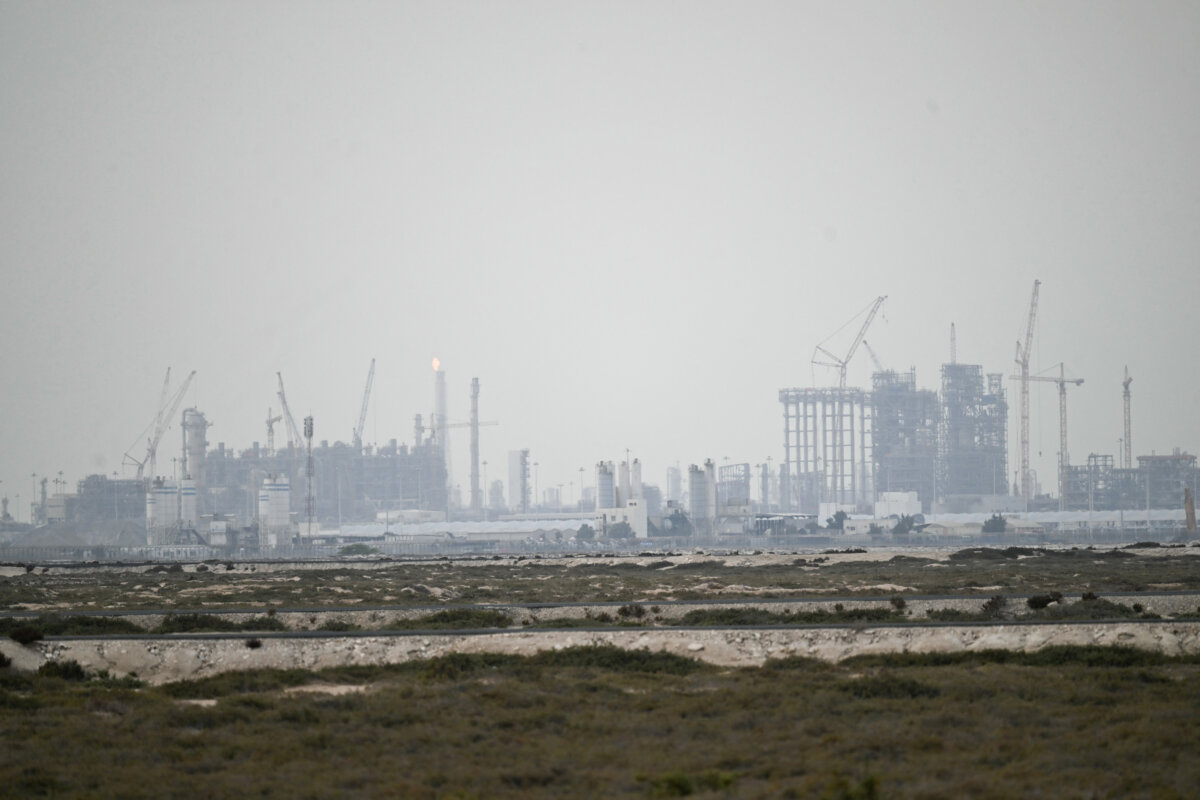
QatarEnergy said in a March 18 post on X that Iranian missile attacks struck Ras Laffan Industrial City, causing “extensive damage” and fires at the facility.
In a follow-up statement early on March 19, the state-owned energy giant further confirmed additional strikes in the early hours of that day that targeted several of its liquefied natural gas facilities, resulting in “sizeable fires and extensive further damage,” including to the Pearl gas-to-liquids plant.
Kaabi said that the scale of the damage from the attacks has set the region back 10 to 20 years.
“And of course, this is a safe haven for a lot of people, to have a safe place to stay and so on,” he said. “And that image, I think, has been shaken.”
The damaged units cost approximately $26 billion to build, Kaabi said.
“If Israel attacked Iran, it’s between Iran and Israel. It has nothing to do with us and the region,” he said.
“And so now, in addition to that, I’m saying that everybody in the world, whether it’s Israel, whether it’s the U.S., whether it’s any other country, everybody should stay away from oil and gas facilities.”
On March 18, explosions were reported at Iran’s South Pars gas field, which is shared by Iran and Qatar.
After the explosion, Iran’s Islamic Revolutionary Guard Corps (IRGC) also warned that people should stay away from oil facilities in Saudi Arabia, the United Arab Emirates, and Qatar, in a statement to the Tasnim News Agency. The Tasnim News Agency is a semi-official Iranian news agency affiliated with the Islamic Revolutionary Guard Corps.
The threatened sites include the Samref Refinery and Jubail Petrochemical Complex in Saudi Arabia; the Al Hosn gas field in the United Arab Emirates; and Qatar’s Mesaieed Petrochemical Complex, Mesaieed Petrochemical Holding Company (linked to Chevron), and Ras Laffan Refinery (Phases 1 and 2).
“These centers have become direct and legitimate targets and will be targeted in the coming hours, so all citizens, residents, and employees are asked to immediately leave these areas and move to a safe distance without any delay,” the Tasnim News Agency stated.
European gas prices surged on March 19, jumping by as much as 40 percent before paring gains, after the strikes on Iran’s giant South Pars gas field. Prices later eased back from their highs to about 20 percent after briefly surging close to 40 percent intraday.
Reuters contributed to this report.
 Friends Read Free
Copy
Facebook
Tweet
Friends Read Free
Copy
Facebook
Tweet