
The leaders of Quebec and Alberta say they want closer economic ties between their two provinces.
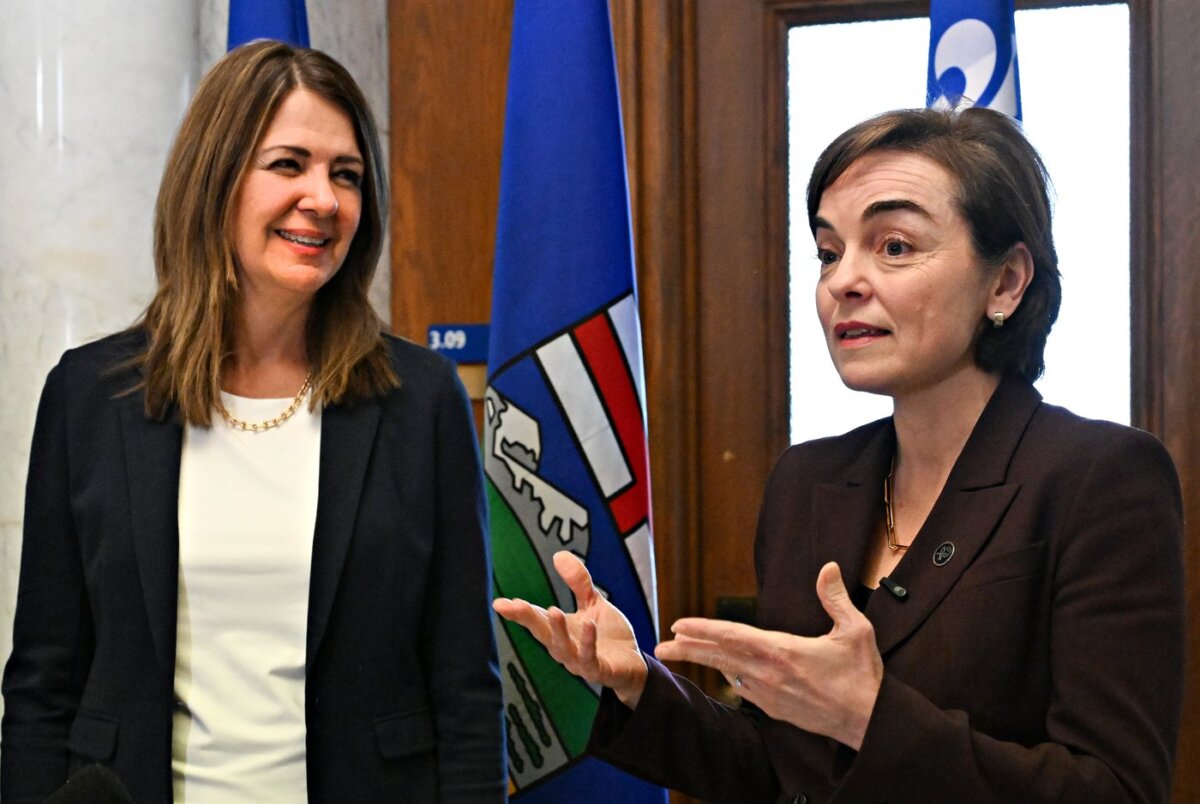
Alberta Premier Danielle Smith and Quebec Premier Christine Fréchette met June 3 in Quebec City as debates over provincial rights and separatism are on the rise in both provinces.
Alberta is set to hold a referendum Oct. 19 that includes a question on whether the province should stay in Canada or begin the legal process to hold a referendum on separation.
The referendum also includes various questions regarding provincial authority on immigration, as well as judicial reform and more rights for Alberta in delegating matters where federal and provincial authority overlap.
Meanwhile, Quebec’s separatist Parti Québécois has been leading in many polls and continues to back Quebec’s separation from Canada, while Quebec’s government has also long sought more power to legislate on matters of immigration, language, and culture within Quebec.
“We often get a lot of wisdom from some of the legislation going through the Quebec legislature, which I’m watching with great interest,” Smith told reporters ahead of her meeting with Fréchette.
Economic Ties
Smith’s Quebec visit is part of wider efforts by her United Conservative Party government to boost ties with other provinces on energy, trade, and shared interests in enhancing provincial rights.
Commenting on the visit to Quebec, Alberta’s government said it was intended to create “strong, lasting interprovincial collaboration” as well as find specific opportunities to work together more closely economically.
Smith said that Alberta and Quebec have a long history of cooperating economically and said the two are likely to rely even more closely on one another as Canada faces uncertainty in its trade relations with the United States.
“The best way to create resilience is to support each other and to have more trade with each other,” Smith said, adding that she was glad to see products from Alberta moving through the Port of Quebec.
For her part, Fréchette said Quebec and Alberta are natural economic partners as their goods complement each other. She noted that while Quebec’s top exports are in manufactured goods, processed agricultural products, and aircraft, Alberta dominates in energy and natural resources, which help fuel economic production and growth.
Smith echoed this, saying Alberta-made plastics help manufacturing in Eastern Canada and Alberta’s agricultural output is useful to Quebec’s large food-processing industry.
“We see lots of other points of connection, too—in aerospace, in defence, in critical minerals, in liquefied natural gas and clean energy,” Smith said.
Culture and Language
Smith said that language and cultural differences between Quebec and Alberta shouldn’t get in the way of establishing deeper economic ties while speaking earlier in the day at a lunch hosted by the Federation of Chambers of Commerce of Quebec.
Commenting on solidarity between the two provinces, Smith pointed to the Montreal Canadiens recently being eliminated from the NHL playoffs, noting that many Albertans had cheered for the Canadiens when it became the last Canadian team playing for the Stanley Cup.
“This is an excellent example of why I’m here, too. And we hope that you are cheering for us, too, not only in hockey, but in the strength of our federation,” Smith said.
“We should do everything that we can to boost trade ties, partnerships, and collaboration between our two great provinces,” she added.
Smith also joked about her limited ability to speak French during the luncheon, telling the audience to “hang on to your ears” before she spoke French.
Alienation From Ottawa
Smith also referenced Alberta and Quebec’s fractious relationship with Ottawa, saying that they should work together to collaborate more closely, including via an east-west “energy corridor.”
“With shifting geopolitics, Alberta is keen to collaborate on an east-west energy corridor as discussion about energy, sovereignty, and security become increasingly relevant,” she said.
Fréchette has said she is open to restarting conversations about shale gas development and hydraulic fracturing in Quebec.
Quebec banned oil and gas development in the province in 2022 after years of political and environmental opposition.
Quebec Minister Responsible for Canadian Relations Jean Boulet also spoke during the luncheon, telling the audience that Alberta and Quebec can rely on each other.
“The current geopolitical situation worldwide is unstable, but Quebec and Alberta can count on each other,” he said.
The Canadian Press contributed to this report.
 Friends Read Free
Copy
Facebook
Tweet
Friends Read Free
Copy
Facebook
Tweet