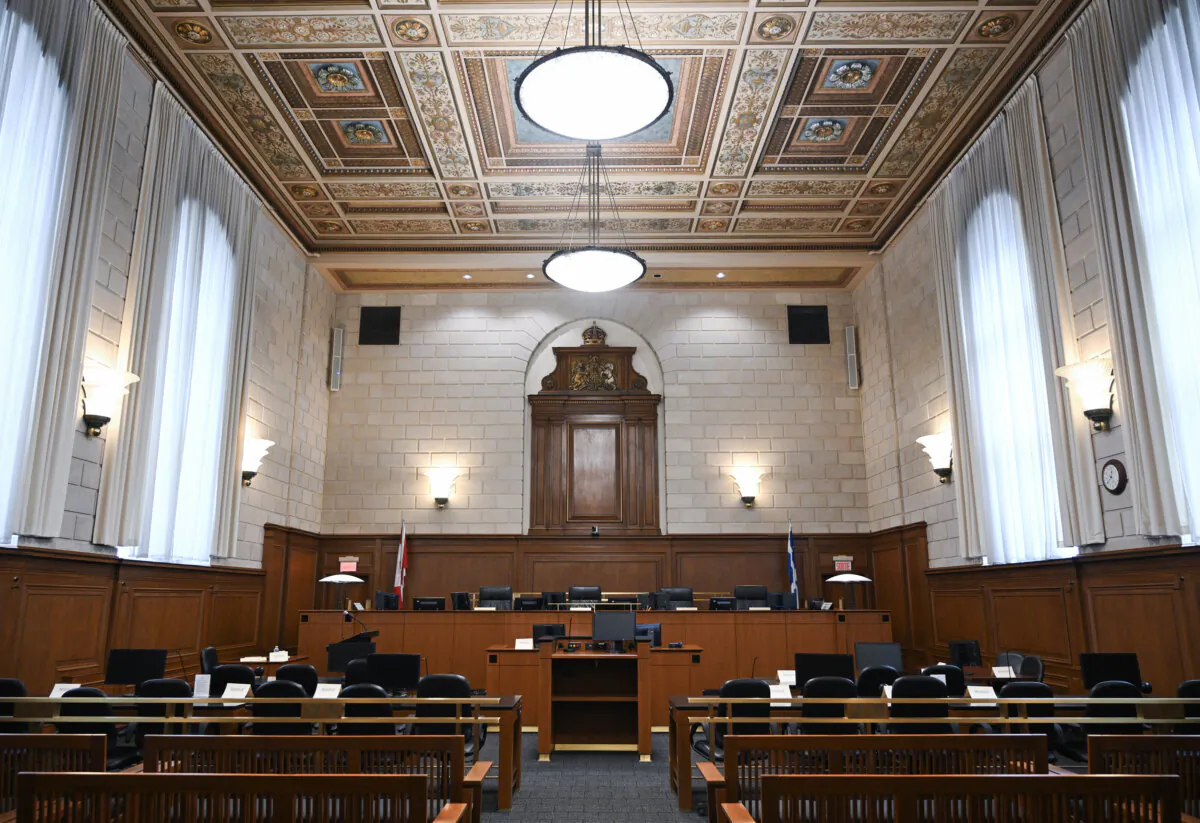

Quebec’s Court of Appeal ruled in favour of allowing actors to smoke on stage during performances, saying it may qualify as protected artistic expression.
The court upheld an earlier lower-court ruling that cancelled fines issued to three Quebec City theatres for allowing performers to smoke in plays.
The theatres involved were Théâtre du Trident, Théâtre de la Bordée, and Théâtre Premier Acte, which had each received $500 fines between 2017 and 2019.
In the lower court ruling, the Superior Court framed the issue at the centre of the appeal as whether the artistic choice of a playwright, set designer, or director to depict smoking on stage constitutes expressive activity protected under the right to freedom of expression.
It further asked whether smoking in the specific context of a theatrical performance—where the act is intended to convey meaning through both form and content—falls within constitutionally protected expression. The court also considered whether Quebec’s general prohibition on smoking in enclosed public spaces improperly limits the artistic freedom of creators and performers.
The case stems from Quebec’s tobacco control law, which broadly bans smoking in enclosed public places, including cultural venues.
While acknowledging the health risks associated with tobacco use, appeal court Justice Judith Harvie wrote that it would not be reasonable to impose an absolute ban on smoking in all circumstances within the context of a theatrical performance.
“There is no question of challenging the general ban on smoking in enclosed public spaces, of questioning the harmfulness of smoking, or of alleging that it should be permitted, either for staff working there or for the public, to smoke for personal purposes in a venue where cultural or artistic activities are presented,” she said.
Indoor smoking bans in public places and workplaces were phased out across Canada mainly in the mid-2000s, with most provinces implementing comprehensive restrictions between 2004 and 2006, and the final jurisdictions following by 2008.
In Quebec, the province’s comprehensive ban on indoor smoking in public places and workplaces came into force on May 31, 2006, when amendments to the Tobacco Act eliminated smoking in virtually all enclosed public spaces, including restaurants and bars.
According to Health Canada, approximately 46,000 people die each year from tobacco-related illnesses. The agency has set a target of reducing tobacco use to less than 5 percent of Canadians by 2035. Despite long-term declines, 11.9 percent of Canadians—about 3.8 million people—still reported smoking in 2022. In 2023, tobacco industry-reported revenue in Canada totalled approximately $4.2 billion.
Separately, an Ontario court approved a $32.5 billion settlement in 2025 resolving long-running tobacco litigation in Canada. The agreement requires major tobacco companies to compensate provinces for smoking-related health care costs and pay damages in class-action cases, following allegations they misled the public about the health risks of smoking.
 Friends Read Free
Copy
Facebook
Tweet
Friends Read Free
Copy
Facebook
Tweet