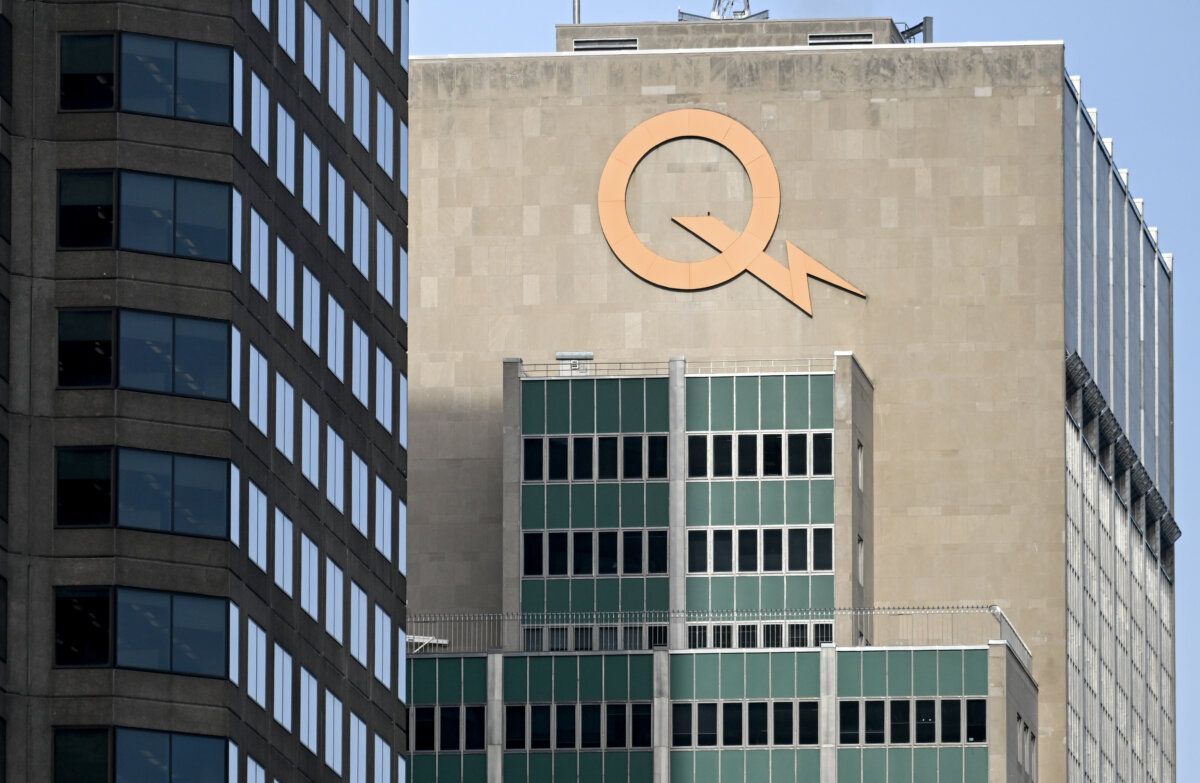

Quebec is incentivized to keep its hydroelectricity rates artificially low in order to keep receiving the largest share of Canada’s equalization payments, according to a new study from the Fraser Institute.
Even a small hike in Quebec electricity prices would lead to billions more in provincial revenue, according to the report, released May 7. However, much of the gain would be offset by a sharp reduction in equalization payments.
“The data presented here show that Quebec faces strong incentives to retain low hydroelectricity rates because the financial cost of maintaining these inefficient rates is largely borne by federal taxpayers,” says the report.
Canada’s equalization program is intended to help the provinces with weaker revenue-generating capacity provide public services comparable to those in wealthier provinces. It’s funded by federal tax revenues and distributes funds to lower-revenue provinces from a fixed national quantity that grows with nominal GDP, under a method known as the fixed growth rate.
If one province’s equalization payment entitlement shrinks, the money is redistributed to those with relatively less revenue while the overall amount doesn’t change.
Alberta and Saskatchewan have historically received little or no equalization funding because of their relatively high provincial revenues, especially from natural resources. British Columbia has also often been a non-recipient province in recent years, though it has received payments in some past periods.
To examine the impact of Quebec’s low electricity prices on equalization payments, report authors Ben Eisen and Joel Emes modelled scenarios in which the province raises the price of electricity by one, two, three, and four cents per kilowatt-hour (kwh).
By raising prices one cent per kwh, Quebec would gain roughly $1.9 billion in natural resource revenues, while the equalization payment would fall by about $1.36 billion. In other words, roughly 70 percent of the additional revenue would be “clawed back” via equalization payments.
Eisen and Emes argue that this strongly disincentivizes Quebec from raising electricity prices.
“The negative incentive effects here are obvious and prohibitive,” the report reads, adding that “the benefits [of raising electricity prices] to its own treasury would be minimal.”
At the upper range of the scenario, raising electricity rates by four cents per kwh would bring prices to a similar level as those of B.C. but would still be below average electricity prices in Canada and acts as an even stronger disincentive for Quebec, according to the report’s authors.
They found that if Quebec raised electricity prices by four cents per kwh, the province would lose roughly $3.65 billion in equalization payments, with the lost funding distributed to other provinces. Ontario would receive about $2.58 billion more in equalization payments, while New Brunswick, Nova Scotia, Manitoba, Prince Edward Island, and Newfoundland and Labrador would also see increases in their payouts.
Rule Change
The report notes that if the fixed growth rate rule was scrapped and Quebec raised electricity prices by four cents per kwh, the equalization program’s total cost to taxpayers would go down approximately $3.9 billion.
Although the report makes no policy recommendation, it notes that Quebec’s plentiful hydro resources and large equalization payouts have given it a large role in shaping how the equalization program ends up being calculated year to year.
Ottawa says the program remains crucial for allowing provinces to maintain similar public services nationwide regardless of economic disparity, while Hydro-Québec defended low electricity prices as a boon to the provincial economy.
“Québec continues to stand out with electricity rates among the lowest in North America, giving it a competitive advantage,” Hydro-Québec wrote in a 2025 news release. “Local businesses will therefore benefit from electricity from renewable sources as well as rates that are well below those in comparable regions, enhancing Québec’s competitive position.”
 Friends Read Free
Copy
Facebook
Tweet
Friends Read Free
Copy
Facebook
Tweet