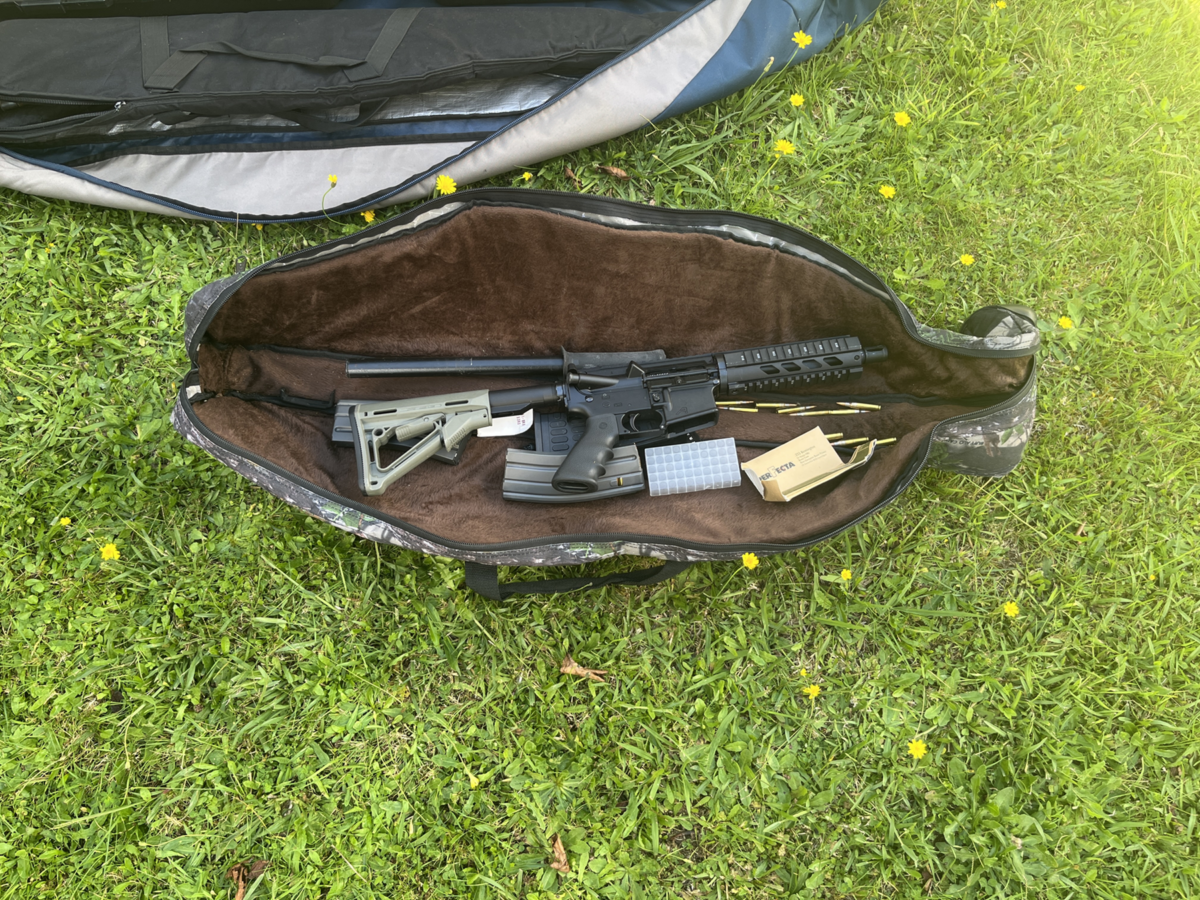

New Zealand Police found a Comancheros gang member with an AR-15 semi-automatic rifle—illegal since the Christchurch mosque shooting—when they executed search warrants as part of a trans-Tasman coordinated operation.
Three arrests and 14 charges were laid, while in Australia, raids on the same day led to 56 people being charged with 168 offences.
Other weapons seized included machetes and knuckle dusters, as well as cash, cannabis, and what is suspected to be a kilogram of methamphetamine.
Taskforce Morpheus comprises of law enforcement agencies across Australia and New Zealand that focus on targeting and disrupting illegal activity by organised criminal groups.
Last week, a “National Day of Action” targeted the Comanchero Motorcycle Club, with nine New Zealand Police districts carrying out raids on various homes and gang headquarters, supported by the National Organised Crime Group and the National Gang Unit. In one region, they were also supported by the Armed Offenders Squad.
In total, five firearms, including an AR-15 rifle, were recovered. Police say the men were arrested without incident.
Gang a Priority for Police
Director of the NZ Police National Organised Crime Group, Detective Superintendent Greg Williams, said the Comancheros remain a priority for law enforcement agencies.
“This gang is seen as one of the top organised crime groups in both Australia and New Zealand for their involvement in the importation and distribution of cocaine, methamphetamine, and other illegal drugs,” he said.
“They remain a focus for us, and through our investigative work, we continue to find their members and associates involved in a large number of importations, alongside their propensity for committing serious violence to maintain control over the market.”
He said police would continue to work with other law enforcement agencies in New Zealand and abroad to combat the Comancheros’ global influence.
The gang was formed in Sydney in the late 60s or early 70s and took its name from a John Wayne film.
Chapters now exist in Australia and Southeast Asia, with their presence in New Zealand a more recent development. Members born in that country were deported as “501s” (people of bad character) by Australia. The Comancheros also have links to other organised crime gangs in southeast Sydney.
“We are focused on taking their influence out of New Zealand, and we have had many successes since the gang established operations here through Operations Nova and Embargo,” Williams said.
Nova was a three-year police investigation that saw 137 charges laid against nearly every member of the gang’s leadership and associates.
That includes Pasilika Naufahu, who was the president of the New Zealand chapter until his arrest in 2019. He was sentenced to 10 years in prison in 2021.
Raids Included Prison Cells
Because so many Comancheros are now in jail, the raids were also coordinated with the Department of Corrections.
Director of the Prisoners of Extreme Risk Directorate, Jeanette Burns, said a large number of cells were searched across six prisons in New Zealand.
“Across those prisons a large amount of tobacco was located, alongside quantities of suspected illicit drugs,” she said. “Some prisoners go to extreme and elaborate lengths to continue offending from prison. Our staff work hard to stop contraband from entering our prisons, and when we do find it, we take it extremely seriously.”
The finding of a semi-automatic weapon, despite them having been made illegal seven years ago, is of particular concern to police. Gun crime in New Zealand has shown a steady upward trend in the early 2020s, particularly in the use of firearms during violent offending and gang-related activity.
While New Zealand remains a relatively low-gun-violence country by international standards, police data and academic studies indicate that firearms are increasingly being used in offending, and are being fired more often. The trend has been accompanied by a rise in illegal weapons circulating outside the licensing system and an increase in firearms seizures by police.
Firearms-related violent offences rose from fewer than 1,000 annually in 2011 to about 1,400 in 2025. In 2025, there were 6,760 firearms seized nationwide, up from 6,153 in 2024 and 5,926 in 2023. Convictions for offences against New Zealand’s Arms Act totalled 1,557 in the 2024–25 year.
Police laid 5,140 charges for crimes where a firearm was involved (including assault, burglary, or homicide). Police estimate that about one firearms offence per day since 2019 has involved gang members, but these usually involve sawn-off shotguns, .22-calibre rifles or, increasingly, pistols and modified guns.
Earlier government reviews suggested between 10,000 and 25,000 firearms held by criminals, plus possibly 100,000 “grey guns” held without licences.
 Friends Read Free
Copy
Facebook
Tweet
Friends Read Free
Copy
Facebook
Tweet