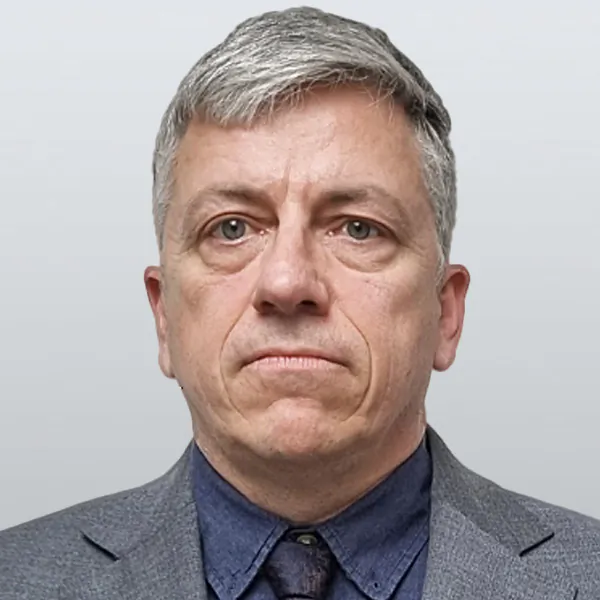
Secretary of State Marco Rubio has applauded the cease-fire between Thailand and Cambodia, which came into effect at midnight local time on Tuesday, and appears to be holding after initial confusion.
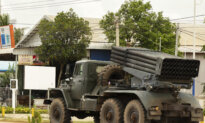
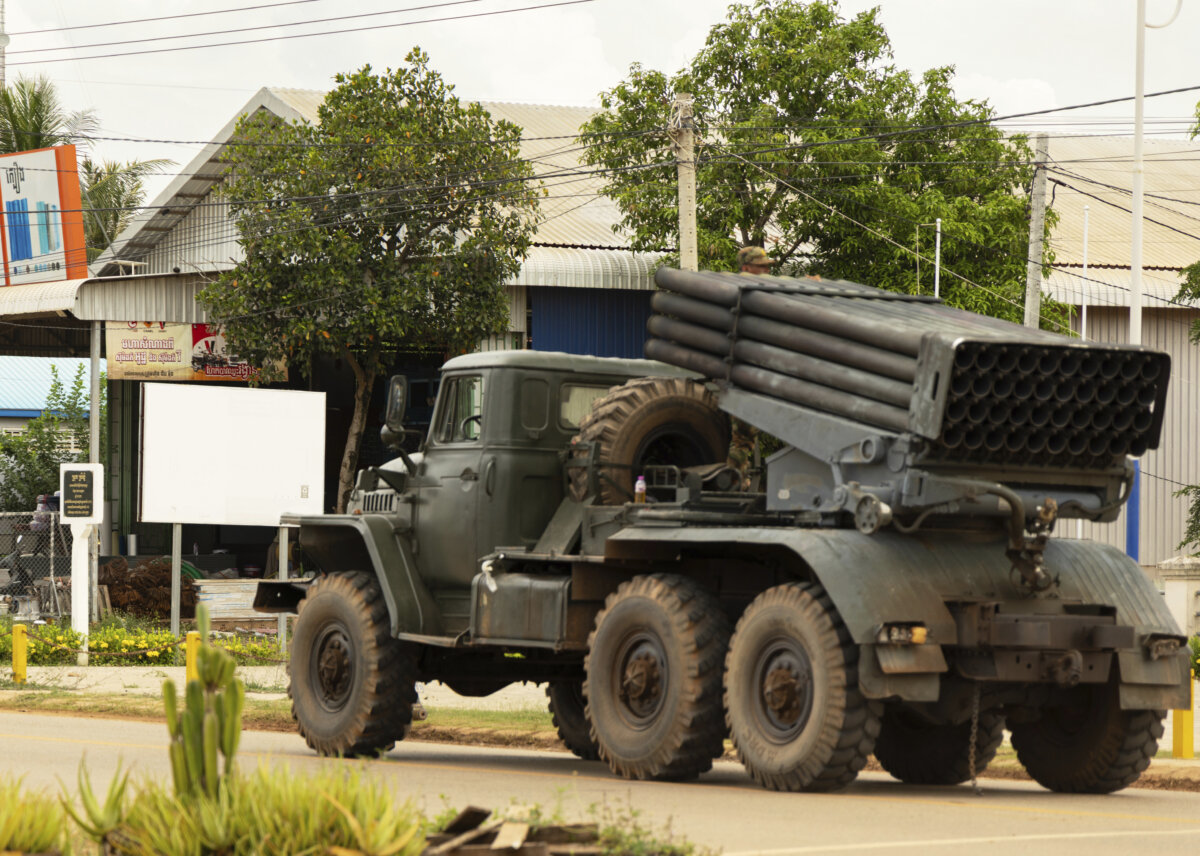
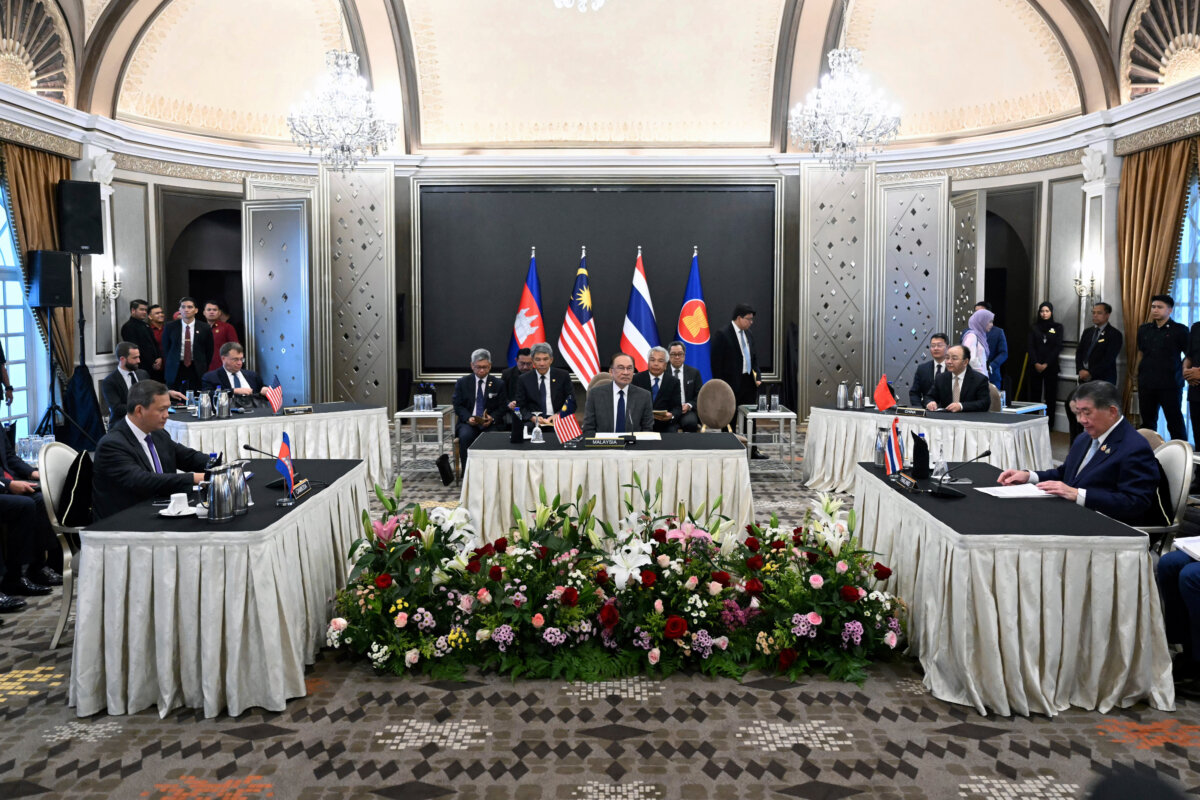
After five days of fighting along the border between the two nations, which claimed at least 41 lives, Cambodian Prime Minister Hun Manet and Thai Acting Prime Minister Phumtham Wechayachai agreed to an unconditional cease-fire after a meeting in Malaysia on Monday.
In a statement, Rubio said, “President [Donald] Trump and I are committed to an immediate cessation of violence and expect the governments of Cambodia and Thailand to fully honor their commitments to end this conflict.”
He thanked Malaysian Prime Minister Anwar Ibrahim, who chairs the Association of South East Asian Nations (ASEAN), for his leadership and for hosting the talks.
“The United States will remain committed to and engaged in this U.S.-Malaysia-organized process to end this conflict,” Rubio said.
Early on Tuesday the cease-fire appeared fragile, with the Thai army accusing Cambodia of launching attacks in multiple areas.
Thai army spokesman Maj. Gen. Winthai Suvaree, however, later said the fighting had stopped after military commanders from both sides met in person and agreed to halt all troop movements.
Suvaree said the two sides would meet for a joint border committee meeting in Cambodia on Aug. 4.
Cambodian Defense Minister Tea Seiha said he spoke to Thailand’s acting Defense Minister Natthaphon Narkphanit about some “incidents” that occurred during the night as the cease-fire was being implemented, but said the Cambodian army had abided by the truce.
Thailand Lodges Complaints
The Thai government said it has lodged complaints with Malaysia, the United States, and China about alleged breaches of the cease-fire.
More than 260,000 people displaced by the fighting have begun returning to their homes close to the border.
Thailand is one of 19 designated major non-NATO allies of the United States. Others in the region include Japan, the Philippines, and South Korea.
Cambodia is one of Beijing’s closest allies in the region. In April, the Chinese Communist Party (CCP) completed the inauguration of its upgraded naval base at Ream in Cambodia, which is large enough to dock an aircraft carrier.
The United States and China both had observer status at Monday’s talks in Malaysia.
Tensions rose between the Southeast Asian neighbors at the end of May, when a Cambodian soldier was killed in a brief exchange of gunfire at a disputed area on their 510-mile border.
On July 23, several Thai soldiers were injured by a Cambodian landmine at the border.
Trump wrote in a July 26 post on Truth Social that he had spoken to the leaders of Thailand and Cambodia and suggested that he would halt trade negotiations with both countries if they did not stop the fighting.
Hun said on July 27 that his country would pursue an “immediate and unconditional cease-fire” and both countries agreed to attend talks in Malaysia.
Border Dispute Dates Back to 1907
Thailand and Cambodia have long disputed their 500-mile-long border, with much of the tension stemming from a map drawn in 1907, when Cambodia was under French colonial rule.
To complicate matters, Thailand’s Prime Minister Paetongtarn Shinawatra was suspended by the country’s highest court on July 1, after 36 senators filed a petition seeking her removal over a leaked phone call with former Cambodian leader Hun Sen, father of Hun Manet.
On June 15, Shinawatra spoke with Hun Sen after a Cambodian soldier was killed on May 28 in a brief exchange of gunfire with Thai troops at a disputed border area between the two countries.
During the phone call, Shinawatra—whose father, Thaksin Shinawatra, is a former prime minister—criticized a Thai army commander and referred to Hun Sen as “uncle.”
The Associated Press contributed to this report.
 Friends Read Free
Copy
Facebook
Tweet
Friends Read Free
Copy
Facebook
Tweet