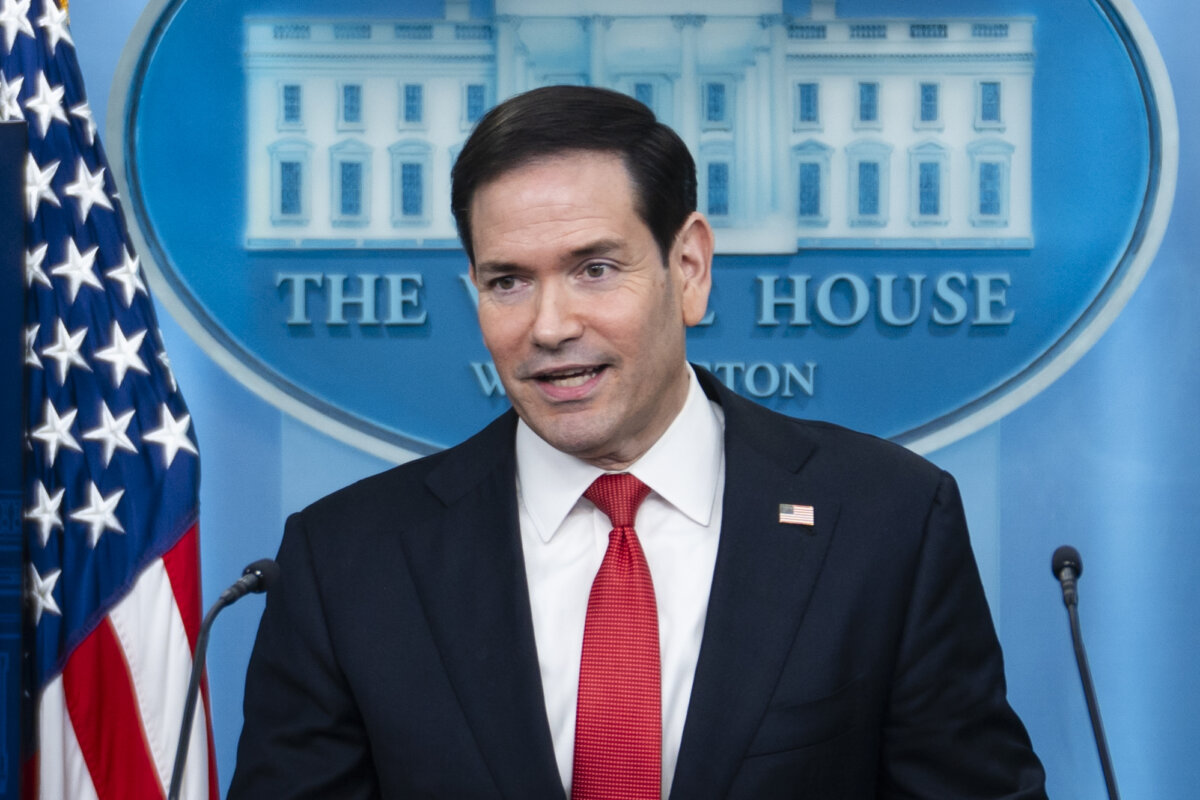

U.S. Secretary of State Marco Rubio on May 13 urged China to take a “more active role” in pressuring Iran to open the Strait of Hormuz.
U.S. President Donald Trump began a two-day summit in Beijing with Chinese leader Xi Jinping on May 14 amid significant tensions between the two countries. Trump and Xi first attended a welcome ceremony near Tiananmen Square, followed by a bilateral meeting at the Great Hall of the People. The ongoing trade tensions are expected to dominate discussions between the two leaders.
Speaking to Fox News’ Sean Hannity aboard Air Force One, as he accompanied Trump on his visit to China, Rubio said that Washington had made the case to Beijing that it was in its interests to help resolve the situation.
Rubio said that there were three main reasons it would benefit China to help resolve the Strait of Hormuz issue.
“The Chinese have ships stuck in the Persian Gulf, because setting up a system that says we’re going to let certain ships through but others not, it’s easier said than done,” Rubio said.
“And you saw a Chinese—not Chinese-flagged vessel, but it was Chinese cargo—got hit over the weekend. I’m sure Iran didn’t do it deliberately, but they did it. It happened. And so that’s why these Chinese ships are stuck in there.”
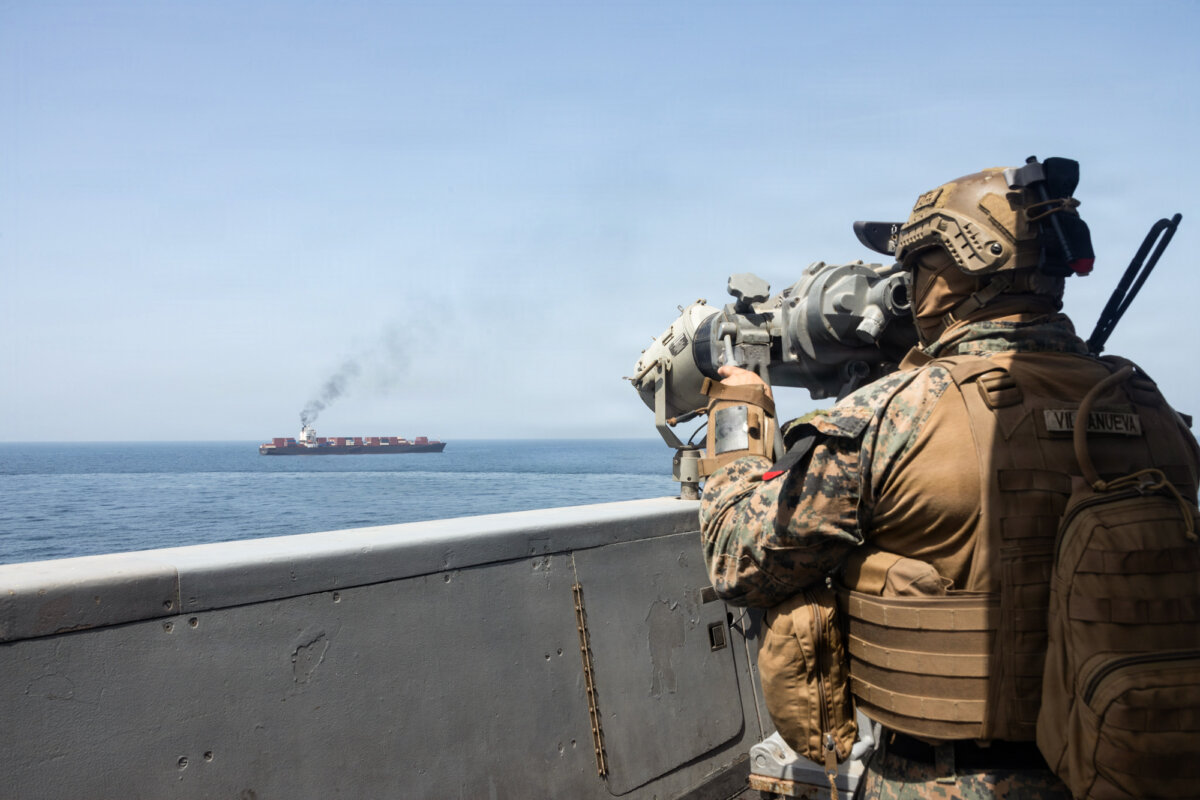
The Strait of Hormuz remains one of the world’s most important shipping chokepoints, with roughly one-fifth of global oil supplies normally passing through the narrow corridor.
Rubio said that the second reason it would benefit Beijing to pressure Tehran to reach a deal is that the closure of the Strait of Hormuz, “threatens to destabilize Asia more than any other part of the world,” due to the continent’s heavy reliance on the waterway for energy.
Rubio said the third reason is that China’s economy is export-driven.
“[China’s] economy is fueled not by what they consume domestically but by what they make and sell to other countries,” he said.
“Well, if all the countries of the world economies are melting down because of this crisis in the straits, they’re going to be buying less Chinese product, and the Chinese exports are going to drop precipitously. So it’s in their interest to resolve this, and we hope to convince them to play a more active role in getting Iran to walk away from what they’re doing now and trying to do now in the Persian Gulf.”
Rubio said that Beijing has an opportunity to show its resolve in this matter during a vote at the U.N. Security Council later this week, on a resolution condemning Iran’s actions in the Strait of Hormuz.
The proposed resolution, drafted by the United States alongside its Gulf allies, would require Tehran to cease attacks, mining, and tolling in the strait. It would also require Iran to disclose the number and location of the sea mines it has laid and cooperate with efforts to remove them, while also supporting the establishment of a humanitarian corridor, according to a May 5 press release from the U.S. State Department.
Rubio’s comments build on remarks made by State Department spokesman Tommy Pigott, who said that the secretary of state and his counterpart in Beijing, Wang Yi, had discussed the issue during an April phone call and “agreed that no country or organization can be allowed to charge tolls to pass through international waterways like the Strait of Hormuz.”
The State Department has not provided a readout of the call, in a break from its usual practice.
During his interview with Hannity, Rubio also said that China was the United States’ “top political challenge geopolitically,” but also “the most important relationship” for Washington to manage.
“I mean, it’s a big, powerful country. It’s going to continue to grow,” he said. “But we’re going to have interests of ours that are going to be in conflict with interests of theirs, and to avoid wars and maintain peace and stability in the world, we’re going to have to manage those.”
Reuters contributed to this report.
 Friends Read Free
Copy
Facebook
Tweet
Friends Read Free
Copy
Facebook
Tweet