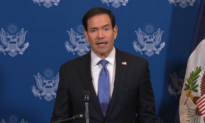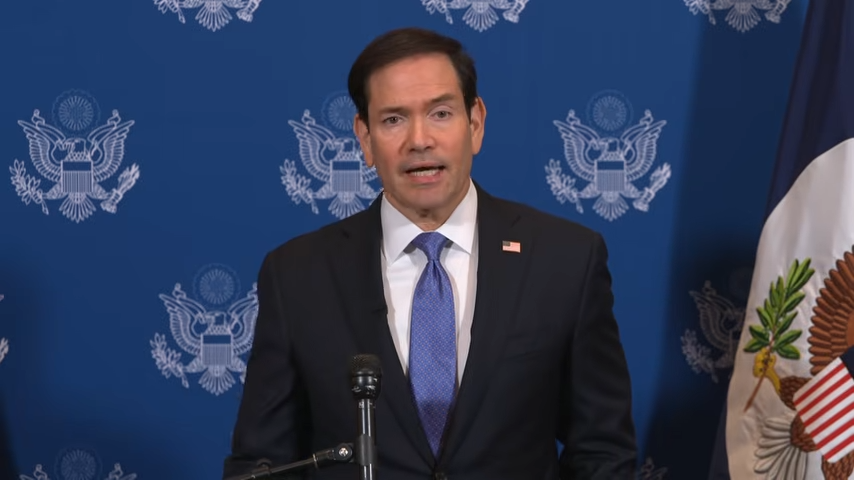

U.S. Secretary of State Marco Rubio said Cuba will face consequences unless the communist regime chooses a different path, warning that those who believe they can wait out the Trump administration are mistaken.
Rubio, speaking to Fox News host Sean Hannity on Monday, said Washington hoped people controlling the regime would “open their eyes to the reality of what they are facing.”
A U.S.-imposed oil blockade implemented earlier this year has put the country under severe strain as it contends with fuel shortages and blackouts exacerbated by failing infrastructure.
“Unfortunately, the people that continue there to chant revolutionary slogans, too many of them still believe that they could wait out this administration and make no changes or do nothing,” Rubio said. “They are wrong, and they will learn the lesson the hard way if they don’t correct.”
Asked whether Cuba was about to fall, he said it had already fallen.
“It doesn’t have a functional economy, and it’s governed by people who continue to preach about some revolution that has been dead for 20 years,” he said. “It’s never worked, and that’s the problem they have.”
He added that the Communist Party of Cuba was not functioning as a government, and was “fueled by corruption, graft, and theft.”
Since 2021, close to 20 percent of Cuba’s population has left the country, he said.
As long as President Donald Trump remained president of the United States, Cuba would not be allowed to “become a base of operation against American interests or pose a threat to our national security,” Rubio told Hannity.
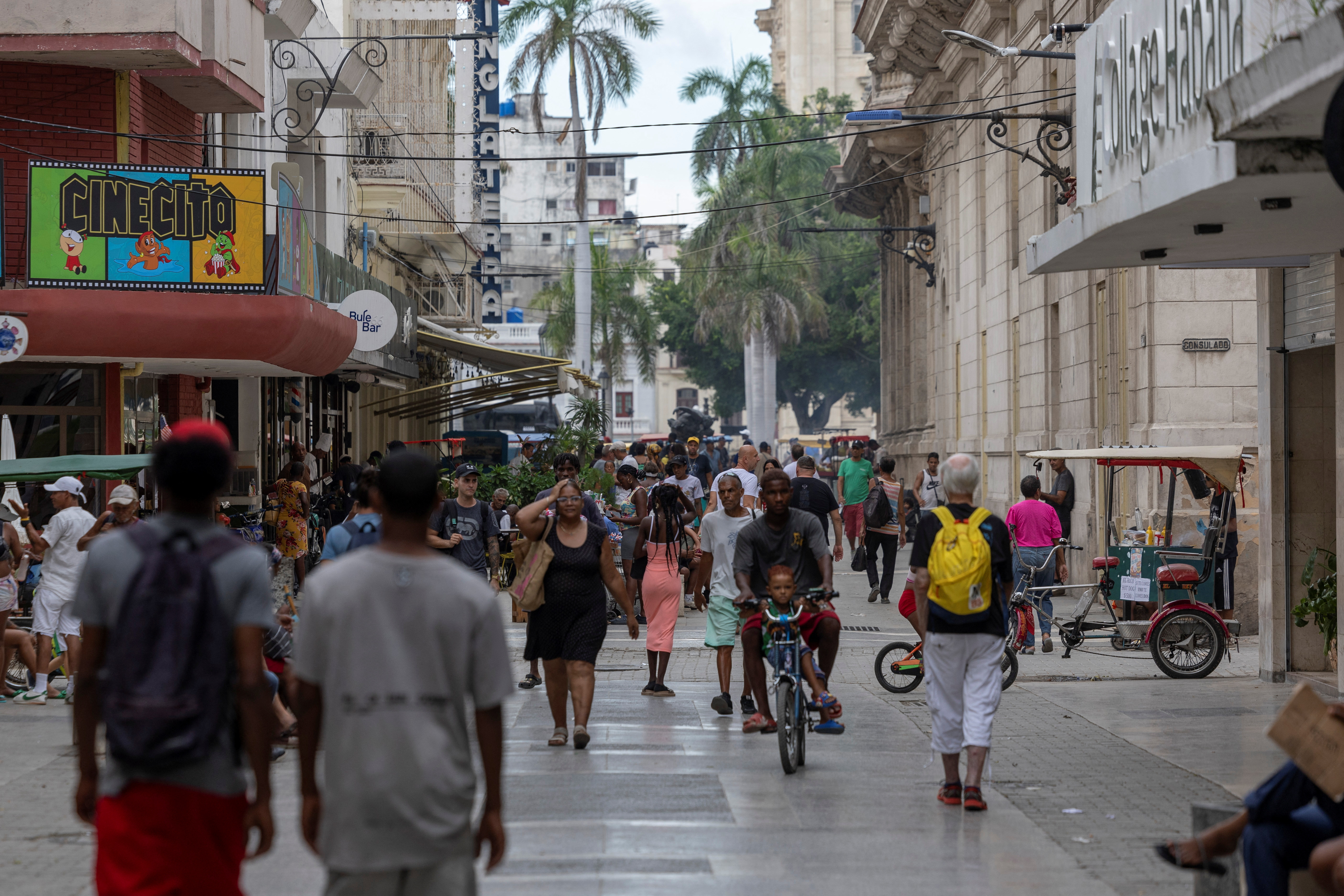 People walk through a busy commercial area in Havana, Cuba, on Sept. 16, 2026. (Ricardo Arduengo/Reuters)
Blockade ‘Abusive and Ruthless’
Cuban Foreign Minister Bruno Rodríguez told the U.N. General Assembly on Saturday that his country was facing “a multidimensional aggression from the United States government,” encompassing “a permanent, abusive and ruthless hostility that has lasted for almost seven decades.”
“Since January 2026, it has intensified and become more cruel and dangerous with the establishment of an energy blockade which, through intimidation and coercion, prohibits all countries from exporting fuel to Cuba, which is equivalent to a naval blockade classified under international law as an act of war,” he said.
“We have always been and remain willing to engage in dialogue with the United States government to try to find solutions to bilateral differences.”
Trump Expects Deal
Speaking to reporters at the White House on Saturday, Trump said he expected the United States and Cuba to reach a deal and did not think military action would be necessary.
During his Sept. 22 speech at the U.N. General Assembly, he said “freedom will be coming” to the island.
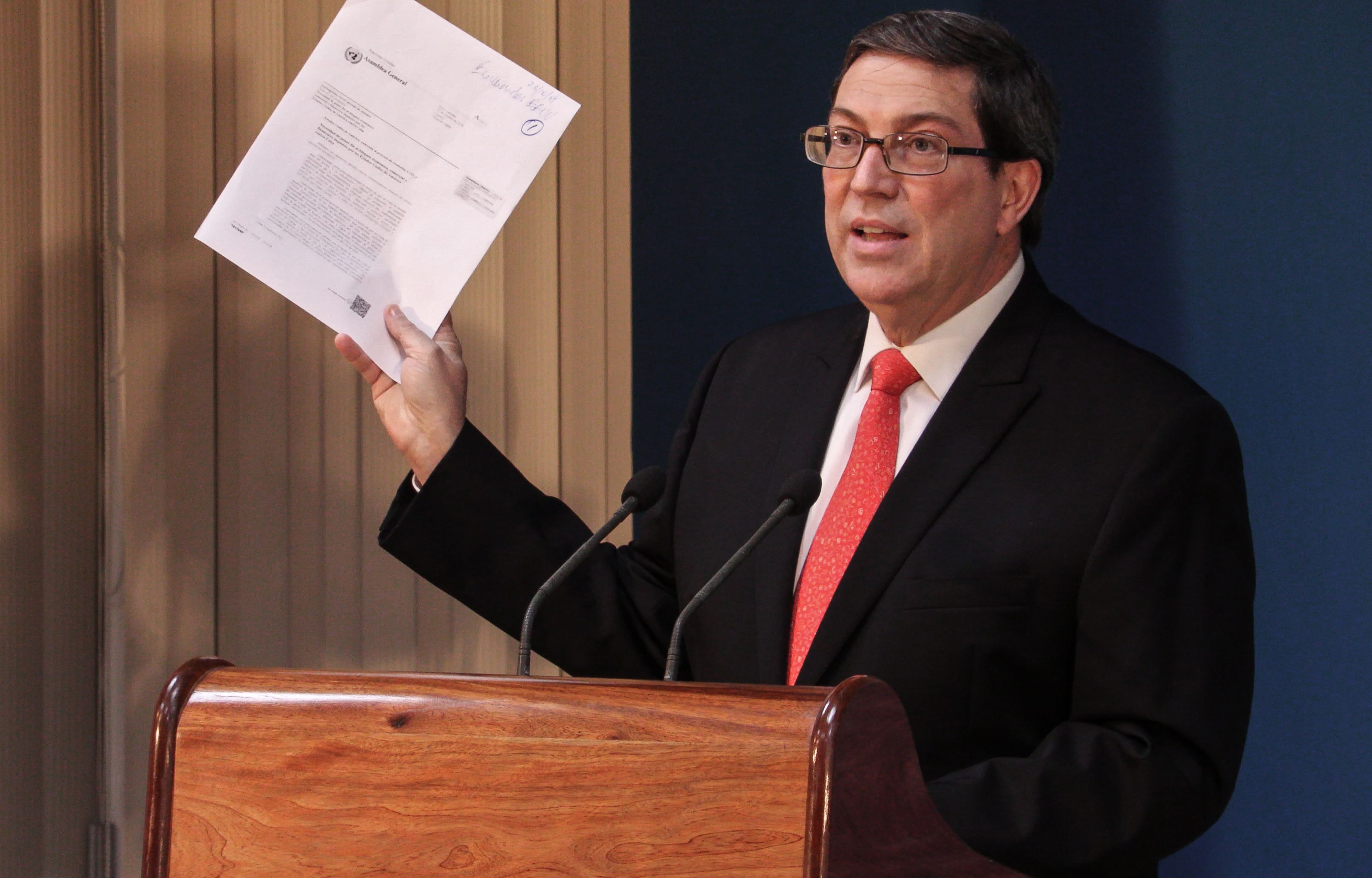 Cuban Foreign Minister Bruno Rodríguez speaks during a press conference, objecting to a U.S. report used to justify the embargo on Cuba, in Havana, on Oct. 24, 2018. (Adalberto Roque/AFP/Getty Images)
Cuba relied on Venezuela’s oil supply for decades, but supplies were cut after U.S. forces captured the Latin American country’s former leader Nicolás Maduro in a Jan. 3 operation, with interim leader Delcy Rodríguez redirecting oil deliveries to the United States.
Trump signed an executive order in late January imposing tariffs on any country that directly or indirectly provides oil to Cuba, exacerbating fuel shortages on the island.
Russia said in March that an oil tanker carrying 100,000 metric tons of crude oil had arrived in Cuba and that Moscow would stand by its friends by working on further supplies despite the U.S. blockade.
“In the desperate situation that Cubans now find themselves in, this, of course, cannot leave us indifferent, so we will continue to work on this,” Kremlin spokesman Dmitry Peskov told reporters at the time.
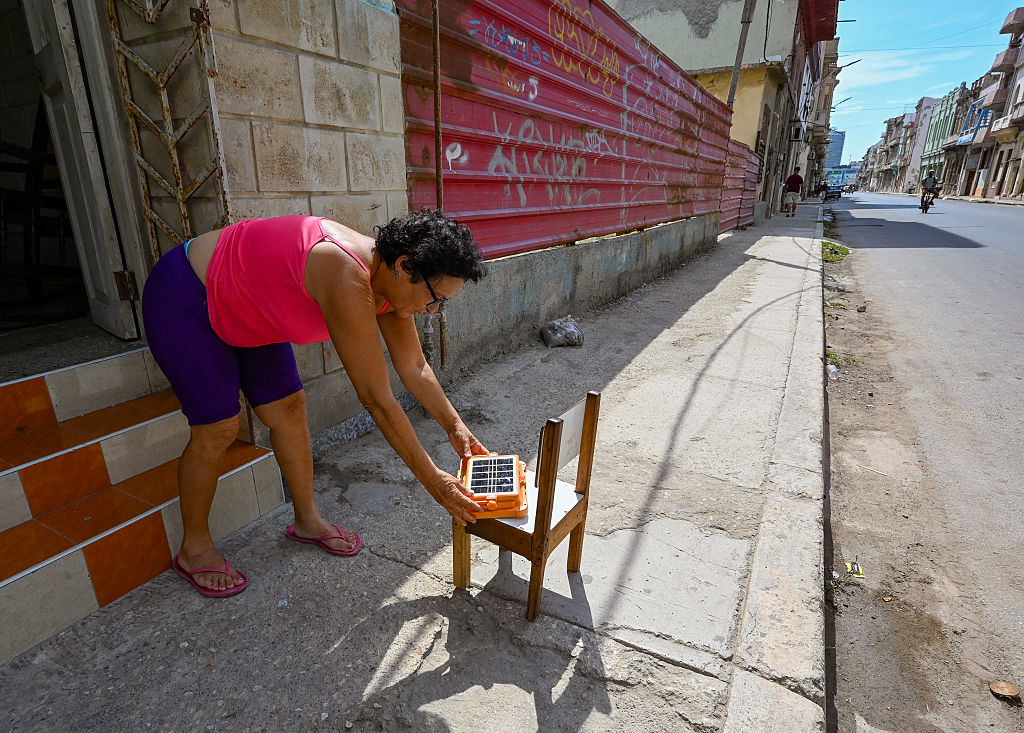 A woman places a solar lamp in the sun during a blackout in Havana on Sept. 18, 2026. (Adalberto Roque/AFP via Getty Images)
Washington has maintained economic sanctions on Cuba for more than 60 years. It began in October 1960, under President Dwight Eisenhower, after Cuban President Fidel Castro’s regime nationalized American-owned property and moved increasingly into the Soviet Union’s sphere of influence. The Eisenhower administration banned most exports to Cuba, except food and medicine.
Under President John F. Kennedy, the sanctions became a near-total trade embargo in February 1962, several months before the Cuban Missile Crisis in October that year brought the United States and the Soviet Union to the brink of conflict.
 Friends Read Free
Copy
Facebook
Tweet
Friends Read Free
Copy
Facebook
Tweet