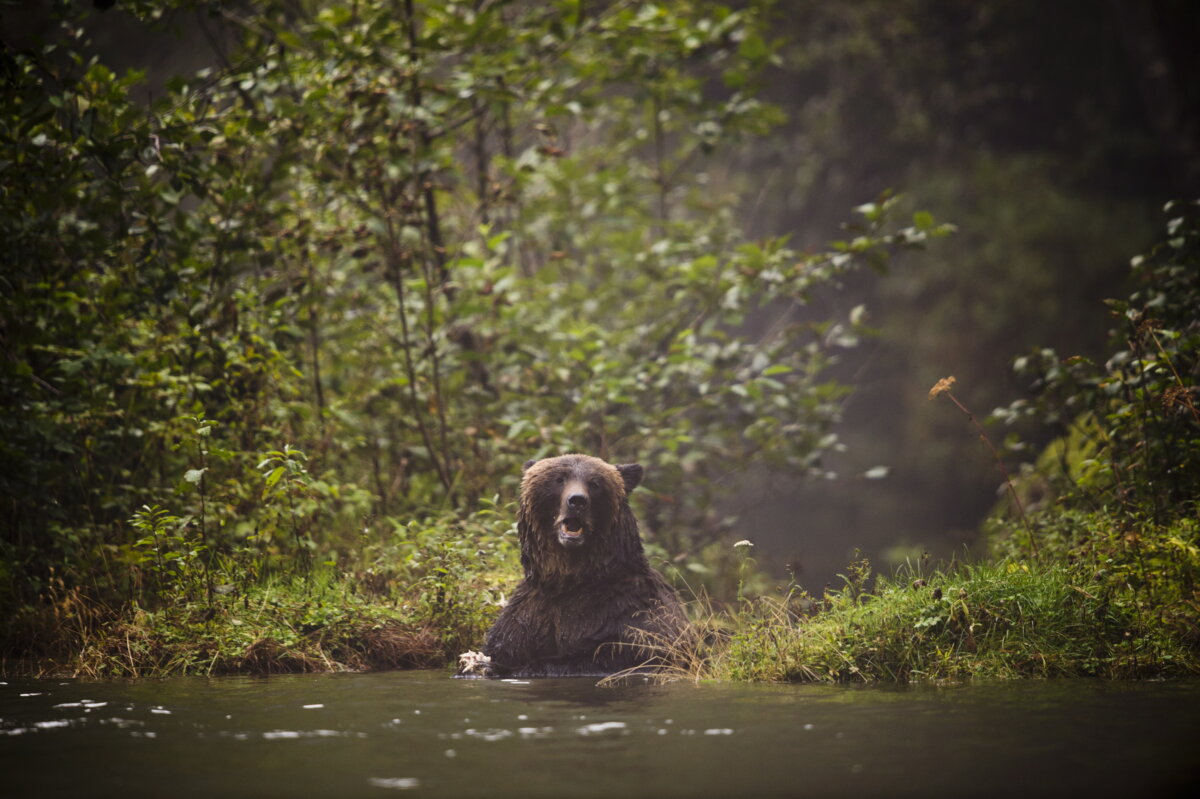

Alberta’s rural municipalities have called for the grizzly bear hunt to be opened, citing more frequent encounters at farms and residential areas along the Rocky Mountains.
“Bear encounters are becoming more frequent and more severe in Alberta’s eastern slopes. These encounters increase risks to residents, livestock and property,” the Rural Municipalities of Alberta (RMA) posted to Facebook on March 11.
“Resolution 17‑24F calls for the Government of Alberta to take a more intentional approach to managing problem bears by increasing funding for Conservation Officers and ensuring that a fully funded grizzly bear management plan is implemented.”
The RMA—an independent association representing 69 of Alberta’s municipal districts and counties—initially introduced Resolution 17-24F in November 2024. The intent of the resolution, which expires in December 2027, has not yet been met.
Alberta ended the general, licensed hunting of grizzly bears in 2006 due to declining population numbers, after which the species was listed by the province as threatened in 2010. However, in June 2024, the province introduced a Wildlife Management Responder Network allowing designated hunters to kill specific “problem” grizzly bears that pose public safety risks.
In practice, “problem” in this case generally refers to grizzlies destroying property or killing livestock, as grizzly bear attacks on humans are rare, according to Parks Canada. Data suggests that there were eight fatal attacks by grizzly bears in Alberta between 1990 and 2023.
In contrast, there have been 897 recorded livestock losses attributed to grizzly bears in Alberta since 2016, according to data from the Alberta government’s Wildlife Predator Compensation Program. Both grizzly bears and black bears also frequently damage grain bins in southern and forested areas of Alberta as they forage for food.
The resolution says that “bear encounters present both an agriculture or livestock predation risk and a human safety risk for those living and working in these rural areas,” which it says is not being dealt with through current management strategies.
The RMA says it acknowledges that only a small number of grizzly bears are problem bears, “but these bears have to be dealt with quickly and efficiently.”
While he has not directly responded to the RMA’s resolution, Alberta’s Minister of Forestry and Parks Todd Loewen has spoken about the Wildlife Management Responder Network.
During a question and answer session at the Legislative Assembly of Alberta on Oct. 28, 2025, Loewen was asked about the efficacy of the network by Sarah Elmeligi, NDP MLA for Banff-Kananaskis. Elmeligi said the program wasted money and was effective only 25 percent of the time, and that “the science clearly shows killing grizzly bears does not reduce human-bear conflict.”
Loewen responded that the program “saves officers’ time and energy so they can focus on catching poachers instead of dealing with problem wildlife … [and] it will not cause a destruction of the population of grizzlies.”
 Friends Read Free
Copy
Facebook
Tweet
Friends Read Free
Copy
Facebook
Tweet