
Russia said on Dec. 1 that remarks by NATO’s top military officer that the alliance could consider a “preemptive strike” were “extremely irresponsible.”
Italian Navy Adm. Giuseppe Cavo Dragone, chair of NATO’s military committee, said earlier that day that the organization was considering being “more aggressive” against hybrid warfare from Moscow.
“We are studying everything. … On cyber, we are kind of reactive. Being more aggressive or being proactive instead of reactive is something that we are thinking about,” Dragone told the Financial Times, adding that a “preemptive strike” could be considered a “defensive action” but acknowledging that it is “further away from [NATO’s] normal way of thinking and behavior.”
He said the key test for NATO was deterrence of future aggression.
“How deterrence is achieved—through retaliation, through preemptive strike—this is something we have to analyze deeply because there could be in the future even more pressure on this,” he said.
NATO describes hybrid warfare as a fusion of conventional and unconventional means, including subversion or destabilization of the adversary and attacks conducted in ways that make identifying those responsible difficult.
Hybrid warfare often occurs in the gray zone, the threshold below conventional war, which can include cyberattacks, attacks on critical infrastructure, and espionage.
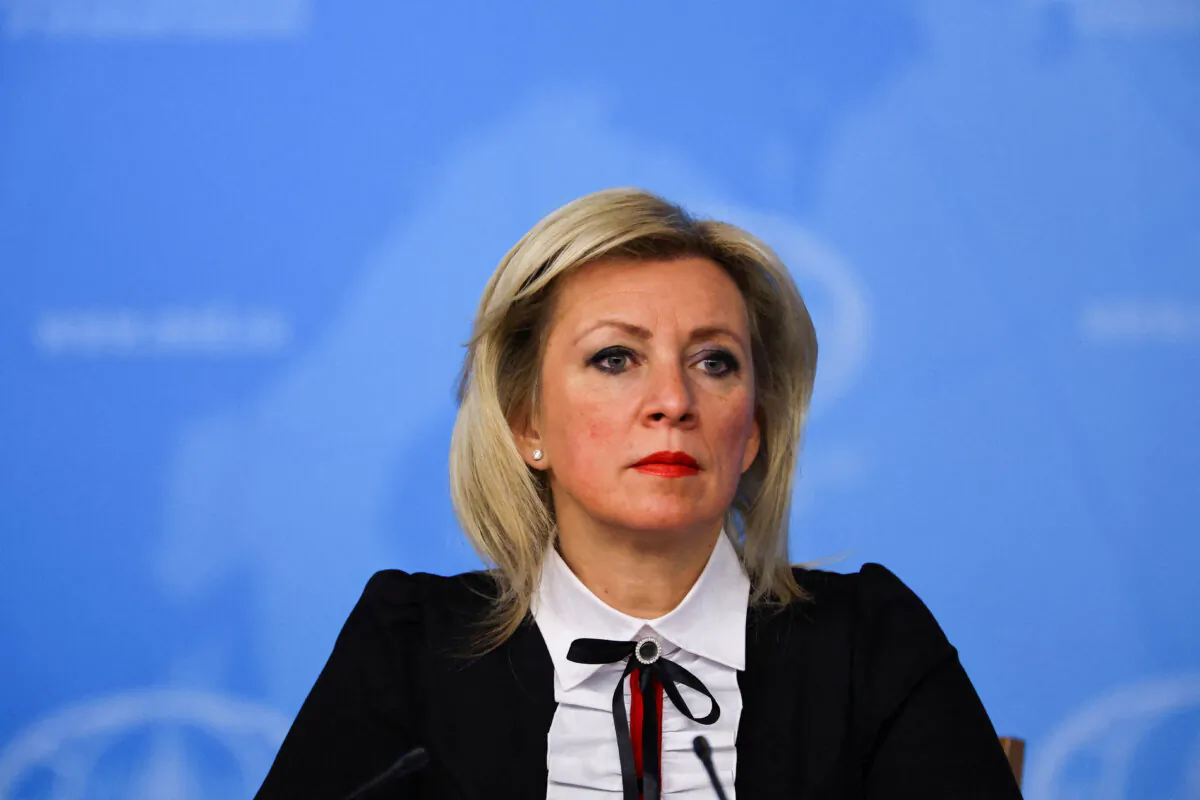
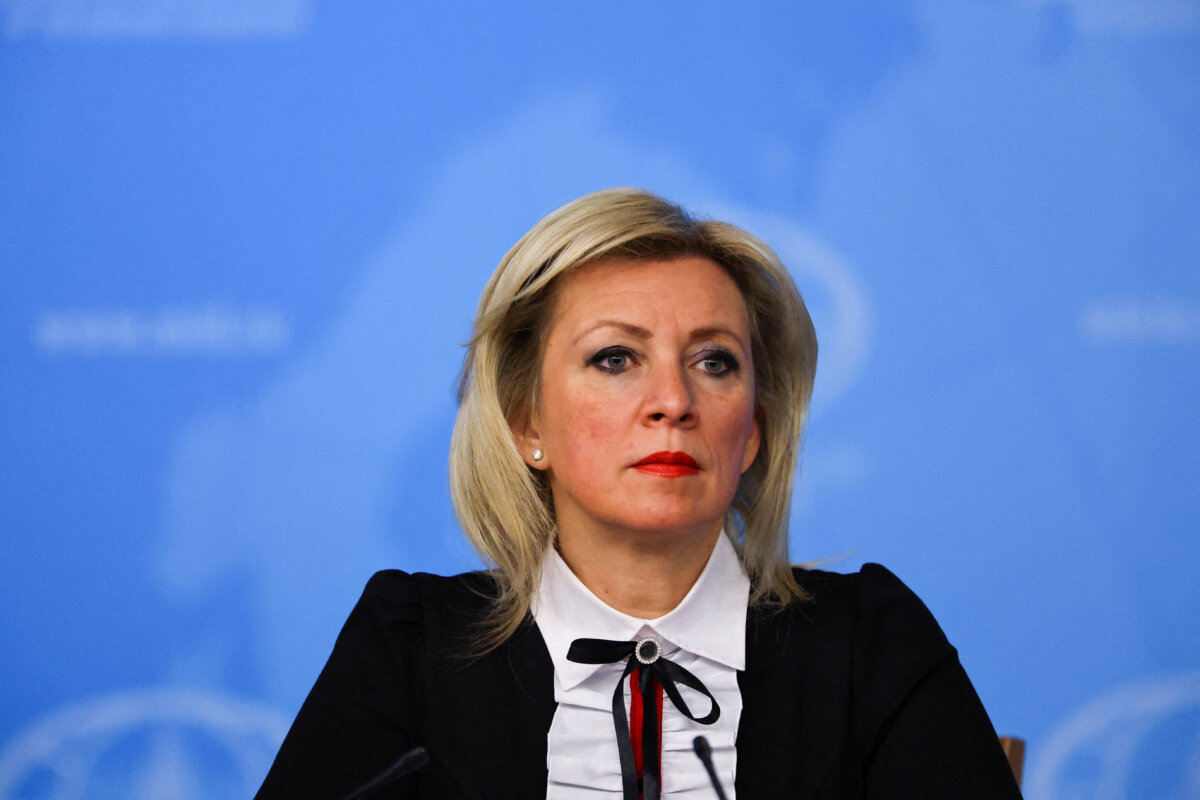
Responding to these comments, Russian Foreign Ministry spokeswoman Maria Zakharova called them “an extremely irresponsible step, indicating the alliance’s readiness to continue moving towards escalation.”
“We see in it a deliberate attempt to undermine efforts to overcome the Ukrainian crisis,” Zakharova said in a statement.
“The people making such statements should be aware of the risks and possible consequences, including for the alliance members themselves.
“We view Giuseppe Cavo Dragone’s statement about possible preemptive strikes against Russia as an extremely irresponsible step, demonstrating the alliance’s readiness to continue escalating.
“We see it as a deliberate attempt to undermine efforts to resolve the Ukrainian crisis. Those making such statements must be aware of the ensuing risks and potential consequences, including for the alliance members themselves.”
Zakharova went on to accuse NATO of “whipping up” anti-Russian hysteria of an imminent attack by Moscow, and she said Dragone’s comments “seriously inflame the already existing confrontation.”
Russian hybrid warfare has increasingly been an issue of concern within both NATO and the European Union.
Incursions by drones and jets have put NATO’s eastern member states on high alert for weeks, following incidents in Poland, Romania, Estonia, and Lithuania.
Activity has also been registered in Western Europe in recent months; the UK, the Netherlands, Belgium, Sweden, and Denmark have all seen drones or ships of either suspected or confirmed Russian provenance.
Concern over this prompted NATO to launch a major air operation on Sept. 12, dubbed “Eastern Sentry,” with the stated aim of defending its eastern flank.
As part of the operation, Danish, French, German, and British jets are now flying sorties across the region.
This follows operation “Baltic Sentry,” which was announced by NATO Secretary-General Mark Rutte at the start of this year and is designed to protect undersea cables in the Baltic Sea.
Alongside NATO, the EU has announced plans for new measures to counter hybrid warfare.
During a speech at the European Parliament on Oct. 8, European Commission President Ursula von der Leyen told lawmakers that there has been a “worrisome pattern of growing threats” to European security that falls outside of the normal scope of conventional war, including sabotage of undersea cables, cyberattacks, and, most recently, drone incursions over Europe’s skies.
“It’s time to call it by its name: This is hybrid warfare, and we have to take it very [seriously],” she told lawmakers in Strasbourg, France.
“We must not only react; we must deter because if we hesitate to act, the gray zone will only expand,” von der Leyen said, without directly naming Moscow, although she did say that Russia aimed to “sow division” in Europe.
On Oct. 16, European Commissioner for Defense and Space Andrius Kubilius said in a statement announcing the plans for the “Preserving Peace—Defence Readiness Roadmap 2030″ that it was necessary to deter “Russian aggression, prevent war and preserve peace.”
The plans outlined four defense strategies: the European Drone Defense Initiative, the Eastern Flank Watch, the European Air Shield, and the European Space Shield.
Russia has consistently denied accusations that it has intentionally entered NATO airspace and has previously denied involvement in other alleged sabotage and attacks on European infrastructure.
 Friends Read Free
Copy
Facebook
Tweet
Friends Read Free
Copy
Facebook
Tweet