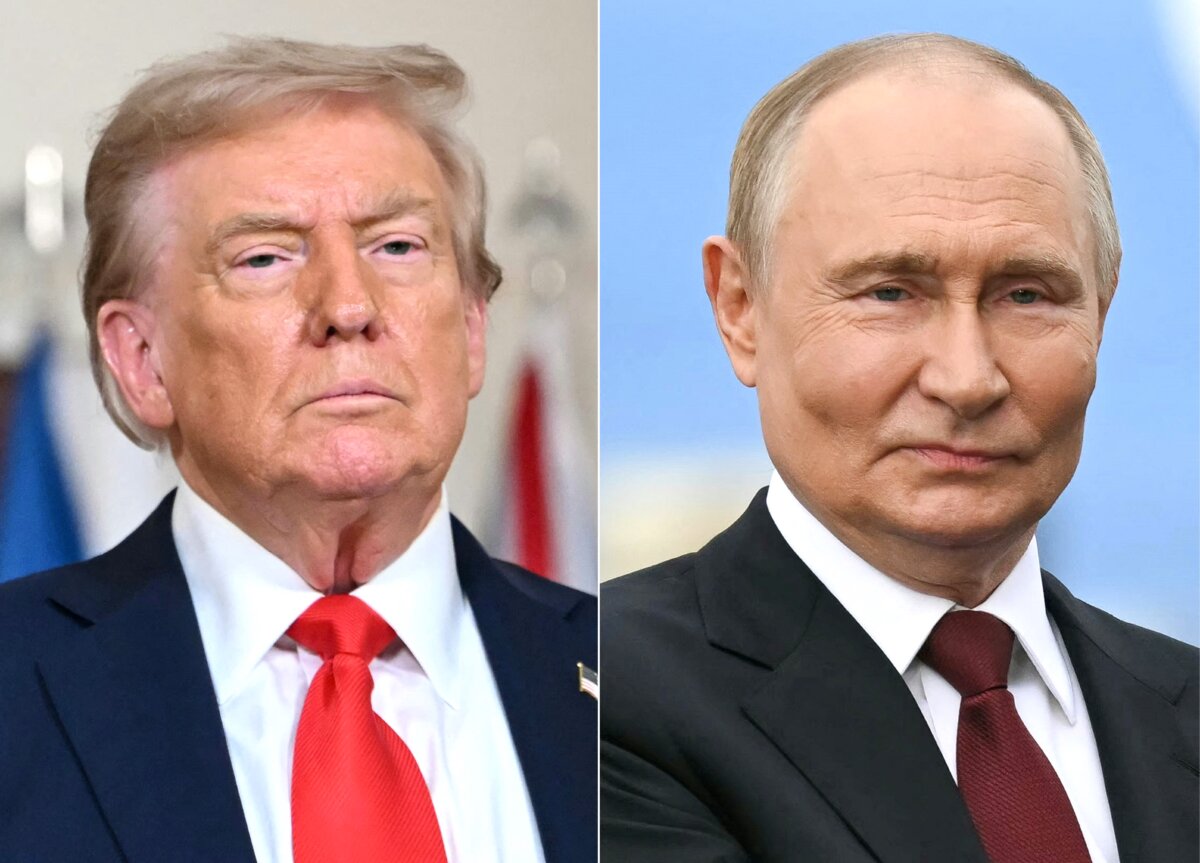

Russian President Vladimir Putin announced on Nov. 5 that his officials will draft plans for possible nuclear weapons testing, in response to U.S. President Donald Trump’s announcement last week.
Putin appeared on television to announce that Moscow is considering a resumption in testing for the first time since the collapse of the Soviet Union ended the Cold War in 1991.
Trump announced last week that the United States would resume its own testing program, signaling an escalation in geopolitical tensions.
“I am instructing the Foreign Ministry, the Defense Ministry … the special services and relevant civilian agencies to do everything possible to collect additional information on the issue, analyze it at the Security Council and make agreed proposals on the possible start of work on the preparation of nuclear weapons tests,” Putin said.
Relations between Washington and Moscow have nosedived in the past few weeks since the stalling of proposed talks in Budapest between the United States and Russia about a possible peace deal with Ukraine.
Trump expressed frustration with Putin and imposed sanctions on Moscow for the first time in his second term in office, before announcing plans for nuclear testing in the United States for the first time in 33 years.
At a meeting of Russia’s Security Council, parliamentary speaker Vyacheslav Volodin asked how Moscow would respond, prompting Putin to make his televised announcement.
‘Advisable to Prepare’
Russian Defense Minister Andrei Belousov told Putin that the announcement from the United States made it “advisable to prepare for full-scale nuclear tests” immediately.
Belousov advised that Russia’s Arctic testing site at Novaya Zemlya could host such tests on short notice.
Putin’s first deputy minister of defense, Gen. Valery Gerasimov, told the Russian president, “If we do not take appropriate measures now, time and opportunities for a timely response to the actions of the United States will be lost, since the time required to prepare for nuclear tests, depending on their type, ranges from several months to several years.”
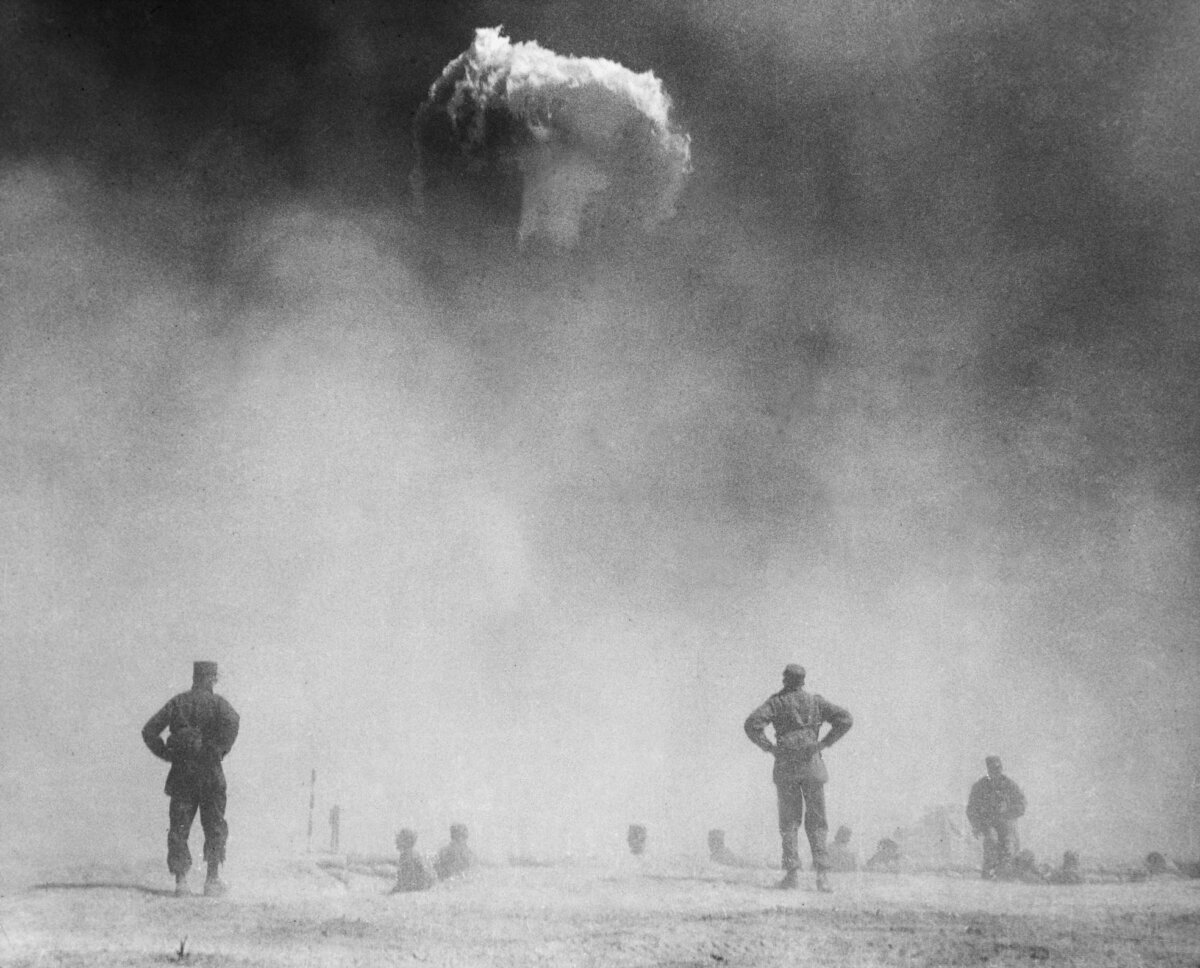
No country other than North Korea—most recently in 2017—has carried out explosive tests of nuclear weapons this century.
Security analysts have warned that any resumption of testing by one of the world’s nuclear powers would be destabilizing, as it would likely trigger a domino effect of responses from the others.
‘Action-Reaction Cycle’
U.N. Institute for Disarmament Research senior researcher Andrey Baklitskiy said on X: “Action-reaction cycle at its best. No one needs this, but we might get there regardless.”
Russia and the United States are by far the largest nuclear powers measured by the number of warheads, according to the Federation of American Scientists.
The two superpowers are followed in the rankings by China, France, Britain, India, Pakistan, Israel, and North Korea. A report by the organization found that “combined, the United States and Russia now possess approximately 87 percent of the world’s total inventory of nuclear weapons, and 83 percent of the stockpiled warheads available for use by the military.”
Putin has not set a deadline for officials to draft the requested proposals, according to Kremlin spokesman Dmitry Peskov.
“I want to emphasize that the president did not give instructions to begin preparations for testing. The president instructed that the advisability of beginning preparations for such tests be considered,” Peskov said, according to Russian state media agency TASS.
‘Non-Critical Explosions’
Trump has not explicitly said whether the resumption in testing he ordered will entail nuclear explosives or testing the flight capabilities of nuclear missiles. However, Energy Secretary Chris Wright indicated on Nov. 2 that the plans will not extend to nuclear explosions.
“I think the tests we’re talking about right now are system tests,” Wright said in an interview on Fox News.
“These are not nuclear explosions. These are what we call non-critical explosions.”
Writing on Truth Social last week, Trump said the move by the United States was necessary to match the growing capabilities of Russia and China. He said that he “hated to do it” but that he “had no choice.”
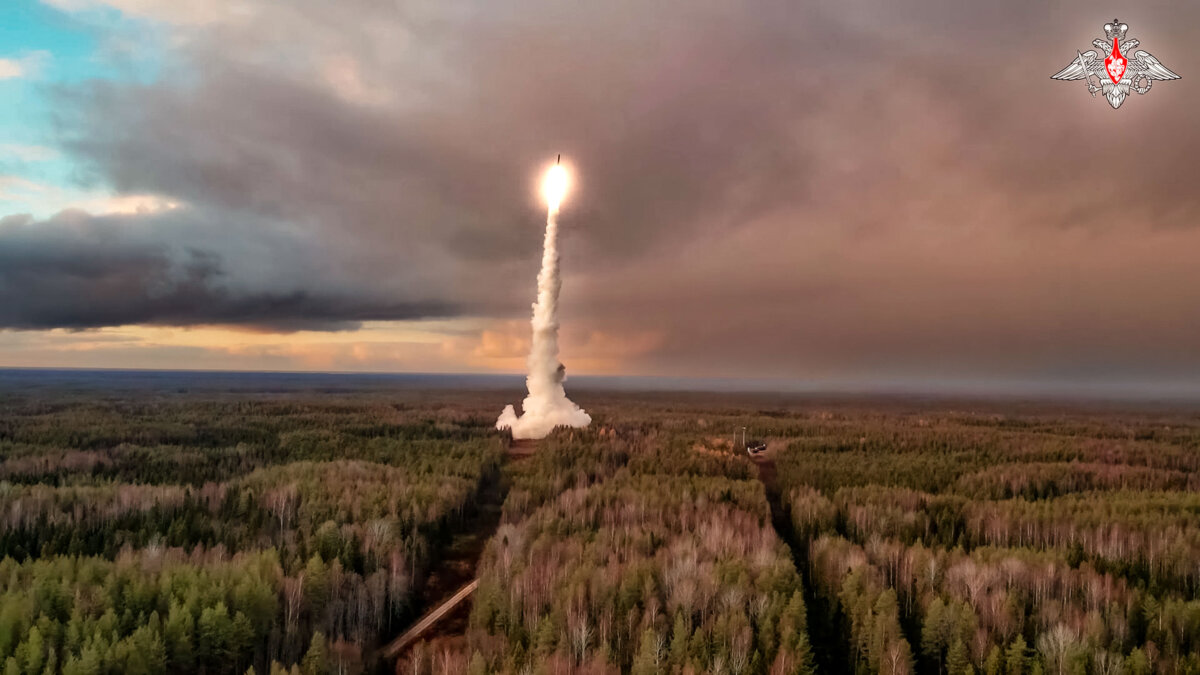
In October, Russia tested a nuclear-powered Poseidon super-torpedo as well as its new Burevestnik cruise missile, which is designed to carry a nuclear warhead.
Nuclear blasts were regularly staged by the major powers for decades during the Cold War, with serious environmental consequences that campaigners fear could be unleashed if explosive tests resume.
Testing delivery systems for nuclear weapons does not involve a nuclear explosion.
Speaking in Malaysia on Oct. 31, U.S. War Secretary Pete Hegseth said that testing nuclear weapons is a responsible way to ensure the country has “the strongest, most capable nuclear arsenal” in order to “maintain peace through strength.”
Reuters and The Associated Press contributed to this report
 Friends Read Free
Copy
Facebook
Tweet
Friends Read Free
Copy
Facebook
Tweet