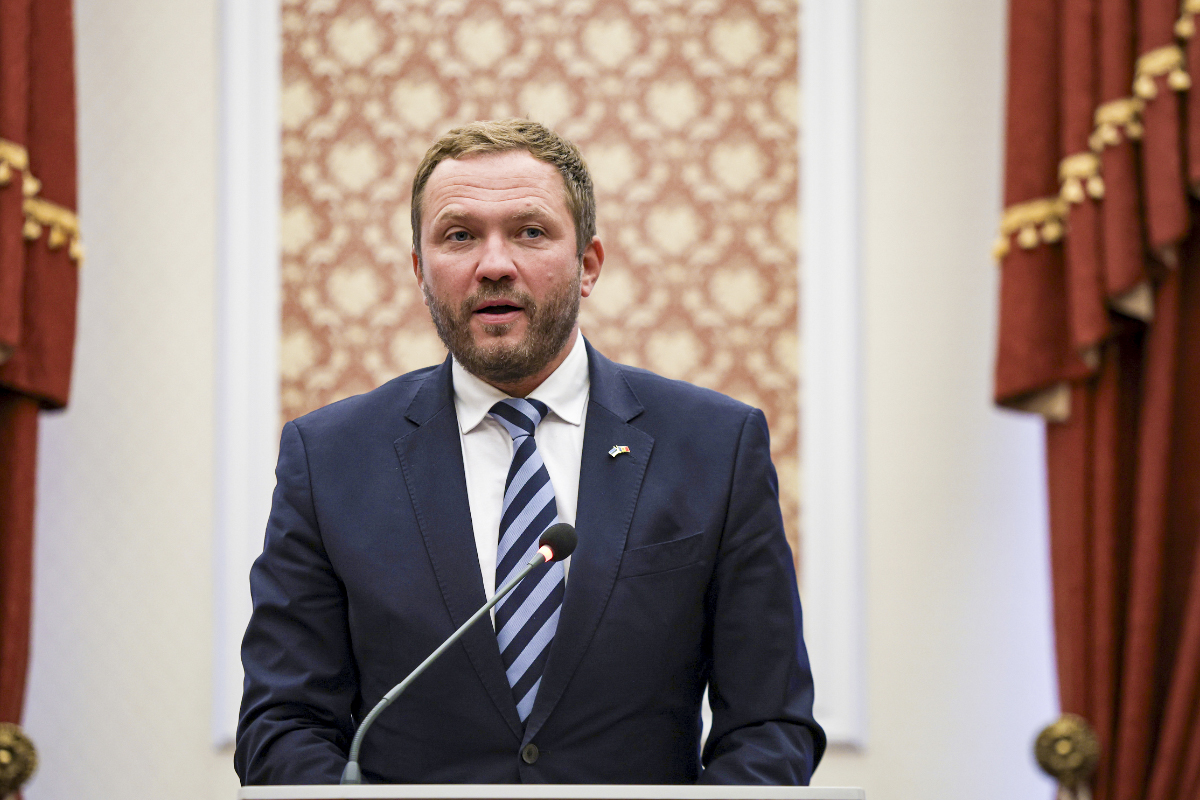

Estonia’s top diplomat says he fears that continued hybrid attacks and sabotage attributed to Russia could erode Western European support for Ukraine.
Estonian Foreign Minister Margus Tsahkna told Reuters in an interview on the sidelines of a conference in Poland that while Eastern European countries are more prepared mentally for aggressive action, the West is not.
European officials have warned that Russia is ramping up sabotage, cyber attacks, and other covert tactics.
Tsahkna reiterated his concerns that Russia could target defense industry companies and critical infrastructure.
This comes after Germany said that Russia orchestrated the attempted drone attack at Leipzig/Halle Airport, and Estonia said that Russia was behind an attack on a defense company supplying Ukraine.
Moscow has consistently denied it is engaged in any kind of hybrid warfare activity, and rejected claims of involvement in the Leipzig airport and Estonian defense company incidents.
“Russia is looking very carefully at how we react,” Tsahkna said. “What is our political unity in practice.”
The Estonian foreign minister said that the Baltic states, Finland, and Poland “have prepared mentally for decades that Russia may commit different levels of attacks.”
“But my main concern is that the Western part of European societies, they are not ready,” he said.
Resolve Strengthened
Western leaders, including NATO Secretary-General Mark Rutte, have said that Russian hybrid attacks were an attempt to fracture allies’ resolve in their support for Ukraine.
The European Union (EU) also believes that Moscow is coordinating hybrid attacks against members to undermine European unity and weaken support for Kyiv.
European nations continue to back Ukraine, even following incidents of sabotage and other covert activities they say have been conducted by Russia.
Germany has reinforced its resolve to support Ukraine after the attempted drone attack on the Leipzig airport, earlier this month announcing a new military aid package for Kyiv worth about 1 billion euros (about $1.1 billion).
Estonia also pledged to increase backing for Kyiv following the September arson attack on Tallinn defense company Milrem Robotics, which supplies unmanned ground vehicles to Ukraine.
“This act of sabotage is part of Russia’s broader campaign across Europe, aimed at intimidating us and weakening our support for Ukraine,” Tsahkna said at the time.
He added that Estonia’s response will be the opposite, confirming that Tallinn will increase its support for Ukraine and the pressure it is exerting on Russia.
In the wake of the attack, the Estonian security service said it assessed that “Russia’s efforts to destabilize Estonian society and weaken support for Ukraine will remain high in the coming years.”
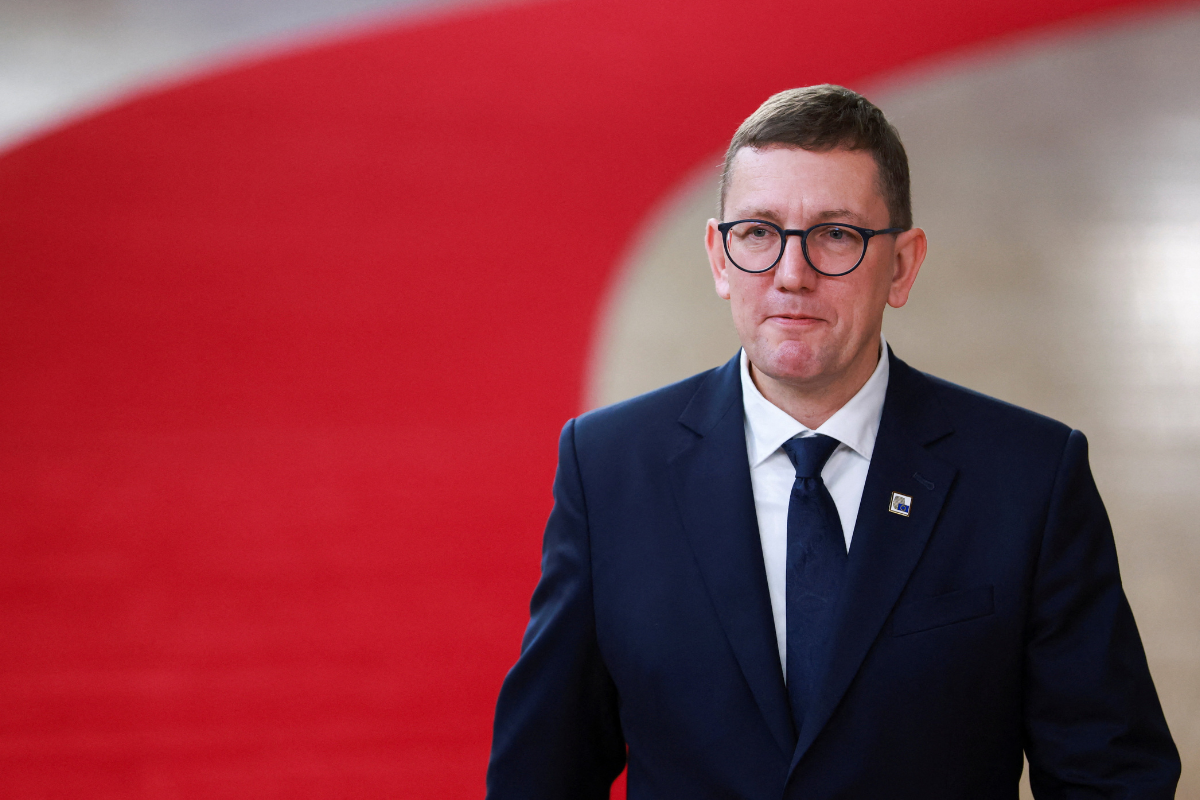 Estonian Prime Minister Kristen Michal arrives at a European Union leaders’ summit in Brussels, Belgium, on Oct. 15, 2026. (Stephanie Lecocq/Reuters)
The war is now in its fifth year.
“European financial assistance has to be there,” Michal said before the start of the second day of an EU summit in Brussels, Belgium.
“Financial assistance in the war of attrition is the alpha and omega. You have to keep it up … That has to come from the European Union.”
The EU has already agreed to lend Kyiv 90 billion euros ($101.25 billion) through the Ukraine Support Loan, 60 billion euros ($67.50 billion) of which is earmarked for defense spending.
This is set to cover Ukraine for 2026 and 2027, but Kyiv has said it now faces a gap of more than $70 billion for both defense and regular budget spending for next year.
Reuters contributed to this report.
 Friends Read Free
Copy
Facebook
Tweet
Friends Read Free
Copy
Facebook
Tweet