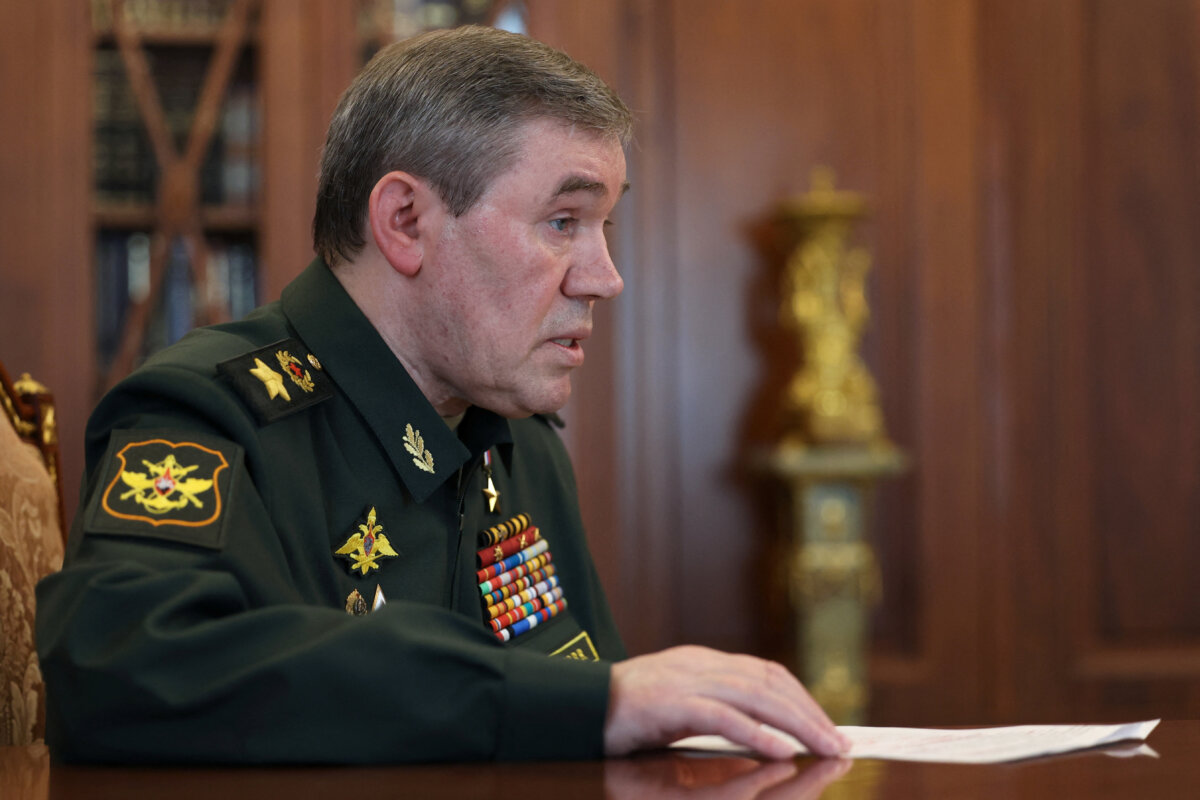

Moscow’s top general announced on Dec. 31 that Russian President Vladimir Putin had ordered troops to expand a region the Kremlin calls the “security zone” in Ukraine in 2026.
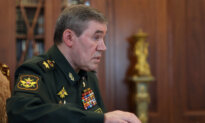
Chief of the General Staff Valery Gerasimov said the areas in question are the Ukrainian regions of Sumy and Kharkiv near the Russian border.
“In the current months, the pace of expansion of the security zone has increased,” Gerasimov said, according to Russian state news agency TASS. “Seven settlements have been liberated. The President of the Russian Federation has set the task next year to continue expanding the security zone to ensure the peaceful life of residents of the Belgorod and Kursk regions.”
Gerasimov made the announcement as he inspected and presented awards to servicemen in the Northern Force Group, who have been tasked with establishing the buffer zone, saying those receiving them had shown “bravery and courage.”
The Northern Force Group was formed in early 2024 and has long operated in northeastern Ukraine.
Its aim of creating a buffer along the border was first openly stated by Putin in May.
Putin has portrayed the buffer zone as a way to push Ukrainian forces and weapons farther from Russia’s border, citing cross-border shelling and drone attacks on regions such as Belgorod and Kursk.
Kyiv, however, has called Moscow’s buffer zone plan a cover for Russia to justify deeper incursions into Ukrainian territory.
Ukrainian President Volodymyr Zelenskyy has previously said that Moscow’s plans for Sumy and Kharkiv are “absolutely insane” and will be resisted by Ukraine.
Gerasimov’s New Year’s Eve revelation followed a promise of retaliation from Moscow for what it called an attempted attack on Putin’s residence in Novgorod on Dec. 29.
Kyiv denies the charge and instead has claimed that Russia is attempting to derail the ongoing peace negotiations.
The Kremlin, meanwhile, has doubled down on the allegations, and released images on Dec. 31 of what it claimed was the explosive-laden drone that carried out the attack, which “refute attempts by Western media outlets and the Kyiv regime to blame a lack of evidence for an attack originating in Ukraine,” according to TASS.
Moscow also issued another show of force on Dec. 30 when it announced that its nuclear-capable Oreshnik missile system had entered active service.
Russian troops held a brief ceremony marking the occasion in Belarus, where the missiles have been deployed, the Russian Ministry of Defense said in a post on Telegram.
It did not say how many missiles had been deployed or give any other details.
Moscow first used the Oreshnik, meaning “hazelnut tree” in Russian, against Ukraine in November 2024, when it fired the weapon at a former missile factory in Dnipro.
Putin has often sung the weapon’s praises, saying that its multiple warheads, which can fly at speeds of up to Mach 10, are impossible to intercept due to their velocity.
He has described their effect as turning the target “into elementary particles—essentially turning it into dust,” and likened their effect to that of a meteorite strike.
He has also warned that Moscow could use Oreshniks against NATO nations that have permitted Ukraine to use their longer-range missiles to strike inside Russia.
As peace negotiations continue, Zelenskyy said on Dec. 30 that he had spoken to Washington about establishing a possible U.S. troop presence in his country for a security boost.
The Ukrainian president said in a WhatsApp message to the media that a U.S. military presence in the country would be a major factor in a U.S. security guarantee for Kyiv.
“Of course, we are discussing this with [U.S. President Donald] Trump and with representatives of the coalition. We want this. We would like this. This would be a strong position of the security guarantees,” Zelenskyy said.
“I told President Trump, European leaders, I am ready for any format of meeting with Putin. I am not afraid of any format. … The main thing is for Russians not to be afraid.”
The White House had no official statement Tuesday on the matter of sending American troops to Ukraine and did not immediately respond to a request for comment from The Epoch Times.
Troy Meyers contributed to this report.
 Friends Read Free
Copy
Facebook
Tweet
Friends Read Free
Copy
Facebook
Tweet