
MOOSE JAW, Sask.—The Saskatchewan NDP is calling on the provincial government to suspend its 15-cents-per-litre gas tax to ease affordability pressures, following similar measures taken by Alberta, Prince Edward Island, and the federal government.
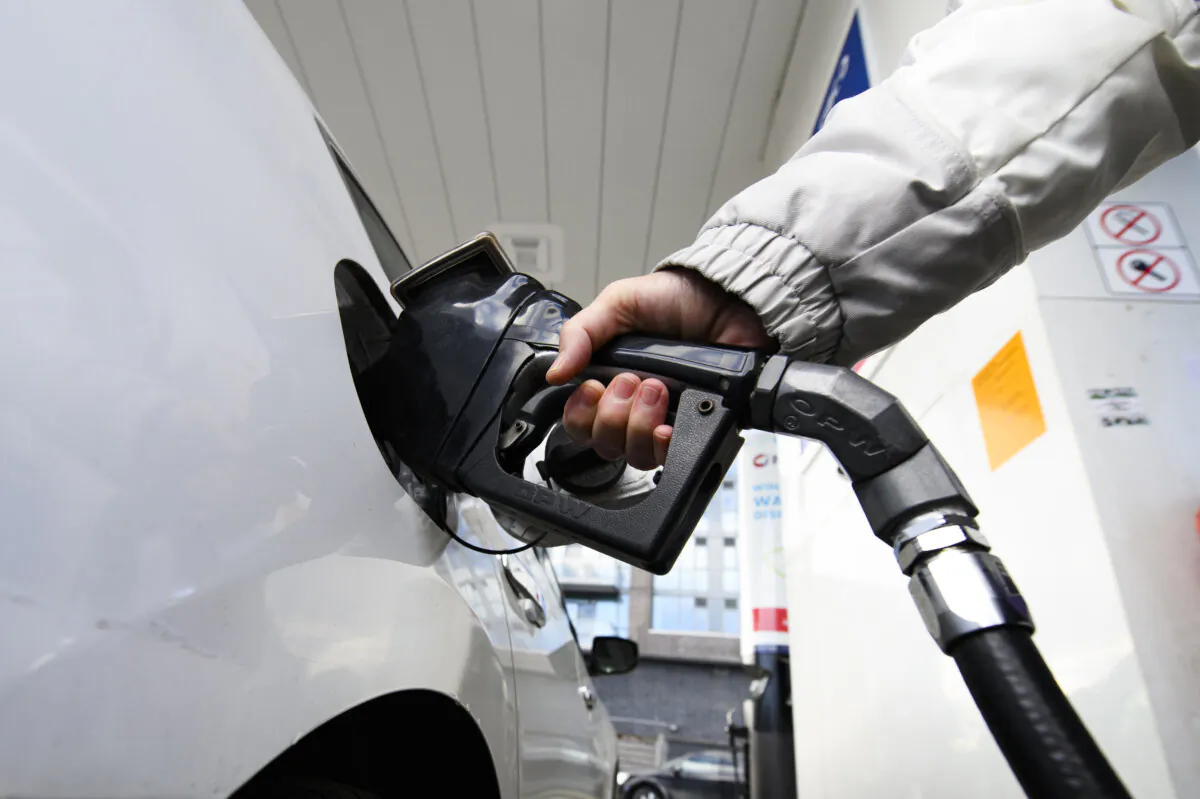
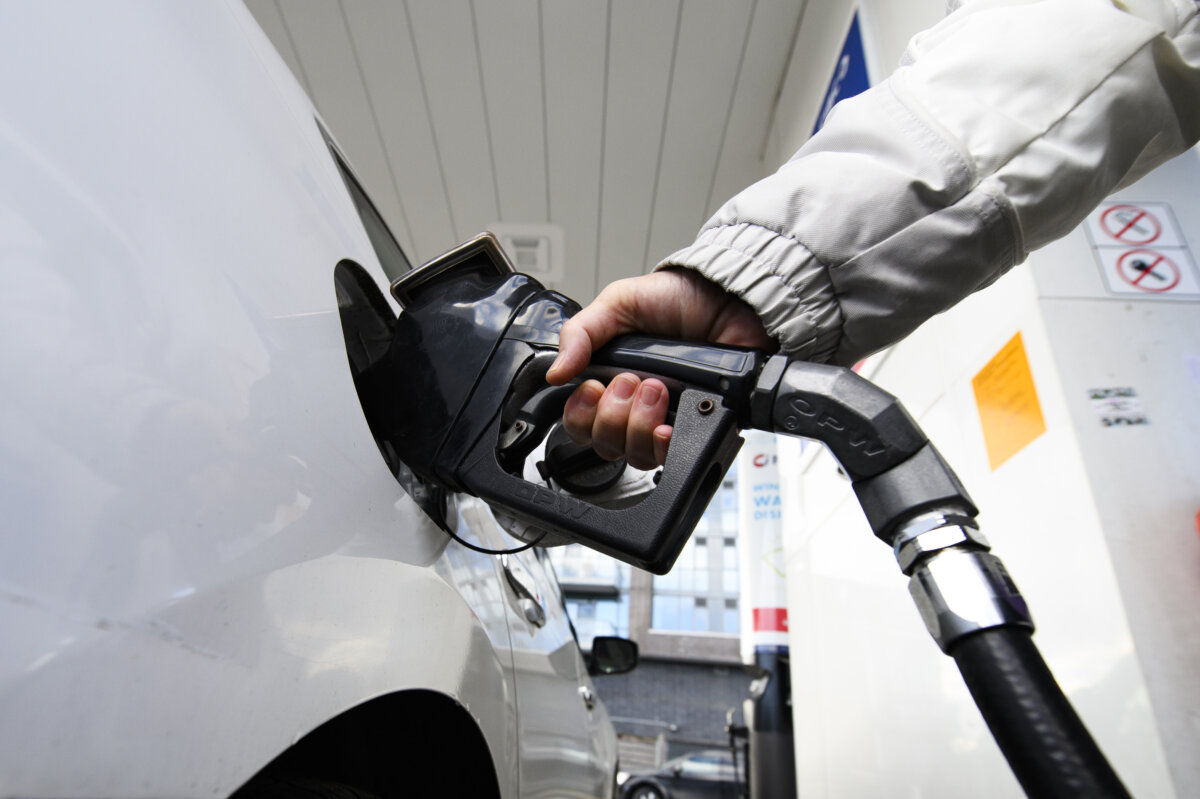
MLA Kim Breckner, the NDP’s shadow minister for trade and development, told reporters in Moose Jaw on Sept. 28 that Premier Scott Moe should suspend the tax “for as long as we’re seeing record-high prices at the pumps.”
“We’re getting that high revenue from skyrocketing oil prices,” she said. “Let’s take that revenue and use it to give back to the people who are feeling the pinch at the gas pumps.”
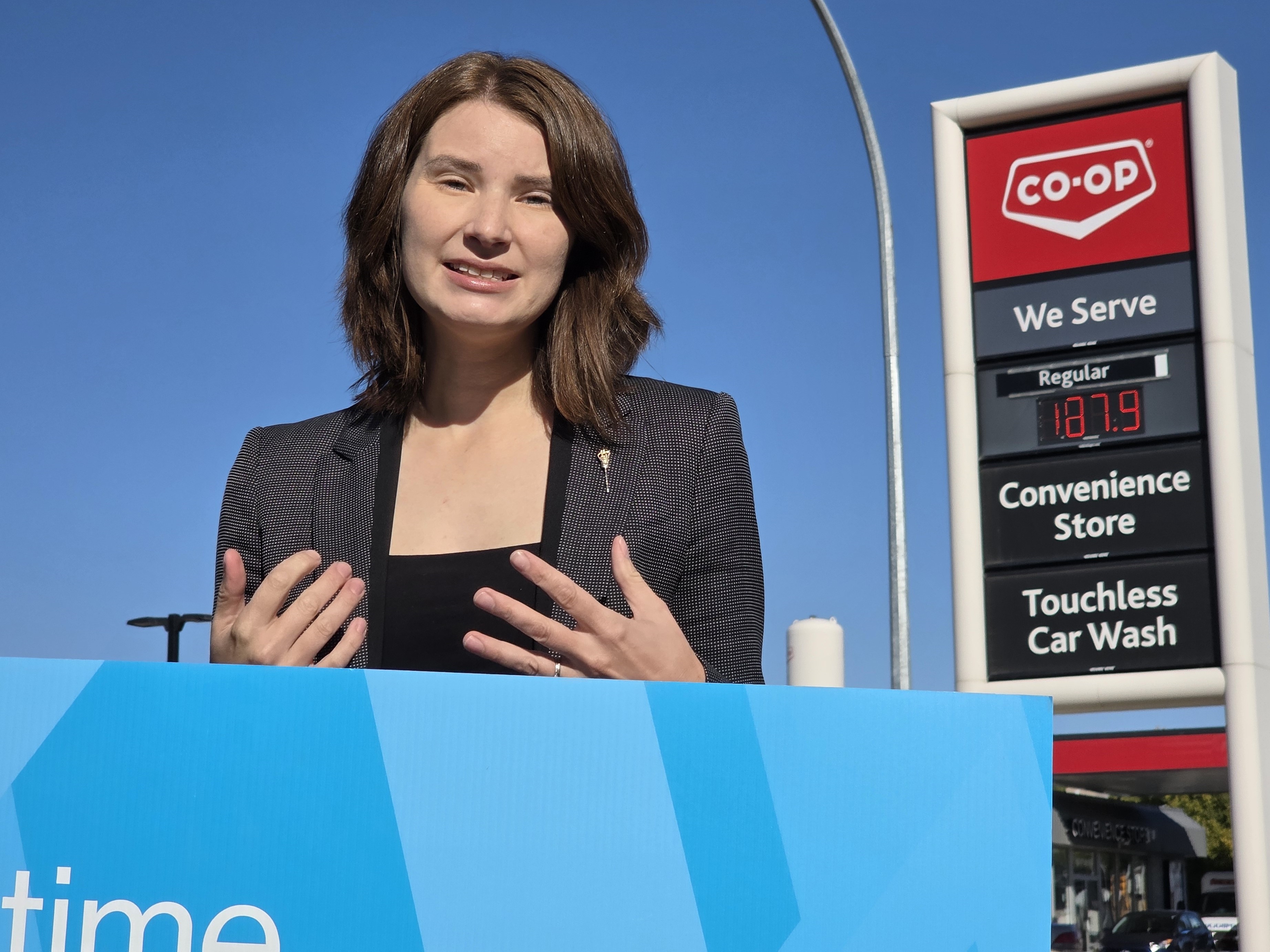 MLA Kim Breckner, the Saskatchewan NDP’s shadow minister for trade and development, speaks to reporters in Moose Jaw, Sask., on Sept. 28, 2026. (The Epoch Times/Jason G. Antonio)
Breckner said some Saskatchewan communities were seeing gasoline prices of $1.87 per litre, while others reached $2.20 over the weekend. She said prices were approximately 30 cents lower at the start of September.
The average gasoline price across most of Saskatchewan was $1.87 per litre on Sept. 28, according to GasBuddy.com.
Breckner said the province is collecting hundreds of millions of dollars in revenue from high oil and gas prices and should use some of it to provide tax relief. She said a fuel-tax pause could help residents dealing with homelessness, food insecurity, increased food-bank use, and financial anxiety.
The Epoch Times contacted the premier’s office for comment but did not receive a response by publication time.
Moe said in the Saskatchewan legislature on May 5 that revenue from the provincial fuel tax goes toward highway upgrades.
The province previously said a fuel tax cut was not planned because it uses more than $500 million in annual revenue from the tax to support transportation corridors on which exports rely.
The government also cited measures in its 2026-27 budget, which allocates more than $2.5 billion to affordability-related initiatives. These include $200 million in personal income-tax savings and $194 million through the Saskatchewan low-income tax credit for about 300,000 households this year. The budget forecasts $512.4 million in fuel-tax revenue for 2026-27.
The government has said the 2026-2027 budget builds on the Saskatchewan Affordability Act by aiming to reduce personal income taxes while expanding affordability measures.
“So we can still do the road maintenance that we need to do and keep our highways safe while cutting this particular tax and giving people a break,” she said.
The NDP previously introduced a motion in November 2024 calling for the fuel tax to be suspended for six months. The Saskatchewan Party government voted down the motion.
Fuel Tax Cuts
The NDP’s call comes as other governments have moved to temporarily reduce fuel taxes amid higher prices.
Prince Edward Island announced on Sept. 25 that it would pause its gasoline and diesel taxes beginning Sept. 26, continuing until Jan. 31, 2027. The measure removes 8.47 cents per litre from gasoline and 14.15 cents per litre from diesel. The P.E.I. tax will return at 50 percent of its current rate on Feb. 1, 2027, before being fully restored on April 1, 2027.
The province said its fuel-tax rates had not changed since Jan. 1, 2020, when the gasoline tax fell from 9.68 cents per litre to 8.47 cents and the diesel tax fell from 15.83 cents to 14.15 cents.
Alberta announced on Sept. 22 it would suspend its provincial fuel tax beginning Oct. 1, citing high energy prices linked to global conflicts. The move will reduce the tax on gasoline and diesel by 13 cents per litre through Dec. 31.
The Alberta government said the measure is intended to ease financial pressure on residents.
The federal government has also suspended its excise tax on gasoline and diesel. Ottawa announced on Sept. 2 that it would extend the suspension until Jan. 31, 2027.
The federal measure reduces the gasoline tax by 10 cents per litre and the diesel tax by four cents. The government plans to restore the tax to half its regular rate on Feb. 1, 2027, and to its full rate on April 1, 2027.
 Friends Read Free
Copy
Facebook
Tweet
Friends Read Free
Copy
Facebook
Tweet