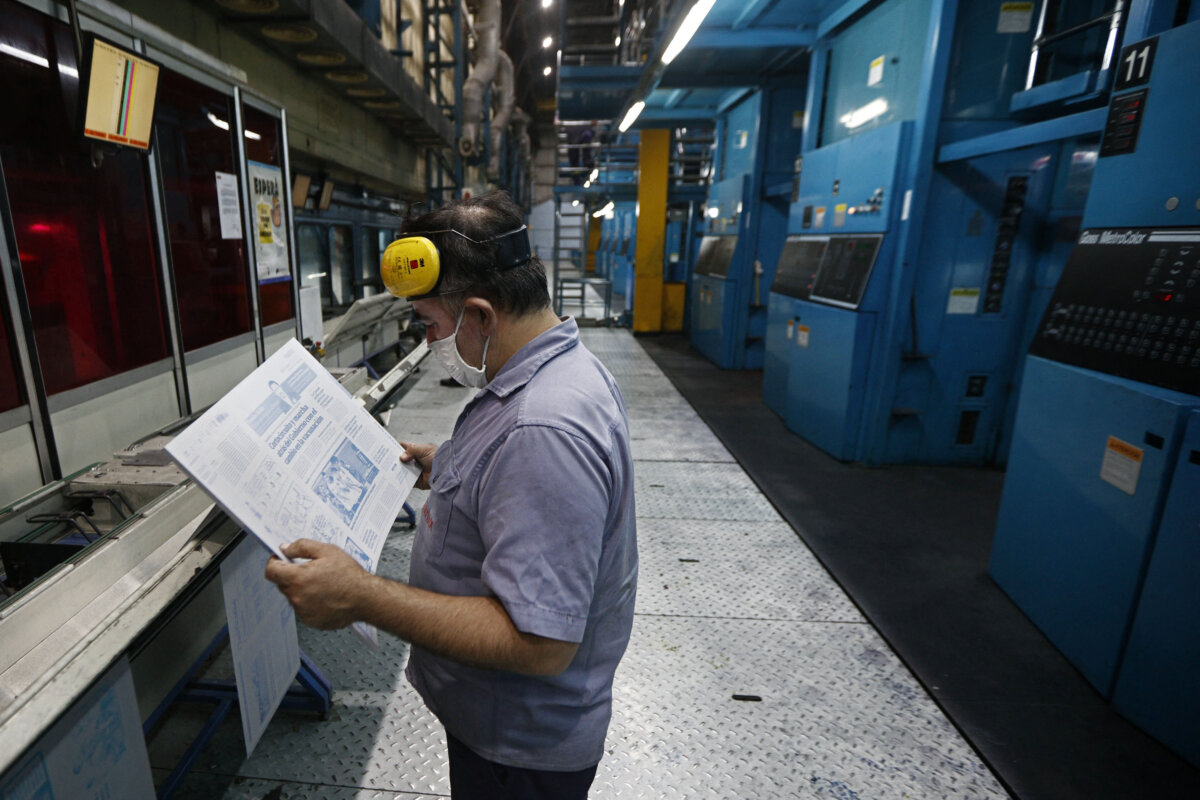

Dozens of Australian communities have been left without local journalism, amid revelations the federal government does not independently track the closure of newsrooms.
A Senate estimates hearing heard that 27 of Australia’s 567 local government areas no longer have a local news service following two decades of digital disruption.
Officials from the communications department said the government relies on external reports and industry data to measure the impacts of social media on the domestic press.
Furthermore, officials from the Environment and Communications Legislative Committee admitted they were “not familiar” with landmark data from the Public Interest Journalism Initiative. That research revealed Australia’s news media landscape had shrunk by 19 percent in the 20 years ending in 2024.
Andrew Verdon, the broadcasting and gambling regulation director of Australian Communications and Media Authority (ACMA) said the decline of news publishing was widely recognised.
“It’s quite well known that, given the rise of digital platforms with the mode of the advertising and the classifieds, that’s all gone online, a lot of the news publishers have been struggling,” he said.
“That’s one of the reasons why we’ve got the news media assistance program, but also the news media bargaining incentive to try and address that issue and provide money back into news publishers across Australia.”
The government’s News Media Assistance Program is a funding package allocating tens of millions of news organisations including the Australian Associated Press (AAP), while the News Media Bargaining Incentive aims to impose penalties on large technology companies who do not enter commercial deals with news publishers when using their content.
Verdon said ACMA also produces a media diversity measure framework, most recently released in March 2025 , with another report due in 2027.
However, he acknowledged the report generally focuses on broader indicators, such as how Australians access news and the number of journalists employed, rather than tracking individual newsroom closures.
“So that’s one of the key reports that we do look at, and that’s what informs our news media assistance program, and also our statutory payment scheme that we’re looking to implement,” Verdon said.
When asked by Liberal Senator Dean Smith if the department specifically collected data on newsroom closures, Verdon responded: “We don’t actively collect it, but if there’s any reports about news closures, we do look at that.”
In response to the growing crisis, Verdon suggested the government might apply an “additional weighting” to regions with insufficient news services when it came to funding arrangements.
“We’re targeting those small publishers, the regional publishers, the First Nations’ publishers, and those that might be in local council areas where there’s not enough services,” he said.
 Friends Read Free
Copy
Facebook
Tweet
Friends Read Free
Copy
Facebook
Tweet