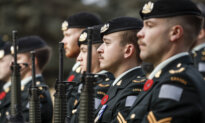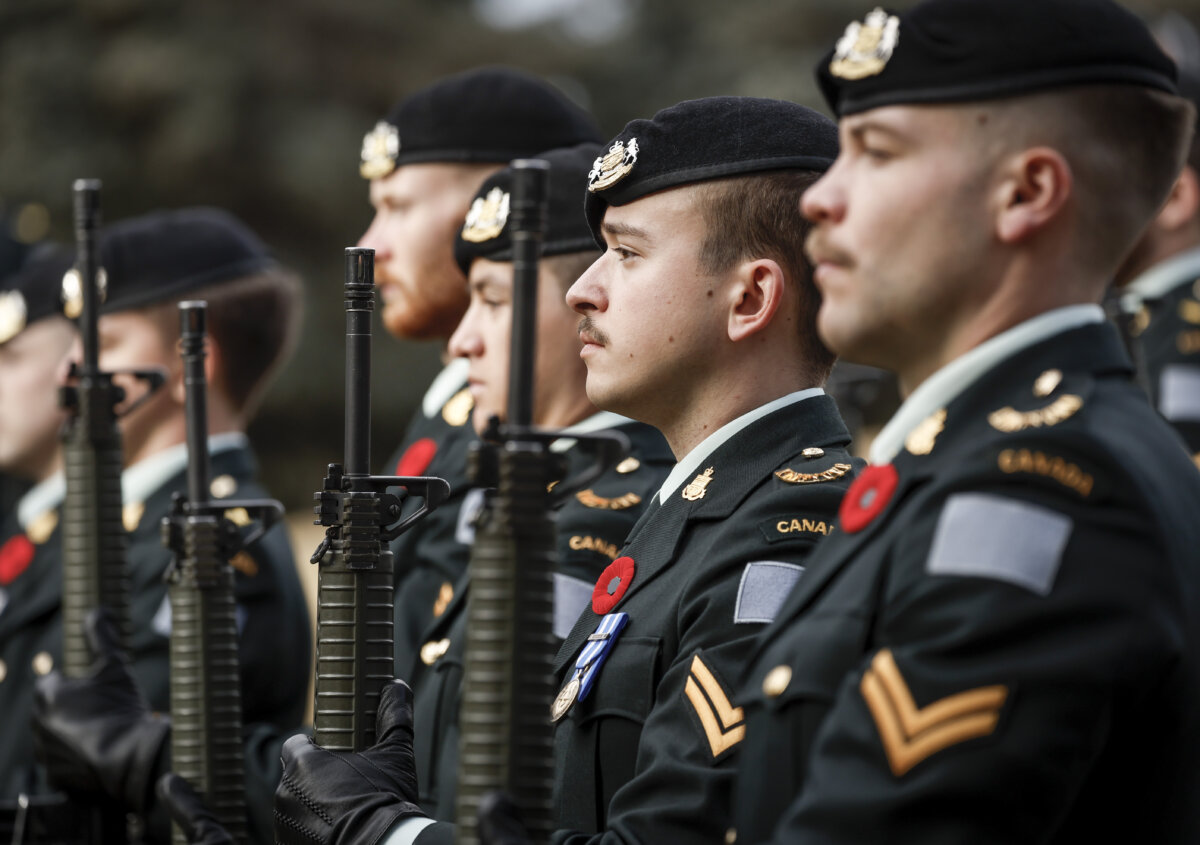

The percentage of Canadians willing to join the military in the event of a major conflict has jumped in the last six months, a new poll shows.
Some 24 percent of respondents said they would be willing to serve full time in the Canadian Armed Forces (CAF) in early March, up from 12 percent in November of last year, according to a poll conducted by Nanos Research for The Globe and Mail.
The percentage that would be willing to serve part time rose to 32 percent from 19 percent in the same period, according to the poll, which was taken just after Israel and the United States attacked Iran on Feb. 28.
When asked to gauge their opinion of the CAF, 56.4 percent of men and 59.7 percent of women said they had a “very positive impression,” rating it between 7 and 10 on a scale of 0 to 10. At the same time, 13.1 percent of men and 6.6 percent of women rated it between 0 and 3, indicating a “very negative impression.” By region, the Atlantic provinces had the most favourable impression of the CAF, while Quebec had the lowest.
Overall, 73 percent of Canadians said they would view a friend or family member’s decision to join the CAF favourably, up from 68 percent in 2025, according to the poll.
The survey was conducted between March 1 and March 8 among 1,058 Canadians aged 18 and older. It has a margin of error of plus or minus 3 percentage points, 19 times out of 20, according to Nanos Research.
The surge in positive opinion toward the military comes as Ottawa boosts defence-related spending to 2 percent of gross domestic product. The funding includes $2 billion for what it calls “the most significant compensation and benefits package in a generation for CAF members,” along with plans to build 7,500 housing units at 25 locations and invest in training, infrastructure, and military readiness, the government says.
Despite the positive poll results, the CAF has fallen short of recruitment targets. Between April 1, 2022, and March 31, 2025, the military received 192,000 applicants, but recruited only 15,000 of those, missing its target of 19,700 by 4,700, according to an audit report published in October last year. The report did not say what percentage of applicants dropped out, failed medical or security checks, or withdrew their applications, but cited structural issues affecting recruitment, including bureaucratic and training bottlenecks.
The Department of National Defence and the Canadian Armed Forces 2026-27 Departmental Plan shows planned spending of $5.38 billion in the current fiscal year for “recognizing the efforts and dedication of CAF members and responding to the challenges of recruitment and retention in a competitive environment.” The report lists a planned human resources target of 22,704 personnel members.
Separately, Immigration, Refugees and Citizenship Canada said in a February news release that the government plans to introduce new immigration Express Entry categories for “highly skilled foreign military applicants recruited by the Canadian Armed Forces in key roles such as military doctors, nurses and pilots.”
 Friends Read Free
Copy
Facebook
Tweet
Friends Read Free
Copy
Facebook
Tweet