
Global Affairs Canada says more than 30 Canadians have left Iran on foot, while thousands have requested assistance in leaving the region, as the war in the Middle East continues.
At least 32 Canadians have left Iran on foot, crossing the border at Türkiye, Armenia, Azerbaijan, and Turkmenistan, Global Affairs Canada (GAC) said in a March 8 travel update.
The department also said 357 Canadians were scheduled to leave the Middle East by plane between March 4 and March 8, including 93 Canadians on a charter flight from Dubai to Istanbul, 213 Canadians on block-booked flights from Beirut to Istanbul, and 51 Canadians on a block-booked flight from Dubai to Toronto.
In addition, 76 Canadians left Qatar by bus between March 7 and March 8 and travelled to Saudi Arabia, while 25 Canadians travelled by bus from Israel to Egypt on March 8.
Consular officials have been deployed to countries bordering Iran, including those stationed near several Iranian borders to meet Canadians who cross, the department said.
“Officials are available to assist Canadians with visa requirements and with arranging onward travel,” GAC added. “Those who travel to these borders are doing so at their own risk.”
GAC said 109,869 Canadians in the Middle East had registered with the department as of March 8, including 9,185 Canadians who have requested assistance. Of those who have requested assistance, 5,267 Canadians have requested assistance in leaving the region.
Ottawa is exploring additional options for ground support for Canadians seeking to leave other locations in the region, the department said, noting that ground transportation is risky due to missiles flying overhead and falling debris.
The department also said it is currently unaware of any Canadians who have been injured or killed because of the hostilities.
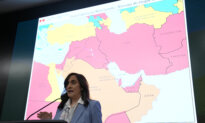
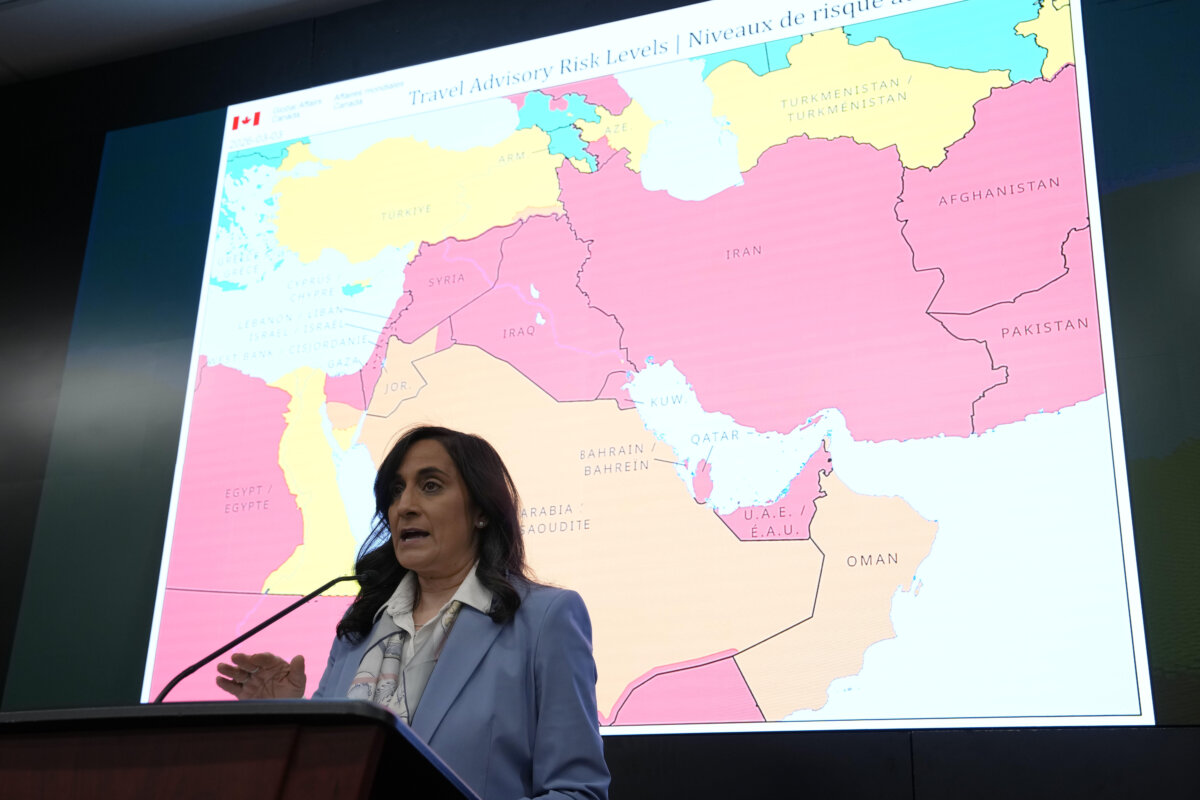
GAC is advising Canadians to avoid all travel to Bahrain, Iran, Iraq, Israel and Palestine, Kuwait, Lebanon, Qatar, Syria, the United Arab Emirates, and Yemen, and to avoid non-essential travel to Jordan, Oman, and Saudi Arabia. Canadians in Cyprus are advised to exercise “a high degree of caution,” the department says.
Meanwhile, Prime Minister Mark Carney convened the Incident Response Group with ministers and senior officials on March 8 to discuss the ongoing war in Iran and the Middle East, with the meeting focusing on “efforts to protect Canadians in the region and work with partners to de-escalate the conflict,” the prime minister’s office (PMO) said in a news release later that day.
“Canada continues to support efforts to de-escalate the situation, and to call for an immediate end to attacks on civilian infrastructure – in line with international law,” the PMO said.
The war in Iran began on Feb. 28 as the United States and Israel launched strikes on Iran after negotiations over Iran’s nuclear program broke down, and Iran responded with retaliatory missile and drone strikes against Israeli and U.S. military positions and other strategic targets in the region.
“Canada was not consulted, did not participate, and has no plans to participate in the offensive actions against Iran that are being undertaken by the U.S. and Israel,” the PMO said. “The initial conflict has spread widely as a result of attacks by Iran and its proxies on other countries across the broader Middle East.”
The statement from the PMO comes after Carney has made conflicting remarks about Ottawa’s stance on the military operation in Iran. He initially said Canada supported the military action to prevent Iran from obtaining a nuclear weapon, but later said the airstrikes “appear to be inconsistent with international law,” and that he supported the U.S. strikes on Iran “with regret.”
 Friends Read Free
Copy
Facebook
Tweet
Friends Read Free
Copy
Facebook
Tweet