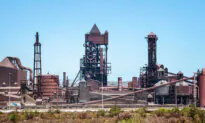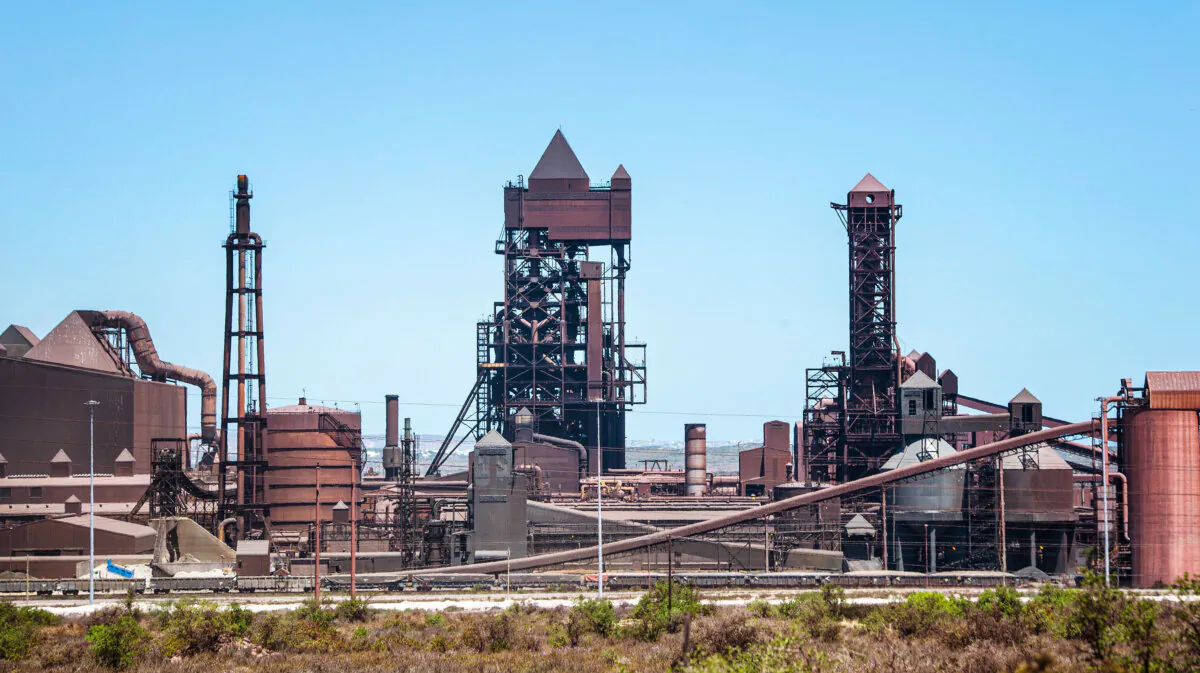

South Africa has introduced high import tariffs on structural steel from China and Thailand after an investigation found that the products were sold at unfairly low prices.
The duties, effective March 19, stand at 74.98 percent on imports from China and 20 percent on those from Thailand. They will last for five years, the government announced in a notice published this week.
The International Trade Administration Commission of South Africa, which carried out the probe, concluded that dumped imports had caused “material injury” to South Africa’s domestic producer of these goods, ArcelorMittal’s local unit, undercutting its steel by about 20 percent.
Imports from China and Thailand surged nearly 19-fold in fiscal 2024, reaching about 28,800 metric tons, 65 percent of which was supplied by China, according to the commission’s findings.
The tariffs replace lower provisional duties imposed in late 2024, set at 52.81 percent for China and 9.12 percent for Thailand, while the full investigation continued.
The decision follows a complaint from ArcelorMittal Rails and Structures, the only manufacturer of these products in the Southern African Customs Union region.
South Africa’s steel sector has faced severe challenges in recent years, such as high energy costs from the utility Eskom, weak domestic demand, logistics issues, and a flood of cheap imports—mainly from China, which accounts for roughly 73 percent of imported steel. Imports make up about 36 percent of total steel consumption in the country.
ArcelorMittal South Africa has idled long-steel operations at plants in Newcastle, Vereeniging, and the Mpumalanga Province, placing up to 3,500 jobs at risk and contributing to broader industrial decline in affected regions.
The company has filed multiple anti-dumping complaints in recent years, including on flat-rolled and color-coated steel products, according to the South African Iron and Steel Institute.
Structural steel—durable, weldable sections used in building frames, bridges, mining infrastructure, rail projects, renewable energy installations, and general engineering—is vital to South Africa’s economy.
Officials say the tariffs will provide breathing space for local producers and help safeguard jobs in manufacturing, construction, and related sectors.
Industry groups have welcomed the move, although some importers warn of higher costs for downstream users.
 Friends Read Free
Copy
Facebook
Tweet
Friends Read Free
Copy
Facebook
Tweet