
South Korea, Japan, and the United States will conduct their annual trilateral drills next month to test their readiness against nuclear and missile weapons threats from North Korea, Seoul has said.
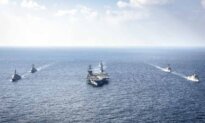
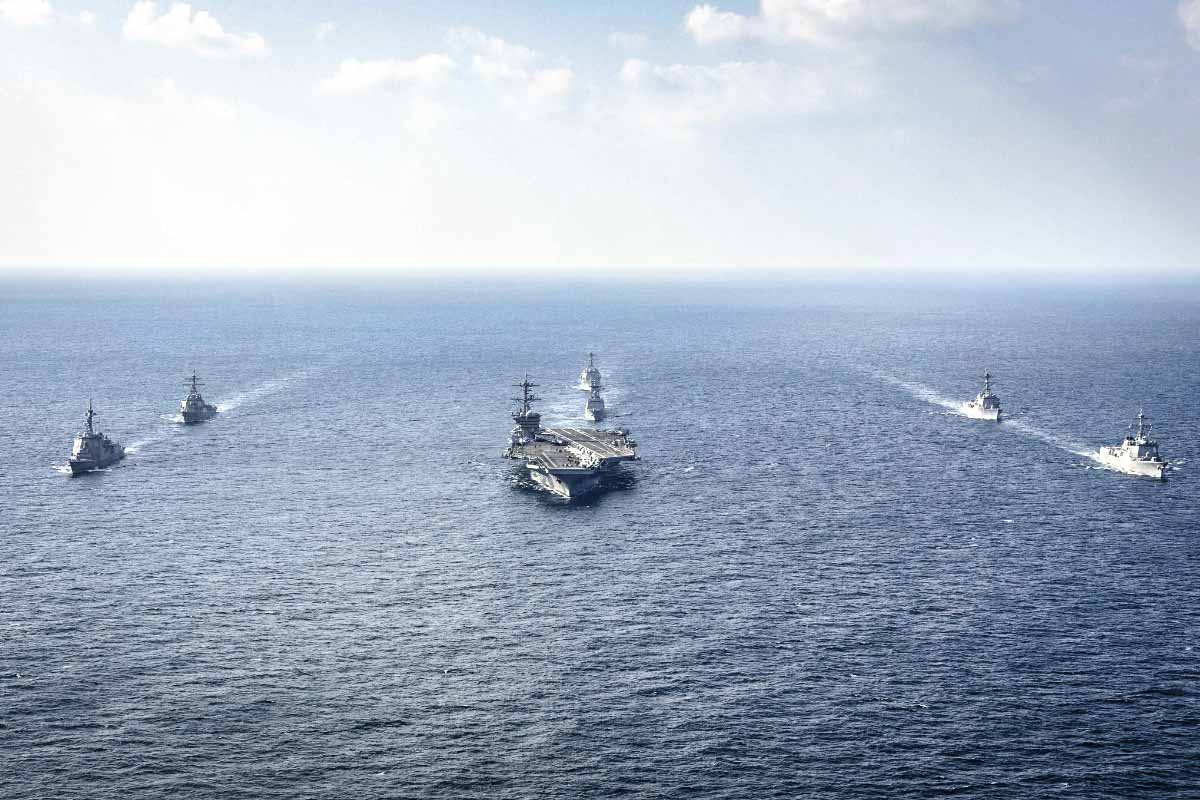
The South Korean military said on Aug. 28 that the Freedom Edge exercises will take place between Sept. 7 and Sept. 11 in the waters off of South Korea’s southern Jeju Island.
It said that the exercises are intended to promote peace and regional stability, and are defensive in nature.
Pyongyang has previously criticized the trilateral drills, calling them a “reckless show of strength” that demonstrate a confrontational stance against North Korea.
Freedom Edge conducted its first drills in June 2024.
During missions, allied forces conduct air and naval exercises in a bid to improve joint ballistic missile defense and anti-submarine warfare, as well as surveillance.
It is one of several exercises that the U.S. military holds in the region, including the annual Ulchi Freedom Shield drills.
Ulchi Freedom Shield is an all-domain exercise between South Korean and U.S. forces in which the allies strengthen their joint response capabilities against a range of regional security threats.
It often features live, virtual, and field-based training, engaging personnel from a range of military services from both forces.
This August’s exercises were scaled back by U.S. President Donald Trump, who said it sent the wrong message to Pyongyang, as well as being costly to the American taxpayer.
Trump also cited in an Aug. 16 Truth Social post his “very good relationship” with North Korean leader Kim Jong Un, who views the drills as hostile and an invasion rehearsal.
As a result, the exercises ended six days earlier than scheduled, but Pyongyang said shortening the drill will not change its “provocative, aggressive nature.”
North Korea launched approximately 10 short-range ballistic missiles toward the sea, following threats and condemnation from Pyongyang ahead of this year’s exercises, which said it would respond by strengthening its own military posture.
However, such rhetoric from Pyongyang is typical ahead of joint drills between South Korea and its allies, and North Korea has conducted its own military tests in response to previous Ulchi Freedom Shield exercises.
US–North Korea Relations
Pyongyang has previously said it will not resume diplomacy with the United States unless Washington drops its demand for North Korean denuclearization as a precondition for talks.
During his first term, Trump met with Kim in Singapore in 2018, Hanoi in 2019, and later in the Demilitarized Zone in 2019.
After the Singapore summit, the U.S. president suspended the 2018 Ulchi Freedom Guardian joint exercises, calling them expensive and provocative. Several subsequent drills were redesigned or canceled.
Talks in Hanoi ended without an agreement on denuclearization, and Pyongyang subsequently expanded its missile and nuclear capabilities.
The United States and South Korea have since restored larger exercises on the Korean Peninsula.
Seoul to Strengthen Defense Capabilities
Earlier this month, South Korean President Lee Jae Myung said his country needs to do more to strengthen its own defense capabilities.
“Through this year’s Ulchi exercise, we need to thoroughly assess and strengthen our defense posture and further enhance the country’s overall capacity to respond to crises,” Lee said during an Aug. 18 cabinet meeting.
“A strong national defense is the most fundamental foundation for protecting the lives of our people and building an irreplaceable Republic of Korea.”
Lee also praised the South Korea–U.S. alliance, saying that Seoul’s strengthening of its independent defense capabilities reinforces the allies’ mutual defense.
“A strong alliance makes the foundation of security stronger, and strengthening our own capabilities increases our value and necessity as an ally,” he said.
The Associated Press contributed to this report.
 Friends Read Free
Copy
Facebook
Tweet
Friends Read Free
Copy
Facebook
Tweet