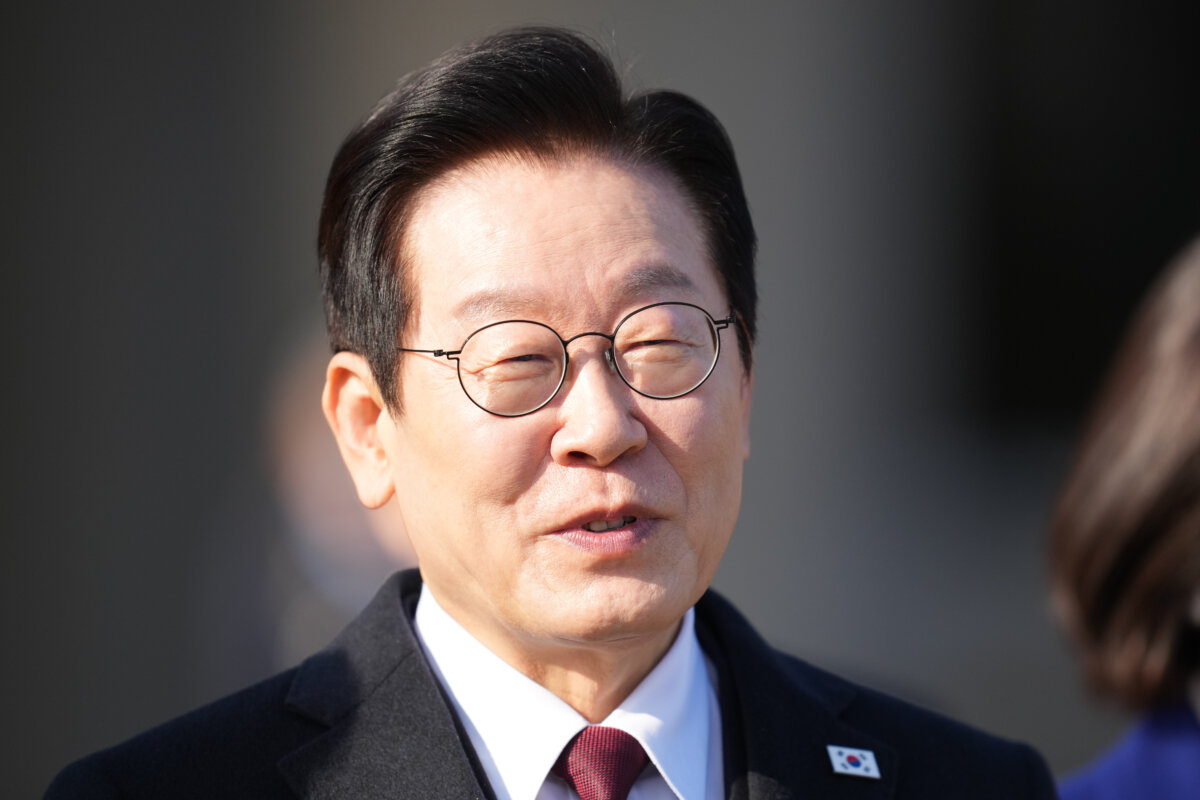

South Korean President Lee Jae Myung on April 2 urged citizens to save “even a drop of oil” amid the Iran conflict, which is driving a sharp energy shock.
“When we save even a drop of oil, avoid wasting even a single plastic bag, and overcome this together, we will be able to exit the tunnel of crisis safely and swiftly,” Lee said in remarks published by Korean broadcaster YTN on Thursday.
In a parliamentary address outlining a 26.2 trillion won ($19.5 billion) supplementary budget, Lee said that disruption to oil supplies had pushed up fuel prices and threatened key industries, from plastics to fertilizer production.
“The price of gasoline and diesel has skyrocketed due to the disruption of oil supply,” Lee said, adding that shortages of raw materials such as naphtha, a key petrochemical feedstock used to make plastics and chemicals, were hitting the wider economy.
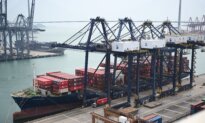
Since the United States and Israel launched their strikes on Iran on Feb. 28, shipping traffic through the Strait of Hormuz, one of the world’s most important energy corridors, has slowed to a near standstill.
South Korea is vulnerable to energy supply disruptions from the Middle East, as it is heavily reliant on Gulf oil, according to a March 5 report by the Atlantic Council.
Lee said the crisis could persist even if the conflict ended soon, as damaged energy infrastructure in the Middle East would take time to recover.
“Considered the worst energy security threat, the event is impacting the global economy, and the uncertainty of not knowing when it will end is having a major adverse impact on the economy,” he said.
“As the global economy enters a recession, we are also worried that the embers of economic growth that have been revived will fade away.”
The government has shifted into an “emergency economic response system,” he added, including measures to stabilize fuel costs and secure alternative crude supplies.
Lee noted that the country has implemented a fuel price cap for the first time in 29 years.
Starting at midnight on March 13, South Korea set maximum supply prices for major fuels.
According to a recent report by the banking group ING, this was “the first time that such a measure has been introduced since the liberalisation of the oil industry in 1997.”
“Gasoline, diesel, and kerosene prices have now returned to near pre-US-Iran war levels,” it said.
The European Commission has urged member countries to reduce oil and gas use.
In a March 31 post on X, European Commissioner for Energy and Housing Dan Jorgensen said that amid “market volatility” linked to the Middle East crisis, he is calling on EU member states “to coordinate action to safeguard oil and refined petroleum products supply.”
Jorgensen urged national energy ministers to refrain from taking measures that “may increase fuel consumption” and to consider “the promotion of demand saving measures, with particular attention to the transport sector.”
According to an analysis by Oxford Economics (OE) published on April 2, the Australian economy faces surging inflation.
It said that its current “base case” is that the conflict will last for around “two months, keeping the Strait of Hormuz closed until the end of April.”
“From there, we anticipate traffic through the Strait rises to around 50 percent in May and June, then gradually returns to full capacity over the next six months,” it added.
However, it said that opportunities for de-escalation are “narrowing,” risking a more prolonged conflict.
It said that its prolonged war scenario suggests world GDP growth would slow to 1.4 percent in 2026, 1.2 percentage points below our current baseline, before recovering to just 2.1 percent in 2027.
It forecast that oil prices would stay above $150 per barrel for four months alongside shortages of refined energy products, pushing global inflation to 7.7 percent, close to the 2022 peak.
In this scenario, it said, the Australian economy “would enter a sharp recession” and its GDP would contract by 0.3 percent quarter-on-quarter in the second quarter as inflation surges, before falling a further 0.8 percent in the third quarter as fuel rationing begins.
“Excluding the pandemic, this would be the sharpest quarterly fall since the early 1990s,” it said.
 Friends Read Free
Copy
Facebook
Tweet
Friends Read Free
Copy
Facebook
Tweet